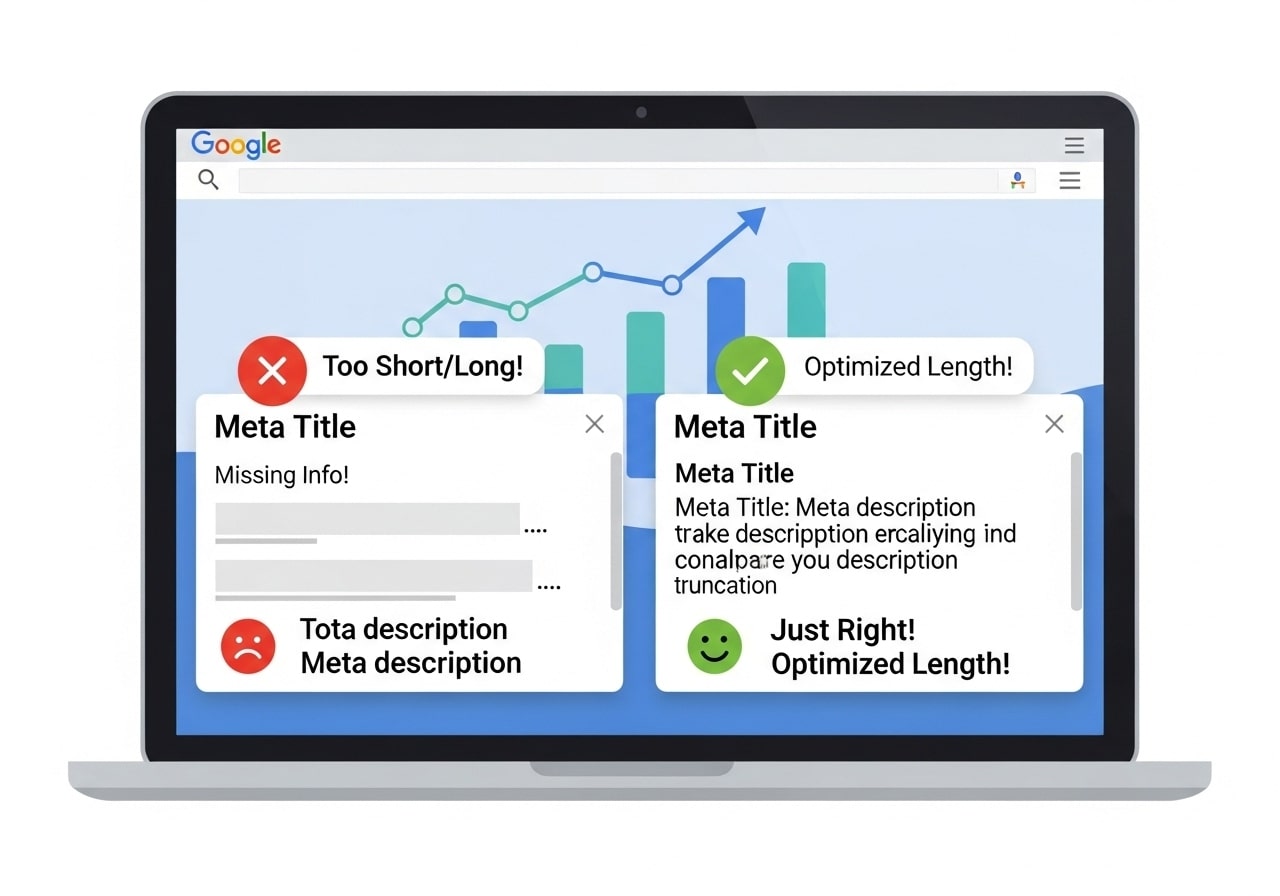
Getting the meta title and meta description length right can make or break your website’s search engine performance. If you’ve ever wondered what is the ideal length for a meta description or how long your SEO titles should be, you’re in the right place.
What Are Meta Titles and Meta Descriptions
Before diving into the specifics of meta title and meta description length, let’s understand what these elements actually are. Meta titles appear as the clickable headline in search engine results, while meta descriptions are the brief summaries that appear below the title.
These elements serve as your website’s first impression in search results. When someone searches for information related to your content, your meta title and description are often the deciding factors in whether they click on your link or scroll past it.
Meta titles tell search engines and users what your page is about in a concise, compelling way. Meta descriptions provide additional context and encourage users to visit your page by explaining what value they’ll find there.
The relationship between these elements and your search rankings is significant. While meta descriptions don’t directly impact rankings, they heavily influence click-through rates, which can affect your overall SEO performance.
The Ideal Meta Title Length
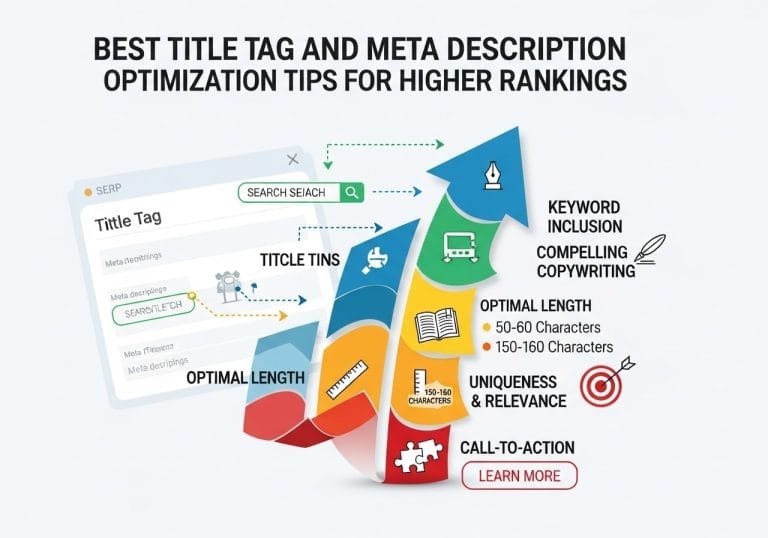
What is the ideal meta description length character count often gets confused with meta title length, so let’s clarify both. For meta titles, the sweet spot is 50-60 characters. This range ensures your entire title displays in search results without getting cut off.
Google typically displays the first 50-60 characters of a title tag. If your title exceeds this limit, it gets truncated with an ellipsis (…), potentially cutting off important keywords or compelling phrases that could drive clicks.
Here’s what you need to know about meta title optimization:
- Keep titles under 60 characters
- Include your primary keyword near the beginning
- Make each title unique across your website
- Write for humans first, search engines second
- Include your brand name when space allows
Example of good meta title length:
“Best Coffee Makers 2024 – Reviews & Buying Guide” (49 characters)
Example of too-long meta title:
The Ultimate Complete Guide to Finding the Best Coffee Makers in 2024 with Detailed Reviews” (92 characters – will be cut off)
What Is the Length of Meta Description in SEO
What is the length of meta description in SEO is one of the most frequently asked questions among website owners. The current best practice suggests keeping meta descriptions between 150-160 characters.
This character count isn’t arbitrary. Google’s search results typically display about 150-160 characters of a meta description before truncating it. However, this can vary based on the width of characters used and the device displaying the results.
What should be the length of meta description depends on several factors:
- Desktop vs. Mobile: Mobile devices might show fewer characters
- Character Width: Wide characters (like ‘W’ or ‘M’) take up more space
- Google’s Algorithm Changes: Display lengths can shift with updates
The ideal length for a meta description balances completeness with conciseness. You want enough space to convey your page’s value proposition while ensuring the entire message displays in search results.
Why Meta Title and Meta Description Length Matters
Understanding what is meta description length and why it matters can significantly impact your website’s performance. Here’s why getting the length right is crucial:
Click-Through Rate Impact
When your meta titles and descriptions display completely in search results, users get the full message you intended to convey. Truncated descriptions create uncertainty and often lead to lower click-through rates.
User Experience
Complete, well-crafted meta descriptions set proper expectations for visitors. When users know what to expect before clicking, they’re more likely to engage with your content and stay on your page longer.
Competitive Advantage
Many websites still get meta title and meta description length wrong. By optimizing yours correctly, you can stand out in search results and capture clicks that might otherwise go to competitors.
Search Engine Trust
Following best meta description length for SEO guidelines demonstrates to search engines that you understand and follow best practices, potentially boosting your overall SEO credibility.
Google’s Guidelines on Max Meta Description Length
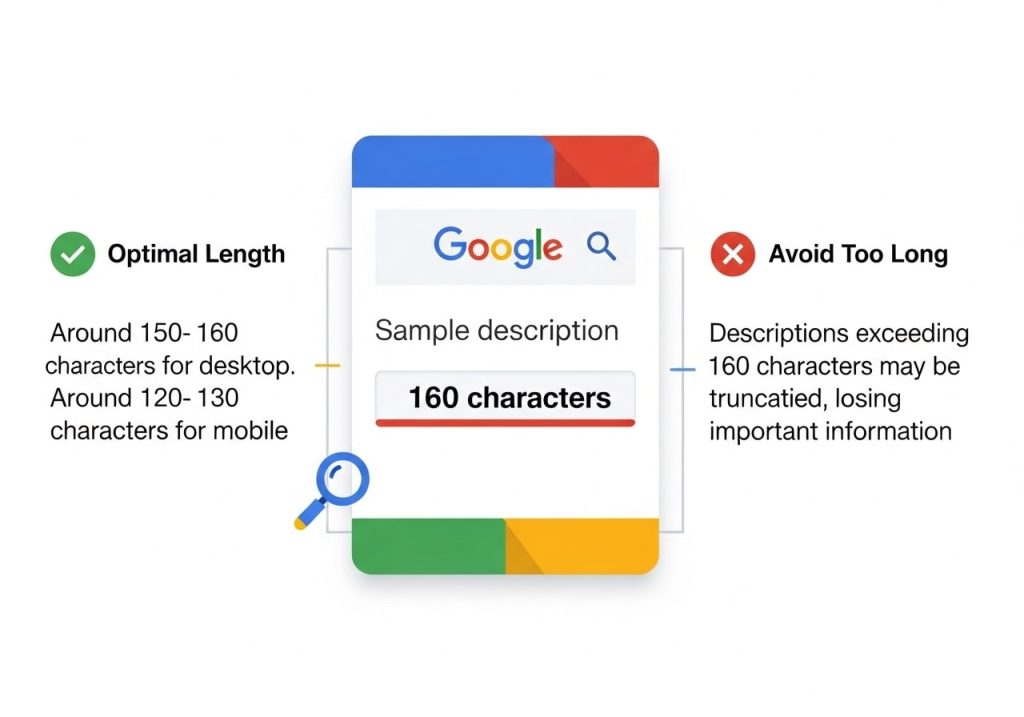
Max meta description length Google allows has evolved over the years. In 2017, Google briefly expanded meta description display to around 300 characters, but later reverted to the shorter format we see today.
Currently, Google meta title and description length guidelines suggest:
For Meta Titles:
- Maximum 60 characters for optimal display
- Include primary keywords
- Remain descriptive and compelling
For Meta Descriptions:
- 150-160 characters for best results
- Include relevant keywords naturally
- Create compelling calls-to-action
- Accurately describe page content
Moz what is a good meta description length research consistently shows that descriptions in the 150-160 character range perform best. This aligns with Google’s current display practices and user behavior patterns.
The search engine doesn’t penalize longer descriptions, but anything beyond the display limit won’t be visible in search results, potentially wasting valuable persuasive content.
Best Practices for Meta Description Length
What is the ideal length of meta description goes beyond just character count. Here are the best practices for creating effective meta descriptions:
Write Within the Sweet Spot
Keep descriptions between 150-160 characters. This best meta description length SEO practice ensures your entire message displays across most devices and search scenarios.
Front-Load Important Information
Place your most compelling information and primary keywords in the first 120 characters. This ensures crucial details appear even if descriptions get truncated unexpectedly.
Include Clear Value Propositions
What is the ideal length for meta description content should focus on benefits users will receive. Use the available characters to explain why someone should click on your result instead of others.
Use Active Voice
Active voice makes descriptions more engaging and typically uses fewer characters than passive constructions, helping you stay within the ideal length of meta description limits.
Test Different Lengths
While 150-160 characters works well generally, test different lengths for your specific audience and industry. Some topics might benefit from shorter, punchier descriptions.
Tools to Check Your Website Meta Description Length
Meta title and meta description length checker tools help ensure your optimization efforts stay within recommended limits. Here are the most reliable options:
Free Tools
- Google SERP Simulator: Preview how your titles and descriptions appear in search results
- Yoast SEO Plugin: Real-time feedback on meta length for WordPress users
- SEOmofo: Simple, free SERP preview tool
Premium Tools
- Ahrefs meta description length checker provides detailed analysis and suggestions
- SEMrush: Comprehensive meta tag analysis with competitive insights
- Screaming Frog: Bulk analysis for large websites
Built-in CMS Features
Many content management systems now include meta title and description length checker functionality:
- WordPress SEO plugins show character counts
- Shopify has built-in meta optimization features
- Squarespace provides length guidance in their SEO settings
Google meta title and description length checker tools help you see exactly how your content will appear in search results, allowing you to make informed optimization decisions.
Common Mistakes to Avoid
Understanding what is the ideal meta description length character count is just the beginning. Avoid these common mistakes that can hurt your SEO performance:
Writing Too Short
While staying under the character limit is important, descriptions that are too short (under 120 characters) often fail to provide enough information to entice clicks.
Keyword Stuffing
Cramming too many keywords into your limited character count makes descriptions unreadable and can hurt your rankings.
Duplicate Descriptions
Using the same meta description across multiple pages confuses search engines and wastes opportunities to target different keywords.
Ignoring Mobile Display
Website meta description length can display differently on mobile devices. Always check how your descriptions appear on smartphones and tablets.
Focusing Only on Length
While what is the ideal length of a meta description is important, don’t sacrifice quality for character count. A compelling 140-character description often outperforms a mediocre 160-character one.
How to Write Perfect Meta Titles and Descriptions
Creating effective meta titles and descriptions that respect seo title and meta description length limits requires a systematic approach:
Step 1: Research Your Keywords
Identify primary and secondary keywords that fit naturally within your character limits. Use tools like Google Keyword Planner or Ahrefs to find relevant terms your audience searches for.
Step 2: Analyze Competitor Descriptions
Look at what competitors are doing for similar keywords. Identify gaps in their messaging that you can fill while staying within what is the ideal meta description length character limits.
Step 3: Write Multiple Versions
Create 3-4 different versions of each meta description. This gives you options and helps you find the most compelling approach within your character constraints.
Step 4: Include Emotional Triggers
Use power words and emotional triggers that encourage clicks. Words like “discover,” “learn,” “improve,” and “save” can be effective when used naturally.
Step 5: Test and Iterate
Monitor your click-through rates and adjust descriptions that underperform. SEO is an ongoing process, and your meta descriptions should evolve based on performance data.
Understanding and implementing proper meta title and meta description length guidelines is essential for SEO success. The ideal ranges of 50-60 characters for titles and 150-160 characters for descriptions aren’t just arbitrary numbers—they’re based on how search engines display results and how users interact with them.
By following these guidelines and regularly checking your website meta description length with appropriate tools, you’ll improve your search visibility and click-through rates. Remember that while character counts matter, creating compelling, accurate descriptions that serve your users should always be your primary focus.
Start auditing your current meta titles and descriptions today. Use the tools and techniques covered in this guide to optimize your content, and you’ll likely see improvements in your search engine performance within a few weeks.
Ready to optimize your meta descriptions? Begin by reviewing your top-performing pages and ensuring they follow these length guidelines while maintaining their compelling messaging.
FAQs
What are meta titles and meta descriptions?
Meta titles are the clickable headlines that appear in search engine results. Meta descriptions are the short text snippets that appear below the title, giving searchers a preview of what your page is about. Both help search engines and users understand your content.
How long should my meta title be for best results?
Your meta title should be between 50-60 characters long. This ensures it displays fully in search results without being cut off. Google typically shows about 580 pixels worth of characters, which usually equals around 60 characters.
What’s the ideal length for meta descriptions?
Meta descriptions work best when they’re between 150-160 characters long. This length allows you to provide enough detail about your page while ensuring the full description shows in search results without being shortened.
Do meta titles and descriptions directly affect my search rankings?
Meta descriptions don’t directly impact rankings, but they influence click-through rates, which can affect your position over time. Meta titles do have a direct impact on rankings since they help search engines understand what your page is about.
What happens if my meta title is too long?
When meta titles exceed 60 characters, search engines cut them off with “…” at the end. This makes your listing look incomplete and may reduce clicks since users can’t see your full message.
Will Google show my meta description if it’s too short?
If your meta description is too short (under 120 characters), Google might pull additional text from your page content to create a longer snippet. This can result in descriptions that don’t match what you intended to show users.
Can I still rank well with poorly sized meta tags?
Yes, you can still rank, but you’ll likely get fewer clicks from search results. Poor meta tags make your listings less appealing and informative, which means people are more likely to click on your competitors instead.
How do I check if my meta tags are the right length?
You can use free online tools like Yoast SEO plugin, SEO review tools, or simply count characters in your text editor. Many SEO tools show you a preview of how your listing will appear in search results.
Should I include my main keyword in both meta title and description?
Yes, include your primary keyword in your meta title as it helps with rankings. For meta descriptions, including keywords can help since Google bolds matching terms in search results, making your listing more noticeable.
How often should I update my meta titles and descriptions?
Review and update your meta tags every 6-12 months or when you notice low click-through rates. Also update them when you change your content significantly or when you want to target different keywords for better performance.