
Your website might be losing valuable traffic and potential customers without you even knowing it. An SEO audit reveals exactly what’s holding your site back from ranking higher in search results.
This guide is for business owners, marketers, and website managers who want to understand why SEO audit is important and how it can boost their online visibility. Whether you’re running an e-commerce store, a local business, or a content website, regular SEO audits help you stay competitive in search rankings.
We’ll walk you through what an SEO audit actually includes and why it’s essential for growing your website traffic. You’ll also learn why technical SEO audits matter so much for your site’s performance and discover the key factors you should check during every audit. By the end, you’ll know exactly how to spot the issues that are hurting your search rankings and what steps to take to fix them.
What Is an SEO Audit and Why SEO Audit Is Important
What Is an SEO Audit and How Does It Work
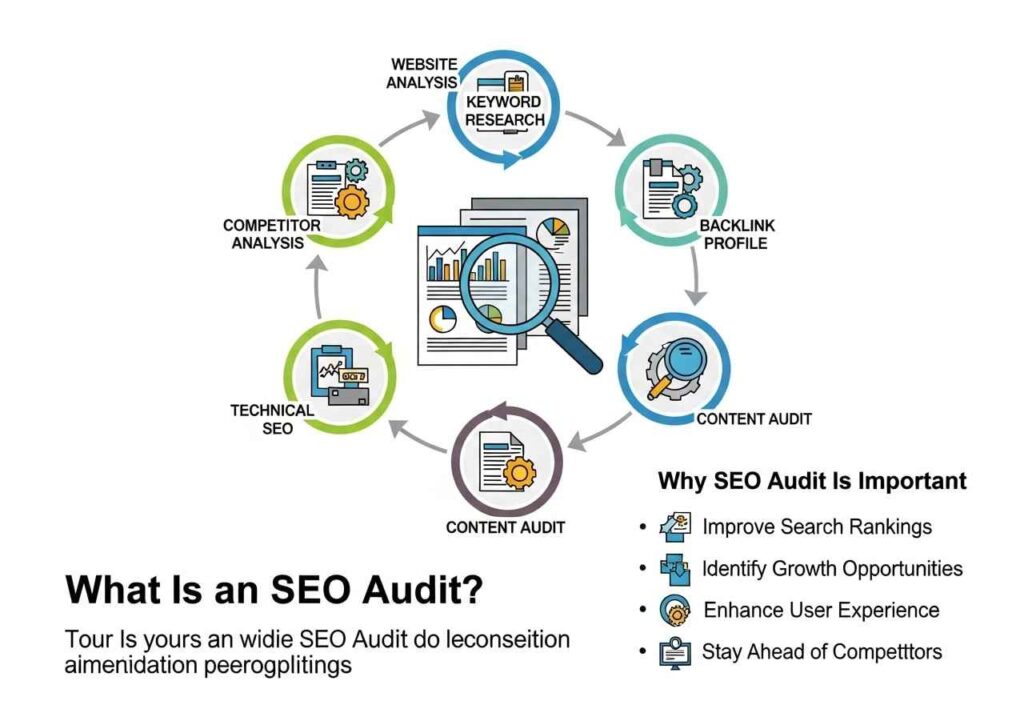
An SEO audit is a comprehensive analysis of your website that evaluates how well it performs in search engines. Think of it as a health checkup for your website – just like you’d visit a doctor to identify health issues before they become serious problems, an SEO audit helps you spot website issues before they tank your search rankings.
The audit process involves examining hundreds of factors that search engines like Google use to determine where your website should rank. This includes checking your site’s technical foundation, content quality, user experience, and how other websites link to yours. Tools like Google Search Console, Screaming Frog, and various SEO platforms scan your website to identify problems that might be holding you back from getting more organic traffic.
When you run an SEO audit, you’re basically asking: “What’s stopping my website from ranking higher?” The audit answers this question by highlighting specific issues like broken links, slow loading speeds, duplicate content, missing meta tags, or poor mobile optimization. Each problem gets flagged with recommendations on how to fix it.
Why an SEO Audit Is Important for a Website and Its Performance
Understanding why SEO audit is important comes down to one simple fact: search engines constantly change their algorithms, and websites naturally develop problems over time. What worked for your site six months ago might be hurting your rankings today.
Regular SEO audits help you stay competitive by identifying opportunities your competitors might be missing. Maybe you discover that your site loads slower than competing websites, or perhaps your content isn’t optimized for keywords that your target audience actually searches for. Without an audit, these issues remain invisible while your organic traffic slowly declines.
The importance of SEO audit becomes even clearer when you consider that most websites lose rankings gradually rather than suddenly. You might not notice a 5% drop in traffic this month, but after a year of small declines, you could be looking at significantly reduced visibility and revenue. An audit catches these trends early and provides a roadmap for improvement.
Types of SEO Audit Including Technical, On-Page, and Off-Page Strategies
SEO audits come in three main flavors, each focusing on different aspects of your website’s optimization:
Technical SEO Audit
This type examines your website’s foundation – the behind-the-scenes elements that search engines need to crawl, index, and understand your content. Key areas include:
- Site speed and Core Web Vitals
- Mobile responsiveness and mobile-first indexing
- XML sitemaps and robots.txt files
- SSL certificates and security issues
- Internal linking structure
- Crawl errors and redirect chains
On-Page SEO Audit
This focuses on the content and optimization elements visible to users and search engines:
- Title tags and meta descriptions
- Header structure (H1, H2, H3 tags)
- Keyword optimization and content quality
- Image alt text and file names
- URL structure and readability
- Schema markup implementation
Off-Page SEO Audit
This examines factors outside your website that influence your search rankings:
- Backlink profile quality and diversity
- Local SEO citations and Google My Business optimization
- Social media signals and brand mentions
- Competitor analysis and link gap opportunities
- Online reputation and review management
How an SEO Audit Affects Website Performance and Search Rankings
An SEO audit directly impacts your website’s performance by identifying bottlenecks that prevent search engines from properly understanding and ranking your content. When you fix technical issues discovered during an audit, you often see immediate improvements in how search engines crawl and index your pages.
The relationship between audits and search rankings works like this: search engines reward websites that provide excellent user experiences and relevant content. An audit helps you align your website with these ranking factors. For example, if your audit reveals that your site takes 8 seconds to load on mobile devices, fixing this speed issue could boost your rankings since Google considers page speed a ranking factor.
Performance improvements from SEO audits often compound over time. Fixing broken internal links helps search engines discover more of your content. Optimizing your title tags and meta descriptions can improve click-through rates from search results. Better site structure makes it easier for users to find what they’re looking for, which reduces bounce rates and signals to Google that your site provides value.
The audit importance extends beyond just rankings – it affects your entire digital marketing strategy. When your website performs better in search results, you get more qualified traffic, which typically leads to higher conversion rates and better return on investment from your marketing efforts.
Why SEO Audit Is Important for Website Growth
Why SEO Audit Is Important to Find Technical Issues and Errors
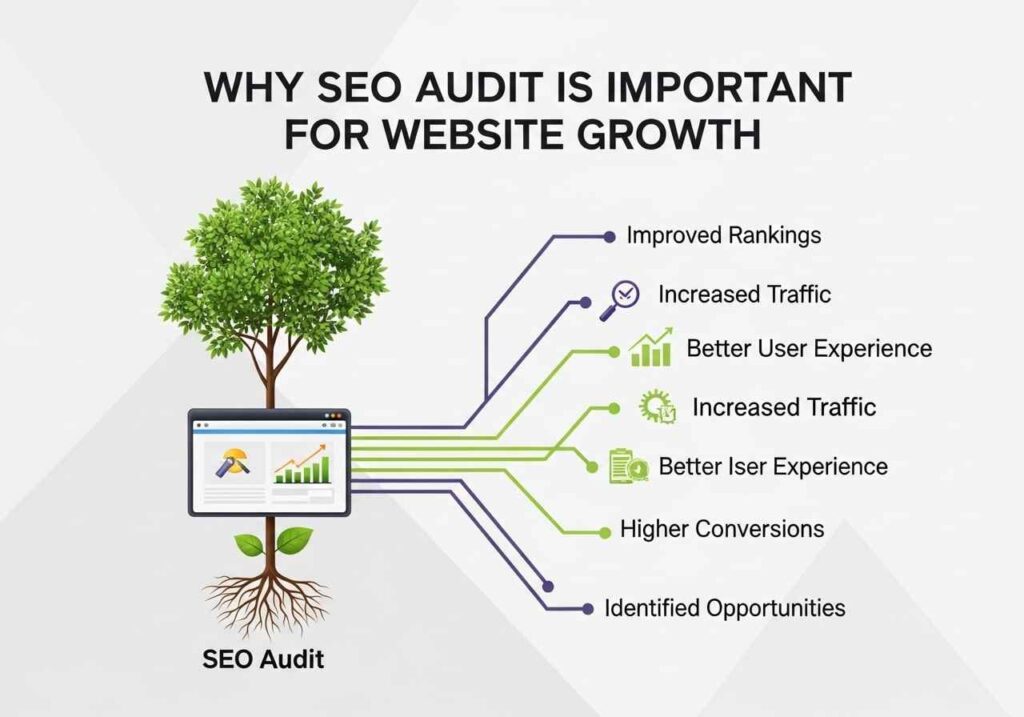
Technical problems hiding behind the scenes can silently sabotage your website’s performance. An SEO audit acts like a diagnostic tool, uncovering critical issues that search engines struggle with when crawling and indexing your site. Broken links, server errors, duplicate content, and crawl barriers can prevent search engines from properly understanding and ranking your pages.
Common technical issues identified through SEO audits:
- 404 errors and broken internal links
- Slow page loading speeds affecting user experience
- Mobile responsiveness problems
- Missing or duplicate meta tags
- Improper URL structures and redirects
- XML sitemap errors
These technical problems don’t just affect search engine visibility—they create friction for real users trying to navigate your site. When visitors encounter broken links or slow-loading pages, they quickly bounce to competitors. An SEO audit helps prioritize which technical fixes will have the biggest impact on both search performance and user satisfaction.
Why SEO Audit Is Important for Search Engine Rankings and Visibility
Search engine algorithms constantly evolve, and what worked last year might actually hurt your rankings today. Regular SEO audits ensure your website stays aligned with current ranking factors and algorithm updates. Without periodic assessment, websites gradually lose visibility as competitors optimize for newer ranking signals.
Key ranking factors evaluated in SEO audits:
| Ranking Factor | Impact Level | Common Issues Found |
|---|---|---|
| Page Speed | High | Unoptimized images, excess plugins |
| Mobile-Friendliness | High | Non-responsive design, touch elements |
| Content Quality | High | Thin content, keyword stuffing |
| User Experience | Medium | Poor navigation, high bounce rates |
| Technical Health | Medium | Crawl errors, indexing problems |
SEO audits reveal gaps between your current optimization level and what top-ranking competitors are doing. This competitive intelligence helps you understand why certain pages aren’t ranking well and provides a roadmap for climbing higher in search results. Regular auditing prevents the gradual decline that happens when websites become outdated compared to evolving search engine expectations.
Why SEO Audit Is Important for User Experience and Engagement
User experience directly influences how long people stay on your site and whether they convert into customers. SEO audits examine user-focused metrics that search engines increasingly prioritize when determining rankings. Poor user experience signals like high bounce rates and short dwell times tell search engines that your content isn’t meeting user needs.
User experience elements assessed in SEO audits:
- Page loading speed across devices
- Navigation structure and internal linking
- Content readability and formatting
- Mobile usability and touch-friendly design
- Visual hierarchy and call-to-action placement
Modern search engines use behavioral signals to gauge content quality. If users quickly leave your pages or struggle to find what they’re looking for, search engines interpret this as a sign of poor relevance or quality. An SEO audit identifies user experience barriers and provides actionable recommendations for creating more engaging, user-friendly pages that naturally encourage longer visits and higher conversion rates.
Why Auditing a Website’s SEO Is Important for Maintaining Overall Site Health
Websites are living entities that require ongoing maintenance to perform optimally. Content gets outdated, new pages create internal linking opportunities, and technical debt accumulates over time. Regular SEO audits function like health checkups, catching problems before they become serious issues that damage search performance.
Site health indicators monitored through SEO audits:
- Content freshness and relevance
- Internal link distribution and anchor text optimization
- Image optimization and alt text completeness
- Schema markup implementation
- Security protocols and HTTPS status
Proactive site maintenance through regular auditing prevents the gradual performance decline that affects neglected websites. Small issues like broken internal links or outdated content might seem minor individually, but they compound over time to create significant SEO problems. Consistent auditing establishes a baseline for measuring improvement and ensures your website maintains competitive performance standards in an ever-changing digital landscape.
Why Technical SEO Audit Is Important

Why a Technical SEO Audit Is Important for Website Functionality
Technical SEO forms the foundation that makes your website accessible to both users and search engines. When you perform a technical SEO audit, you’re essentially running a health check on your website’s underlying structure. Why is a technical SEO audit important? Because even the most compelling content won’t rank well if search engines can’t properly crawl, understand, or index your pages.
Search engines rely on bots to navigate through your website, and these bots need clear pathways to discover and evaluate your content. Technical issues create roadblocks that prevent proper crawling, which directly impacts your visibility in search results. A well-functioning website loads quickly, displays correctly across devices, and provides clear signals to search engines about its content hierarchy and importance.
Common Technical SEO Issues Found in an Audit and How to Spot Them
Technical SEO audits reveal numerous issues that website owners often overlook. Here are the most frequent problems discovered during comprehensive audits:
Site Speed and Performance Issues
- Oversized images and unoptimized media files
- Excessive HTTP requests and render-blocking resources
- Inadequate server response times and hosting limitations
Mobile Responsiveness Problems
- Pages that don’t adapt to different screen sizes
- Touch elements placed too close together
- Content that extends beyond the viewport
Crawling and Indexing Barriers
- Broken internal and external links creating dead ends
- Missing or incorrectly configured robots.txt files
- Faulty XML sitemaps with outdated or irrelevant URLs
URL Structure and Redirect Issues
- Redirect chains and loops that confuse search bots
- Non-canonical URL versions creating duplicate content
- URLs containing unnecessary parameters or session IDs
Security and Protocol Problems
- Missing HTTPS implementation across all pages
- Invalid SSL certificates or mixed content warnings
- Outdated security protocols that browsers flag as unsafe
You can spot these issues using various tools like Google Search Console, which flags crawling errors, or website auditing platforms that provide comprehensive technical analysis.
How Technical SEO Issues Affect Indexing and Visibility in Search Results
Technical problems create a cascade effect that severely impacts your website’s search performance. When search engine bots encounter crawling difficulties, they may abandon your site entirely or index only a fraction of your pages. This directly reduces the number of pages that can appear in search results.
Slow-loading pages frustrate users and signal poor quality to search algorithms. Google’s Core Web Vitals now factor page speed and user experience metrics into ranking decisions. A website that takes more than three seconds to load typically experiences significant bounce rate increases and ranking penalties.
Mobile-unfriendly websites face particularly harsh consequences since Google uses mobile-first indexing. If your site doesn’t function properly on mobile devices, search engines treat it as lower quality content, regardless of how valuable your information might be.
Duplicate content issues confuse search algorithms about which version of a page to rank. This dilutes your ranking potential across multiple URLs instead of consolidating authority into one strong page.
Fixing Technical SEO Issues After an Audit to Improve Performance
Once you’ve identified technical problems, prioritize fixes based on their impact on user experience and search visibility. Start with critical issues that completely block search engine access, then move to performance optimizations.
Speed Optimization Steps
- Compress and optimize images using modern formats like WebP
- Minimize CSS, JavaScript, and HTML files
- Implement browser caching and content delivery networks (CDNs)
- Upgrade hosting solutions if server response times exceed acceptable limits
Mobile Experience Improvements
- Implement responsive design that adapts to all screen sizes
- Ensure touch targets meet minimum size requirements
- Test functionality across different devices and browsers
- Optimize form fields for mobile input methods
Crawling and Indexing Solutions
- Fix broken links and implement proper 301 redirects
- Update XML sitemaps to include only indexable, valuable pages
- Configure robots.txt files to guide search bots effectively
- Set up canonical URLs to consolidate duplicate content
Security Implementation
- Install SSL certificates and redirect all HTTP traffic to HTTPS
- Update security protocols and resolve mixed content warnings
- Implement proper security headers for additional protection
Regular monitoring after implementing fixes ensures improvements stick and new issues don’t emerge. Why do an SEO audit regularly? Because websites constantly evolve, and new technical problems can develop as you add content, update plugins, or make design changes. Monthly technical audits help maintain optimal website health and search performance.
How to Do SEO Audit for a Website

How to Do SEO Audit Properly to Identify All Issues
Conducting a proper SEO audit requires a systematic approach to uncover every potential issue that could impact your website’s performance. Start by crawling your entire website to identify technical problems like broken links, duplicate content, and missing meta descriptions. Pay close attention to your site’s structure, ensuring that internal linking makes sense and that pages are properly organized in a logical hierarchy.
Check your website’s loading speed across different devices and browsers, as page speed directly affects both user experience and search rankings. Analyze your content quality, looking for thin pages, keyword cannibalization, and opportunities for content optimization. Don’t forget to examine your mobile responsiveness, as search engines prioritize mobile-friendly sites.
Review your website’s indexation status by checking how many pages Google has actually indexed versus how many you want indexed. Look at your XML sitemap, robots.txt file, and ensure that important pages aren’t accidentally blocked from search engines.
Monitor your backlink profile to identify any toxic links that could harm your rankings, while also spotting opportunities to build more high-quality links. Check for proper implementation of structured data markup, which helps search engines understand your content better.
The key is being thorough and documenting everything you find. Create a comprehensive checklist that covers technical SEO, on-page optimization, content quality, and off-page factors to ensure you don’t miss critical issues.
SEO Audit Tools Used for Website Analysis and Optimization
The right tools make the difference between a surface-level audit and a comprehensive analysis that reveals hidden opportunities. Google Search Console serves as your foundation, providing direct insights from Google about your site’s performance, indexation issues, and mobile usability problems. This free tool shows you exactly which queries bring traffic and highlights critical errors that need immediate attention.
Screaming Frog SEO Spider excels at technical audits, crawling your entire website to identify broken links, missing title tags, duplicate content, and redirect chains. For larger sites, enterprise tools like Ahrefs or SEMrush provide deeper competitive analysis and keyword research capabilities, while also offering comprehensive site audit features.
PageSpeed Insights and GTmetrix help you understand your site’s loading performance and provide specific recommendations for improvement. Google Analytics reveals user behavior patterns that can inform your optimization strategy, showing you which pages have high bounce rates or poor engagement.
| Tool Category | Recommended Tools | Primary Use Case |
|---|---|---|
| Technical Audit | Screaming Frog, Sitebulb | Crawling and technical issues |
| Performance | PageSpeed Insights, GTmetrix | Site speed optimization |
| Keyword Research | Ahrefs, SEMrush, Ubersuggest | Content and keyword analysis |
| Free Essentials | Google Search Console, Analytics | Foundation monitoring |
Specialized tools like Schema.org validators check your structured data implementation, while backlink analysis tools help you understand your link profile’s health and identify opportunities for improvement.
How to Decide Which SEO Issues to Fix First for Maximum Impact
Not all SEO issues carry equal weight, so prioritizing fixes based on potential impact saves time and resources while delivering faster results. Start with critical technical issues that prevent search engines from properly crawling and indexing your site. These include server errors, broken redirects, and blocked important pages that can immediately improve your visibility.
Address high-traffic pages first, as improvements here will affect more visitors and potentially more revenue. Look at your Google Analytics data to identify your most valuable pages, then focus optimization efforts on these areas. Pages ranking on the second page of search results often need just small improvements to break into the top 10, making them high-impact targets.
Fix issues that affect user experience next, such as slow loading times, mobile responsiveness problems, and confusing navigation. These improvements not only help with SEO but also reduce bounce rates and improve conversions.
Priority Framework:
- Critical Technical Issues – Server errors, indexation problems
- High-Traffic Page Optimization – Title tags, meta descriptions, content gaps
- Quick Wins – Low-hanging fruit that’s easy to implement
- Content Opportunities – Pages with ranking potential
- Long-term Projects – Site restructuring, major content overhauls
Consider the resources required for each fix. Some improvements take minutes to implement, while others might require weeks of development work. Balance quick wins with longer-term strategic improvements to maintain momentum while building toward bigger goals.
What to Do After Completing an SEO Audit to Ensure Long-Term Benefits
Your SEO audit is just the beginning of an ongoing optimization process that requires consistent monitoring and adjustment. Create a detailed action plan that breaks down identified issues into manageable tasks with specific deadlines and assigned responsibilities. This prevents your audit from becoming just another document that sits unused.
Set up monitoring systems to track your progress and catch new issues before they become problems. Use Google Search Console alerts to notify you of sudden drops in performance or new crawl errors. Establish regular check-ins to review key metrics like organic traffic, keyword rankings, and technical health scores.
Document everything you implement, including the rationale behind each change and the expected outcomes. This creates a valuable reference for future audits and helps you understand what strategies work best for your specific site. Track the impact of each fix to build a knowledge base of effective optimization techniques.
Schedule regular mini-audits to catch emerging issues early. SEO isn’t a set-it-and-forget-it activity – search engine algorithms change, competitors evolve their strategies, and new content gets published regularly. Monthly technical checks and quarterly comprehensive reviews help maintain your competitive edge.
Build SEO considerations into your content creation and website development processes. This prevents many common issues from occurring in the first place and ensures that new pages launch with proper optimization. Train your team on SEO best practices so that everyone contributes to maintaining your site’s search performance.
Consider your audit as the foundation for a long-term SEO strategy rather than a one-time fix. Regular optimization based on data-driven insights will compound over time, leading to sustained growth in organic visibility and traffic.
SEO Audit Importance and Key Factors to Check

15 Most Important SEO Factors for an Audit That Affect Rankings
When you dig into why SEO audit is important, understanding the core ranking factors becomes essential. These 15 critical elements can make or break your website’s search performance:
Technical Foundation:
- Page loading speed and Core Web Vitals
- Mobile responsiveness and usability
- SSL certificate and HTTPS implementation
- XML sitemap accuracy and submission
- Robots.txt file configuration
Content Quality:
- Keyword optimization and targeting
- Content freshness and relevance
- Meta titles and descriptions
- Header tag structure (H1, H2, H3)
- Internal linking strategy
Authority Signals:
- Backlink profile quality and diversity
- Domain authority metrics
- User engagement signals
- Local SEO factors (for location-based businesses)
- Schema markup implementation
Each factor carries different weight depending on your industry and competition level. Page speed affects user experience directly, while backlinks signal trustworthiness to search engines. Missing any of these elements during an audit means potentially losing valuable rankings and traffic.
Why Regular SEO Audit Is Important for Maintaining Website Health
Your website changes constantly – new content gets added, plugins update, and search algorithms evolve. This explains why an SEO audit is important on a regular basis rather than as a one-time activity.
Search engines update their algorithms hundreds of times yearly. What worked last quarter might hurt your rankings today. Regular audits catch these shifts before they damage your visibility. Technical issues creep in gradually too. A plugin update might break your schema markup, or server changes could slow your loading times.
Content decay happens naturally. Pages that ranked well six months ago might lose relevance without fresh updates. Competitor analysis during regular audits reveals new opportunities and threats in your niche.
The recommended audit frequency depends on your website size and activity level:
| Website Type | Audit Frequency | Focus Areas |
|---|---|---|
| Small Business | Quarterly | Technical issues, local SEO |
| E-commerce | Monthly | Product pages, site structure |
| Large Enterprise | Bi-weekly | All factors, competitor analysis |
| News/Blog Sites | Monthly | Content performance, indexing |
Using SEO Audit Reports and PDFs for Accurate Analysis and Planning
Professional SEO audit reports serve as roadmaps for improvement. A comprehensive SEO audit importance becomes clear when you have actionable data in organized formats. These reports typically include:
Executive Summary Section:
- Overall website health score
- Priority issues requiring immediate attention
- Performance benchmarks against competitors
- ROI projections for recommended fixes
Technical Analysis:
- Crawl errors and indexing issues
- Site speed performance metrics
- Mobile usability problems
- Security vulnerabilities
Content Evaluation:
- Keyword gap analysis
- Duplicate content identification
- Thin content pages
- Content optimization opportunities
PDF reports work well for stakeholder presentations and long-term reference. They capture website snapshots at specific points, helping track progress over time. Interactive dashboards complement static reports by providing real-time monitoring capabilities.
The key lies in translating audit findings into prioritized action plans. Not every issue deserves equal attention – focus on problems that impact user experience and search visibility most significantly.
How SEO Audit Helps Maintain Long-Term SEO Performance and Visibility
Sustainable SEO success requires consistent monitoring and adjustment. This highlights why SEO audit is important for businesses thinking beyond quick wins.
Search landscape changes create new opportunities and challenges regularly. Voice search optimization, AI-generated content, and mobile-first indexing represent recent shifts that audits help navigate. Staying ahead requires proactive identification of these trends through regular analysis.
Performance tracking through audits reveals patterns in your SEO efforts. Seasonal fluctuations, algorithm impact assessment, and content performance cycles become visible through consistent monitoring. This data helps predict future performance and allocate resources effectively.
Competitive advantage comes from spotting opportunities others miss. Regular audits uncover keyword gaps, backlink opportunities, and technical advantages that competitors haven’t addressed yet. Early adoption of best practices often translates to lasting ranking benefits.
Budget optimization becomes more effective with audit-driven strategies. Instead of spreading resources thin across random SEO activities, audits pinpoint high-impact improvements that deliver measurable results. This targeted approach maximizes ROI and demonstrates clear value to stakeholders.
Long-term visibility protection requires identifying potential threats before they materialize. Algorithm penalties, technical debt accumulation, and competitive pressure all show warning signs during comprehensive audits. Early intervention prevents costly recovery efforts later.

Running regular SEO audits:
Running regular SEO audits gives you a clear picture of what’s working on your website and what needs fixing. These comprehensive checkups help you spot technical problems, content gaps, and missed opportunities that could be holding back your search rankings. When you stay on top of these issues, you’re setting your website up for better visibility, more traffic, and stronger performance across search engines.
Think of an SEO audit as your website’s health checkup – it’s not something you do once and forget about. Make it a regular part of your digital strategy, whether that’s quarterly or twice a year. Start with the technical basics like site speed and mobile responsiveness, then dive into your content and keyword strategy. Your website will thank you with better rankings, and your visitors will have a much smoother experience finding exactly what they’re looking for.
FAQs
Why SEO audit is important for a website?
SEO audit is important because it helps identify technical, on-page, and off-page SEO issues, fix errors, and improve website performance and search engine rankings.
What is an SEO audit, and what does an SEO audit include?
SEO audit is a comprehensive evaluation of a website to check its structure, content, technical issues, backlinks, and on-page optimization to ensure better search engine visibility.
Why is an SEO audit important for improving search rankings?
SEO audit is important for improving search rankings because it identifies issues, optimizes pages, and ensures the website meets technical and content standards for search engines.
Why should you do an SEO audit regularly?
Performing SEO audits regularly helps detect new issues, maintain website health, improve user experience, and ensure consistent search engine performance.
Why SEO audit is important for user experience?
SEO audit is important for user experience because it identifies slow pages, broken links, and navigation issues, allowing you to enhance visitor engagement and website usability.
Why is technical SEO important in an audit?
Technical SEO is important in an audit because it ensures proper indexing, fast site speed, mobile optimization, and fixes crawl errors, all of which improve search visibility and performance.
How to do an SEO audit for a website?
To do an SEO audit, use tools to analyze technical issues, on-page SEO, backlinks, and content quality. Then prioritize and fix problems to improve overall website performance.
Why SEO audit is important for small businesses?
SEO audit is important for small businesses as it helps identify website issues, improve online visibility, attract organic traffic, and compete effectively in the market.
What are the 15 most important SEO factors for an audit?
The 15 most important SEO factors include website speed, mobile-friendliness, indexing, crawlability, broken links, duplicate content, meta tags, internal linking, backlinks, content quality, and other on-page and off-page SEO signals.
Why do you need an SEO audit to maintain long-term website growth?
Conducting regular SEO audits can identify and resolve SEO issues, maintain search rankings, and ensure your website remains optimized as search algorithms evolve.