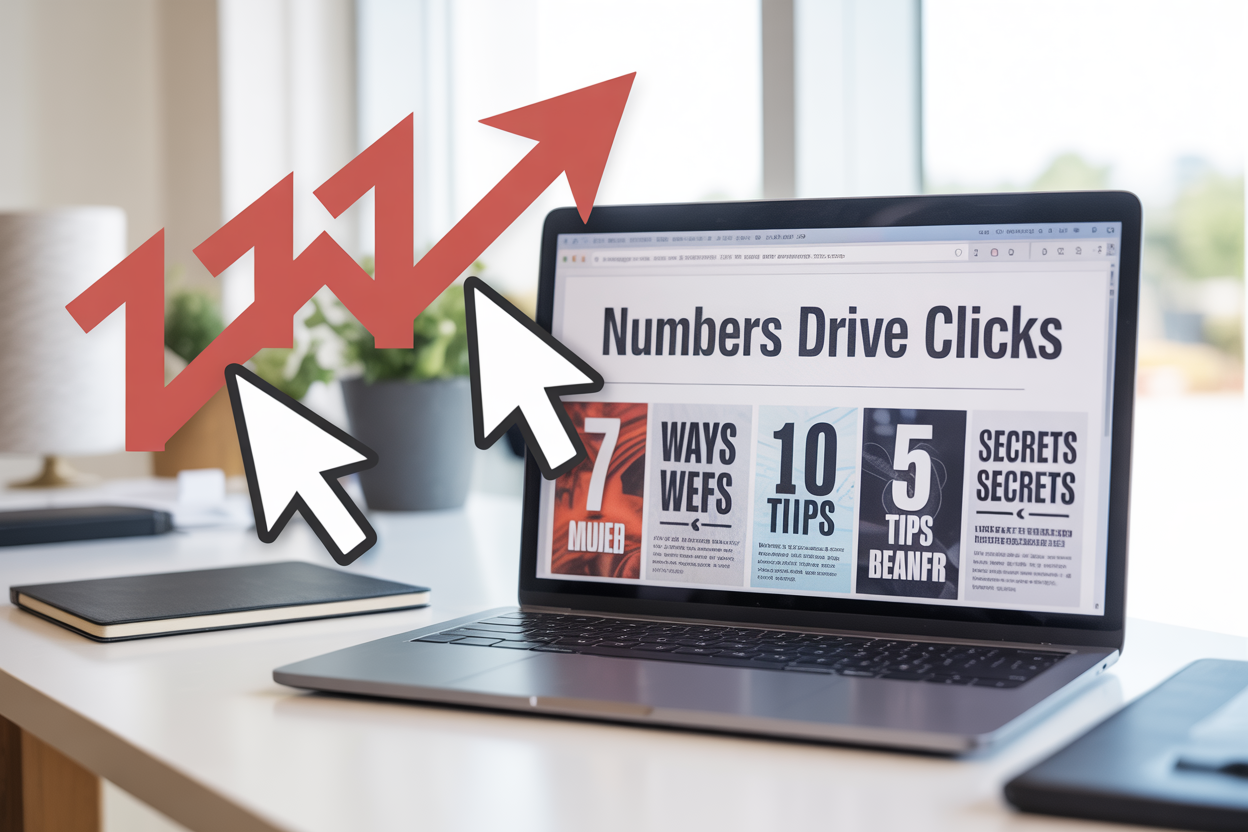
Numbers in headlines grab attention faster than almost any other technique. For content creators, marketers, and bloggers who want to boost their click-through rates, using numbers in headlines can be the difference between content that gets ignored and content that gets clicked.
This guide shows you exactly how to use numbers in headlines effectively. You’ll discover why numbers drive reader engagement and which types of numbers create maximum impact. We’ll also cover strategic number placement techniques that actually work and reveal common mistakes that can kill your numbered headlines before they have a chance to perform.
Why Numbers Drive Reader Engagement and Click-Through Rates
The Psychology Behind Number-Driven attention Spans
Our brains are wired to seek patterns and shortcuts when processing information. Numbers tap directly into this cognitive preference by offering immediate structure and clarity. When readers scan content, their eyes naturally gravitate toward numerical data because it promises specific, measurable value.
This attraction stems from our evolutionary need to quantify resources and assess situations quickly. Headlines with numbers create what psychologists call “cognitive ease” – the mental comfort that comes from knowing exactly what to expect. A headline like “7 Ways to Boost Sales” immediately tells readers they’ll receive seven distinct pieces of information, making the content feel manageable and actionable.
Using numbers in headlines also triggers the brain’s reward system. Numbers suggest completion and achievement, appealing to our desire for closure and accomplishment. Readers feel more motivated to engage with content when they can visualize finishing it.
How Our Brains Process Numerical Information Faster Than Text
The human brain processes visual symbols like numbers approximately 60,000 times faster than written text. This speed advantage makes numerals in headlines incredibly powerful for capturing attention in today’s information-saturated environment.
Numbers function as visual anchors that help readers quickly categorize and prioritize content. When someone sees “5 Marketing Strategies” versus “Several Marketing Strategies,” the specific number creates immediate mental filing. The brain doesn’t need to interpret vague quantifiers – it instantly understands the scope and commitment required.
Research in cognitive science shows that Arabic numerals (1, 2, 3) are processed even faster than spelled-out numbers (one, two, three). This processing speed translates directly into engagement rates. Headlines with numbers cut through information clutter by providing instant cognitive shortcuts that busy readers desperately need.
Statistical Evidence of Improved Click Rates With Numbered Headlines
Content analysis across millions of articles reveals compelling evidence for using numbers in titles. BuzzSumo’s research found that headlines beginning with numbers generate 36% more social shares than those without numbers. HubSpot’s data shows numbered headlines receive 23% higher click-through rates compared to generic alternatives.
|
Headline Type |
Average Click-Through Rate |
Social Shares |
|---|---|---|
|
Numbered Headlines |
8.2% |
+36% higher |
|
Generic Headlines |
6.7% |
Baseline |
|
Question Headlines |
7.1% |
+12% higher |
News headlines with numbers perform particularly well, with studies showing 40% better engagement rates. The specificity creates credibility while the structure appeals to readers seeking organized information. Digital marketing campaigns using numbered headlines consistently outperform alternatives across email, social media, and content marketing channels.
The Trust Factor Numbers Create With Audiences
Numbers establish immediate credibility by suggesting research, expertise, and precision. When readers see using numbers in news increases story credibility, they perceive the content as more authoritative and trustworthy. This trust factor stems from our association of numbers with facts, data, and measurable outcomes.
Using numbers in advertising leverages this trust dynamic effectively. Claims like “Reduces wrinkles by 47%” feel more believable than “dramatically reduces wrinkles.” The specificity implies scientific testing and honest reporting, even when the underlying research might be limited.
Numbers also create transparency by setting clear expectations. Readers appreciate knowing they’re committing to “10 tips” rather than an unknown quantity of information. This transparency builds trust between content creators and audiences, leading to higher engagement rates and return visits.
The psychological impact extends beyond initial clicks. Numbered content that delivers on its promises strengthens reader relationships and brand credibility over time.
Most Effective Types of Numbers for Maximum Impact

List-based numbers that promise quick consumption
Odd numbers consistently outperform even numbers in headlines, with research showing that 37% more people click on headlines featuring odd numbers. The number “7” reigns supreme in list-based headlines, creating an irresistible promise of digestible, bite-sized information. Headlines like “7 Quick Ways to Double Your Productivity” or “13 Secrets Every Successful Entrepreneur Knows” tap into our brain’s preference for manageable chunks of content.
The sweet spot for list-based numbers falls between 5 and 15 items. Numbers below 5 feel too simple, while anything above 25 can overwhelm readers before they even start. Here’s what works best:
- Single digits (3, 5, 7, 9): Perfect for quick reads during busy schedules
- Teen numbers (11, 13, 15, 17): Suggest comprehensive coverage without being overwhelming
- Round numbers (10, 20, 25): Create expectations of organized, complete information
The psychology behind list-based numbers in headlines connects to our desire for structure and completion. When readers see “8 Essential Marketing Strategies,” their brain immediately understands the scope and time investment required.
Specific statistics and percentages that build credibility
Numbers backed by research transform ordinary headlines into credible, click-worthy statements. Using numbers in news increases story credibility by establishing concrete evidence rather than vague promises. Headlines incorporating specific percentages like “Boost Your Sales by 47% Using This Simple Technique” immediately signal authority and measurable results.
Statistics work because they answer the skeptical voice in every reader’s head asking “How much?” or “By what amount?” Consider these compelling approaches:
|
Number Type |
Example |
Impact |
|---|---|---|
|
Exact percentages |
“Increase Revenue by 34%” |
High credibility |
|
Large round numbers |
“10,000 Companies Use This Method” |
Social proof |
|
Precise decimals |
“Save 23.7 Minutes Daily” |
Scientific precision |
|
Growth metrics |
“300% Growth in 90 Days” |
Dramatic transformation |
The key lies in specificity. “Reduce Costs by 40%” performs significantly better than “Dramatically Cut Costs” because the exact percentage creates tangible expectations. Readers can visualize the potential impact on their situation, making the content more personally relevant and actionable.
Time-based numbers for urgency and efficiency
Time-related numbers in headlines create powerful psychological triggers that combine urgency with efficiency promises. Headlines like “Master This Skill in 30 Minutes” or “Transform Your Business in 90 Days” appeal to our time-conscious society where speed equals value.
Short timeframes work exceptionally well for skill-based content:
- Minutes (5, 10, 15, 30): Perfect for tutorials, quick fixes, and productivity hacks
- Days (7, 14, 21, 30): Ideal for habit formation and short-term challenges
- Weeks (2, 4, 6, 8): Great for lifestyle changes and learning programs
- Months (3, 6, 12): Best for major transformations and long-term goals
The magic happens when time-based numbers align with realistic expectations. “Learn Photography in 5 Minutes” feels unrealistic, while “Improve Your Photos in 5 Minutes” suggests quick, actionable improvements. This subtle difference between complete mastery and meaningful progress determines whether readers trust your promise enough to click.
Money-related figures for value perception
Dollar amounts, savings figures, and cost-related numbers create immediate value perception in headlines. Whether promising savings (“Save $500 Monthly on Groceries”) or potential earnings (“Generate $10K Monthly with This Side Hustle”), money-related numbers speak directly to readers’ financial motivations.
Effective money-based headlines follow specific patterns:
- Specific dollar amounts: “$1,247 Monthly Passive Income Strategy”
- Percentage savings: “Cut Your Bills by 35% This Month”
- Cost comparisons: “Get $500 Results for Under $50”
- Investment returns: “Turn $100 into $1,000 in 6 Months”
The psychology behind money-related numbers taps into both fear (losing money) and greed (making money). Headlines that promise to save money appeal to loss aversion, while those promising earnings trigger opportunity motivation. Using numbers in advertising becomes particularly powerful when combining monetary figures with time elements, creating headlines like “Earn an Extra $2,000 This Quarter” that deliver both financial promise and temporal urgency.
Strategic Number Placement Techniques That Work

Leading with numbers for immediate impact
Starting your headline with a number creates instant visual magnetism. When readers scan content, their eyes naturally gravitate toward numerals because they stand out from surrounding text. This technique works particularly well for listicles, guides, and how-to content where you’re promising specific value.
Using numbers in headlines at the beginning signals exactly what readers can expect. “7 Ways to Boost Productivity” immediately tells your audience they’ll get seven actionable strategies. This clarity reduces uncertainty and increases click-through rates because people know the time investment required.
Research shows that headlines with numbers generate 36% more clicks than those without. The psychological appeal lies in our brain’s preference for concrete information over abstract promises. Instead of “Ways to Save Money,” try “12 Simple Ways to Save $500 This Month.” The specificity makes the benefit tangible and achievable.
Consider these high-performing patterns:
- “5 Mistakes That Cost You Sales”
- “21 Tools Every Marketer Needs”
- “3 Secrets to Better Sleep Tonight”
The key is matching your number to your content’s actual value. Don’t inflate numbers just for impact – readers will notice if your “50 Tips” list contains filler content.
Embedding numbers within compelling phrases
Sometimes placing numbers mid-headline creates better flow while maintaining their magnetic effect. This approach works especially well when you’re emphasizing transformation, time savings, or dramatic results.
Using numbers in titles within compelling phrases can amplify emotional impact. “Transform Your Business in 30 Days” hits harder than “30 Days to Business Transformation” because it leads with the desired outcome. The number supports the promise rather than dominating it.
This technique shines when highlighting specific timeframes or quantities that seem almost too good to be true:
- “Lose 10 Pounds Without Dieting”
- “Master Photography in 7 Days”
- “Build a $100K Business from Home”
The embedded approach works particularly well for using numbers in advertising where you need to balance credibility with excitement. “Cut Your Expenses by 40% Starting Today” feels more believable than “40% Expense Reduction Method” because the action comes first.
News headlines with numbers often use this placement strategy. “Stock Market Soars 200 Points After Announcement” embeds the specific data within the broader story context, making the information feel more natural and newsworthy.
Using odd versus even numbers for different effects
Odd and even numbers trigger different psychological responses that smart headline writers can leverage. Odd numbers feel more authentic and specific, while even numbers suggest completeness and balance.
Using numbers in news increases story credibility, and odd numbers particularly excel at this. “7 Warning Signs of Market Volatility” feels more researched and less manufactured than “8 Warning Signs.” Readers subconsciously assume odd numbers result from genuine analysis rather than arbitrary list-making.
Even numbers work better for aspirational or organizational content. “10 Steps to Financial Freedom” suggests a complete, systematic approach. Round numbers like 10, 20, or 100 imply comprehensive coverage of a topic.
|
Odd Numbers (3, 5, 7, 9) |
Even Numbers (4, 6, 8, 10) |
|---|---|
|
Feel authentic and specific |
Suggest completeness |
|
Good for tips and insights |
Better for step-by-step guides |
|
Higher click-through rates |
Easier to remember |
|
Work well for lists |
Ideal for processes |
Numbers in news headlines demonstrate this pattern clearly. “5 Factors Behind the Market Crash” sounds like investigative reporting, while “6 Steps to Economic Recovery” sounds like a planned solution.
The number 7 consistently outperforms others in testing. It’s large enough to promise substantial value but small enough to feel manageable. “7 Days,” “7 Ways,” and “7 Secrets” have become headline staples for good reason.
For maximum impact, test both odd and even numbers with your specific audience. B2B readers might prefer even numbers that suggest systematic approaches, while consumer audiences often respond better to odd numbers that feel more authentic and discoverable.
Common Mistakes That Kill Numbered Headlines

Overpromising with unrealistic large numbers
Headlines like “347 Ways to Boost Your Productivity” or “1,001 Marketing Strategies That Work” might seem impressive, but they often backfire spectacularly. When using numbers in headlines, your readers develop specific expectations about the content they’ll receive. If you promise 347 productivity tips, people expect exactly that – not 20 decent tips padded with fluff.
Large numbers can overwhelm readers before they even click. Most people realize they don’t have time to consume hundreds of tips in one sitting, which creates an immediate barrier to engagement. Smart content creators stick to realistic numbers that match their audience’s attention span and needs. Headlines with 5-15 items typically perform better than those promising dozens or hundreds.
The credibility gap widens when readers discover your “50 Essential Tools” actually includes basic items like “use a pen” or “check your email.” This damages trust and reduces the likelihood that readers will engage with your future content.
Using vague or rounded numbers instead of specifics
Generic numbers like “10 Tips” or “5 Ways” lack the psychological impact of specific figures. Headlines with precise numbers such as “17 Proven Strategies” or “23 Quick Fixes” create more curiosity and appear more credible. The specificity suggests research and genuine value rather than arbitrary list-making.
Rounded numbers signal laziness or lack of thorough research. When someone sees “10 Perfect Examples,” they might assume you forced yourself to reach a round number rather than naturally discovering exactly ten great examples. Specific numbers feel organic and authentic.
Research shows that odd numbers often outperform even ones in headlines. “7 Secrets” tends to generate more clicks than “6 Secrets” or “8 Secrets.” The psychology behind this relates to how our brains process information and perceive authenticity.
Failing to deliver on numbered promises in content
This mistake destroys reader trust faster than almost any other headline sin. When your headline promises “12 Game-Changing Strategies,” your content must deliver exactly twelve distinct, valuable strategies. Padding your list with redundant points, combining multiple concepts into single numbered items, or simply falling short of the promised count frustrates readers.
Each numbered item needs to stand alone as valuable content. If your headline says “15 Tools Every Designer Needs,” but three of those “tools” are different versions of Photoshop, you’ve broken the promise. Readers notice when you stretch thin content to meet arbitrary number requirements.
Quality always trumps quantity in numbered content. Better to promise seven excellent tips and deliver seven excellent tips than to promise fifteen tips and deliver seven good ones plus eight mediocre fillers. Your audience will appreciate honesty and thoroughness over artificial inflation.
Overusing numbers across all headlines
When every headline on your blog includes numbers, the tactic loses its power entirely. 5 Marketing Tips,” “7 SEO Tricks,” “10 Social Media Hacks,” and “12 Content Ideas” all blending together creates headline fatigue. Your numbered headlines stop standing out because they’ve become your default format.
Smart publishers mix numbered headlines with other compelling formats. Question headlines, how-to headlines, and curiosity-driven headlines should rotate with your numbered content. This variety keeps your audience engaged and makes your numbered headlines more impactful when they do appear.
Consider your overall content calendar when planning numbered headlines. Spreading them strategically across weeks or months maintains their effectiveness while avoiding the appearance of lazy headline writing. Your audience should feel excited when they see numbers, not bored by predictable formatting patterns.
Proven Formulas for Creating High-Converting Numbered Headlines

The Classic List Format with Actionable Benefits
The most reliable formula for using numbers in headlines combines specific quantities with clear, actionable benefits. This approach works because readers instantly understand what they’ll gain and exactly how much value they’re getting.
Start with odd numbers between 5-15, as research shows these perform better than even numbers. Odd numbers feel more authentic and less manufactured. Here’s the formula:
[Odd Number] + [Power Word] + [Specific Benefit] + [Target Audience]
Examples that convert:
- “7 Proven Strategies to Double Your Email Open Rates”
- “13 Simple Hacks to Save $500 Monthly on Groceries”
- “9 Essential Tools Every Remote Worker Needs”
Power words like “proven,” “essential,” “simple,” and “instant” amplify the impact. Always include specific benefits rather than vague promises. Instead of “5 Ways to Improve Your Writing,” use “5 Techniques to Write Compelling Headlines in 10 Minutes.”
Time-Saving Promise Structures with Specific Durations
Time-conscious readers gravitate toward headlines with numbers that specify exact durations. These formulas tap into our desire for quick wins and efficient learning.
The most effective time-based structures include:
[Number] + [Benefit] + “in [Specific Time Frame]”
- “10 Photography Tips You Can Master in 30 Minutes”
- “5 Productivity Habits That Transform Your Day in 1 Week”
“[Time Frame] + [Action] + [Number] + [Result]”
- “15-Minute Morning Routine: 8 Steps to Peak Performance”
- “Weekend Project: 6 Ways to Organize Your Entire Home”
Short timeframes (5-30 minutes) work best for skill-based content, while longer periods (weeks, months) suit lifestyle changes. Avoid unrealistic promises that damage credibility. “Learn Piano in 3 Days” sounds fake, but “5 Piano Techniques You Can Practice in 20 Minutes Daily” feels achievable.
Results-Focused Headlines with Measurable Outcomes
Numbers become powerful when they represent concrete, measurable results. These headlines work because they set clear expectations and promise specific transformations.
“[Action] + [Number/Percentage] + [Measurable Result]”
- “How I Increased My Blog Traffic by 400% in 6 Months”
- “Transform Your Garden: 8 Plants That Cut Cooling Costs by 25%”
“[Number] + [Method] + [Specific Outcome]”
- “3 Email Templates That Boost Response Rates by 67%”
- “7 Social Media Strategies That Generated 10,000 Followers”
Include percentages, dollar amounts, or specific metrics when possible. Boost Your Sales” is weak compared to “Increase Sales by 35%.” Real case studies and data make these headlines even more compelling. When you can back up your numbered claims with actual results, readers trust your content more and click at higher rates.
Combine multiple numbers for extra impact: “5 Instagram Strategies That Gained Me 12,000 Followers in 90 Days.” This formula stacks specificity and creates an irresistible value proposition that drives clicks.

Numbers work like magnets in headlines because they promise something specific and measurable. They tell readers exactly what they’re getting – whether it’s 5 quick tips or 10 proven strategies. The brain loves this kind of clarity, which is why numbered headlines consistently outperform their generic counterparts. When you combine the right type of number with smart placement and proven formulas, you create headlines that people can’t help but click.
The secret isn’t just throwing random digits into your titles. Success comes from understanding which numbers resonate with your audience and avoiding the pitfalls that make headlines feel forced or clickbait-y. Start experimenting with odd numbers, specific figures, and time-based promises in your next batch of headlines. Your click-through rates will thank you, and your readers will appreciate the clear value proposition you’re offering them upfront.
FAQs
Why do numbers work so well in headlines?
Numbers work because they make headlines more specific and easier to scan. Our brains process numbers quickly, and they help set clear expectations about what readers will get from your content. A headline like “5 Ways to Save Money” is more concrete than “Ways to Save Money.”
Which types of numbers get the most clicks?
Odd numbers tend to perform better than even numbers, with 7, 5, and 3 being particularly effective. Lists with 10 items also work well because people are familiar with “top 10” formats. The key is choosing a number that feels right for your content length and topic.
Should I always start my headlines with numbers?
Not always. While starting with numbers can be effective, you can also place them in the middle or end of headlines. For example, “The 7 Best Tips for Better Sleep” works just as well as “7 Best Tips for Better Sleep.” Test different positions to see what works for your audience.
Do numbers work for all types of content?
Numbers work best for list-based content, how-to guides, tips, statistics, and time-related information. They’re less effective for storytelling, opinion pieces, or emotional content where the focus should be on the message rather than the format.
How do I choose the right number for my headline?
Base your number on your actual content. If you have 8 solid tips, use 8 rather than forcing it to 10. The number should feel natural and match what you’re delivering. Readers notice when content doesn’t match the promise in the headline.
Are there numbers I should avoid in headlines?
Very large numbers (like 47 or 83) can seem overwhelming and may reduce clicks. Very small numbers (like 2 or 1) might not seem valuable enough. Stick to numbers between 3-15 for most content, with 5, 7, and 10 being the most popular choices.
Can I use numbers other than list counts in headlines?
Yes, you can use percentages, years, time frames, ages, prices, or any relevant statistic. Headlines like “Save 30% on Your Electric Bill” or “Learn Photography in 30 Days” use numbers effectively without being list-based content.
Should I spell out numbers or use digits in headlines?
Use digits (5, 10, 25) rather than spelling them out (five, ten, twenty-five). Digits stand out more when people scan headlines and are processed faster by the brain. This makes your headlines more attention-grabbing.
Do numbered headlines work on social media too?
Yes, numbered headlines often perform very well on social media platforms. They’re easy to scan in busy feeds and give people a quick idea of the time commitment needed to consume your content. Just make sure the number fits the platform’s character limits.
How can I test if numbers are improving my click rates?
Create two versions of the same headline – one with numbers and one without. Use A/B testing tools or simply track the performance of different headline styles over time. Pay attention to your click-through rates, social shares, and overall engagement to see which approach works better for your audience.