Have you ever wondered why some brands seem to effortlessly connect with their audience while others struggle to get noticed? The secret lies in content marketing success. Today’s businesses can’t survive on promotional messages alone – they need to provide real value through strategic content that resonates with their target audience. Understanding what is the key to successful content marketing can transform your business from just another voice in the crowd to a trusted authority in your field.
What Is Content Marketing Success and Why It Matters
Content marketing success happens when your content consistently drives meaningful business results while building genuine relationships with your audience. It’s not just about creating blog posts or social media updates – it’s about delivering the right message to the right people at the right time.
Why is content important in marketing? Content serves as the bridge between your business and potential customers. It educates, entertains, and builds trust before people are ready to buy. Unlike traditional advertising that interrupts, good content marketing attracts people who are already interested in what you offer.
The foundation of any successful content marketing strategy rests on three pillars:
- Value Creation: Your content must solve problems or answer questions
- Consistency: Regular publishing builds audience expectations
- Authenticity: Genuine, helpful content outperforms sales-focused material
Essential Content Marketing Success Metrics
Content marketing success metrics help you understand whether your efforts are paying off. Here are the key indicators to track:
Primary Success Indicators
- Website Traffic: Organic search traffic growth shows content discovery
- Engagement Rates: Comments, shares, and time spent on page
- Lead Generation: Email signups and contact form submissions
- Conversion Rates: How content visitors become customers
- Brand Awareness: Social mentions and branded search volume
Advanced Metrics for Deeper Insights
- Customer Lifetime Value: How content affects long-term customer relationships
- Cost Per Lead: Efficiency of content compared to other marketing channels
- Return on Investment: Revenue generated versus content creation costs
- Social Media Reach: How far your content spreads across platforms
Indicators of success for content marketing vary by business goals, but the most important measure is whether your content moves people closer to making a purchase or taking your desired action.
How to Create a Successful Content Marketing Strategy
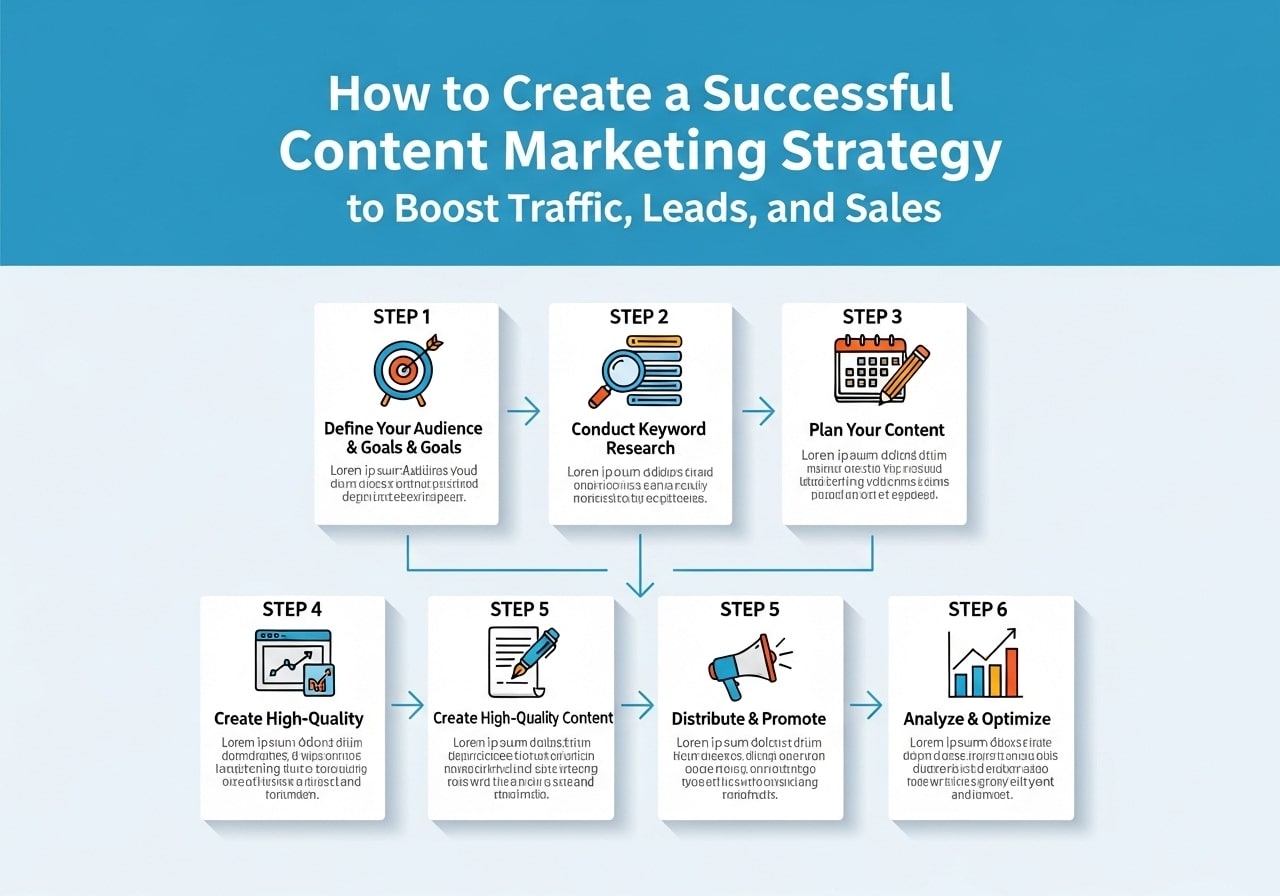
Building a successful content marketing strategy requires careful planning and consistent execution. Here’s your step-by-step guide:
Step 1: Define Your Goals
Start with clear, measurable objectives:
- Increase website traffic by 50% in six months
- Generate 100 new leads per month
- Build email list to 5,000 subscribers
- Improve brand awareness in target market
Step 2: Know Your Audience
Create detailed customer profiles including:
- Demographics and job roles
- Pain points and challenges
- Preferred content formats
- Where they spend time online
- Questions they ask before buying
Step 3: Content Planning and Strategy Development
Content marketing strategy and planning involves:
- Content Calendar: Schedule posts across different platforms
- Topic Research: Use tools like Google Keyword Planner to find relevant subjects
- Format Variety: Mix blog posts, videos, infographics, and podcasts
- Distribution Channels: Choose platforms where your audience is active
Step 4: Content Creation Framework
Follow this process for consistent quality:
- Research your topic thoroughly
- Create compelling headlines
- Write in your brand voice
- Include relevant keywords naturally
- Add visual elements
- End with clear calls to action
Step 5: Publishing and Promotion
Content marketing distribution strategy is crucial:
- Share on social media platforms
- Send to email subscribers
- Reach out to industry influencers
- Submit to relevant online communities
- Consider paid promotion for top-performing content
Content Marketing Success Stories and Examples
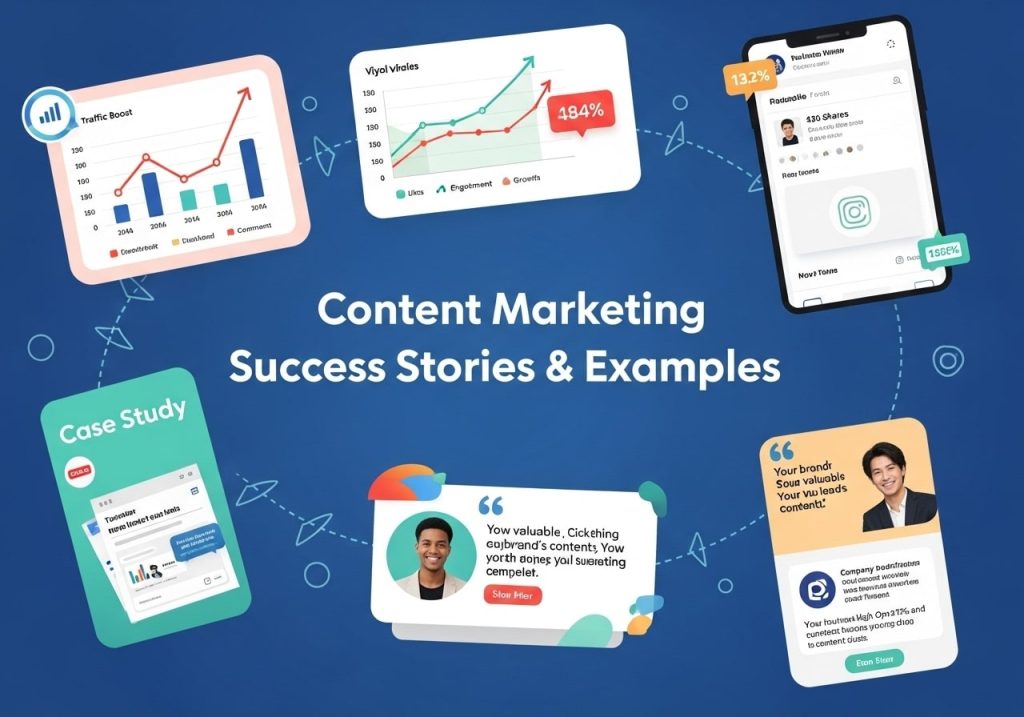
Learning from successful content marketing examples can inspire your own strategy. Here are notable cases:
HubSpot’s Educational Approach
HubSpot built their business by teaching marketing and sales through:
- Free online courses and certifications
- Comprehensive blog covering industry topics
- Downloadable templates and guides
- Regular webinars and events
Their content marketing strategy focused on education first, sales second. This approach established them as industry experts and generated thousands of leads.
Coca-Cola’s Emotional Storytelling
Content marketing strategy of Coca Cola centers on happiness and human connections:
- “Share a Coke” personalized bottles
- Feel-good video campaigns
- User-generated content initiatives
- Community-focused local campaigns
Apple’s Product-Focused Content
Content marketing strategy of Apple emphasizes simplicity and innovation:
- Clean, minimalist design in all content
- Product demonstration videos
- Customer success stories
- Behind-the-scenes development content
B2B Success: Salesforce
Their b2b content marketing strategy includes:
- Industry-specific case studies
- Thought leadership articles from executives
- Customer success stories
- Technical documentation and tutorials
Measuring Content Marketing Success
How to measure content marketing success depends on your specific goals, but these methods work across industries:
Google Analytics Setup
Track these essential metrics:
- Organic Traffic: Shows content discovery through search
- Bounce Rate: Indicates content relevance and quality
- Pages Per Session: Reveals content engagement depth
- Goal Completions: Measures conversion actions
Social Media Analytics
Monitor engagement across platforms:
- Likes, shares, and comments
- Click-through rates to your website
- Follower growth over time
- Reach and impressions data
Email Marketing Metrics
For content delivered via email:
- Open rates and click rates
- Unsubscribe rates
- Forward rates
- List growth statistics
Lead Generation Tracking
Content marketing kpis for lead generation:
- Form completion rates
- Download rates for gated content
- Webinar attendance numbers
- Demo request volumes
The Role of Visual Content in Marketing Success
Where is visual content marketing most successful and applicable? Visual content works particularly well on:
Social Media Platforms
- Instagram and Pinterest for lifestyle brands
- LinkedIn for professional B2B content
- Facebook for community building
- TikTok and YouTube for entertainment
Website and Blog Content
- Infographics for complex information
- Product photos and demonstrations
- Video tutorials and explanations
- Interactive content like quizzes
Video content marketing has become especially important as:
- Videos get higher engagement than text alone
- People prefer watching over reading for many topics
- Mobile users consume video content easily
- Search engines favor pages with video content
B2B vs B2C Content Marketing Strategies
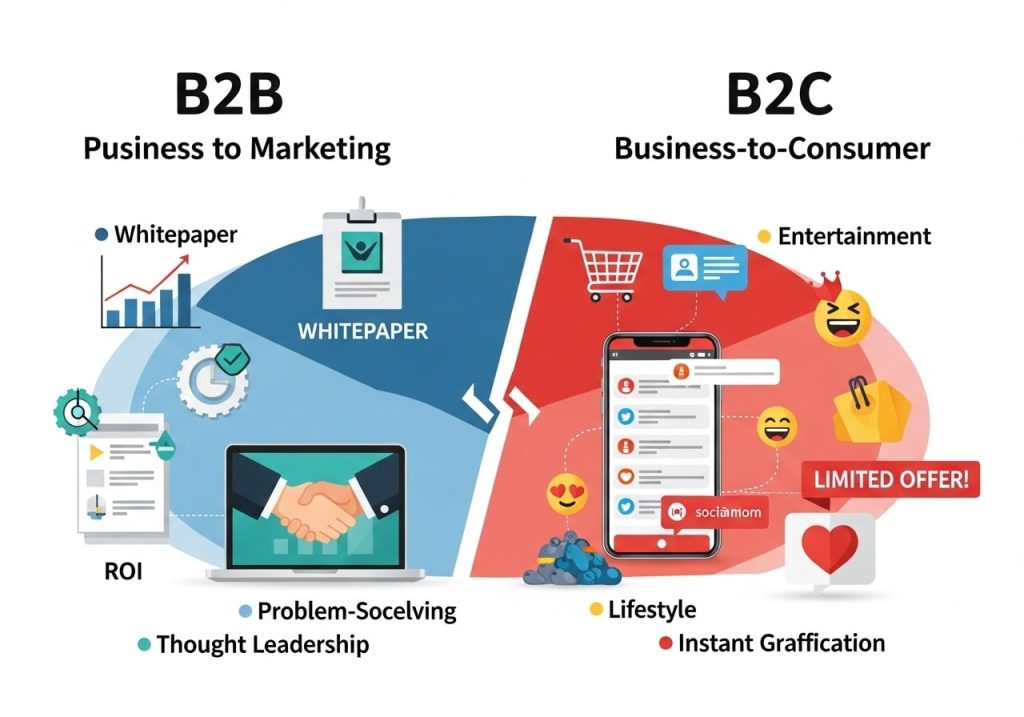
B2b content marketing strategy focuses on:
- Educational Content: White papers, case studies, industry reports
- Thought Leadership: Executive insights and expert opinions
- Problem-Solving: Addressing specific business challenges
- Long Sales Cycles: Nurturing leads over extended periods
- Multiple Decision Makers: Content for different stakeholder needs
Successful B2B content often includes:
- Technical documentation
- ROI calculators and tools
- Customer testimonials and case studies
- Industry trend analyses
B2C Content Marketing Examples
B2c content marketing examples include:
- Entertainment Value: Engaging, shareable content optimization
- Lifestyle Focus: How products fit into daily life
- Emotional Appeals: Stories that create feelings
- Quick Decisions: Content supporting impulse purchases
- Visual Heavy: Images and videos over text
Content Marketing for Different Industries
Ecommerce Content Marketing Strategy
E-commerce content marketing strategy should include:
- Product Guides: How to choose the right item
- User-Generated Content: Customer photos and reviews
- Seasonal Content: Holiday and event-focused material
- Comparison Articles: Product versus product analysis
- Behind-the-Scenes: Company culture and values content
E-commerce content marketing works best when it:
- Answers pre-purchase questions
- Shows products in real-world use
- Builds trust through transparency
- Provides post-purchase value
Financial Services Content Marketing
Content marketing strategy financial services companies use:
- Educational articles about money management
- Market analysis and economic insights
- Customer success stories and testimonials
- Regulatory updates and compliance information
- Tools like calculators and planning guides
Small Business Content Marketing
Content marketing strategy for small business should focus on:
- Local SEO and community content
- Personal stories and founder insights
- Customer spotlights and testimonials
- Practical tips related to your industry
- Behind-the-scenes business operations
Future of Content Marketing
What is the future of content marketing? Several trends are shaping the industry:
Artificial Intelligence Integration
Content marketing strategy ai applications include:
- Automated content generation for basic topics
- Personalization at scale
- Content performance prediction
- Audience behavior analysis
- Chatbots for content distribution
Interactive Content Growth
Future content will be more:
- Interactive and engaging
- Personalized to individual users
- Voice and audio-focused
- Video and visual-heavy
- Community and discussion-oriented
Privacy and Data Changes
Content strategies must adapt to:
- Reduced cookie tracking
- Increased privacy regulations
- First-party data importance
- Direct relationship building
- Transparent data practices
Taking Action on Your Content Marketing Success
Creating content marketing success requires consistent effort, strategic planning, and continuous improvement. Start by defining clear goals, understanding your audience, and creating valuable content that addresses their needs. Remember that successful content marketing isn’t about perfection from day one – it’s about learning, adapting, and growing your expertise over time.
The most important step is to begin. Choose one or two content formats, create a simple publishing schedule, and start providing value to your audience. Track your results, learn from what works, and gradually expand your efforts as you see positive outcomes.
Content marketing success is within reach for any business willing to commit to serving their audience with helpful, relevant content. Start your journey today, and watch as your consistent efforts build lasting relationships and drive meaningful business growth.