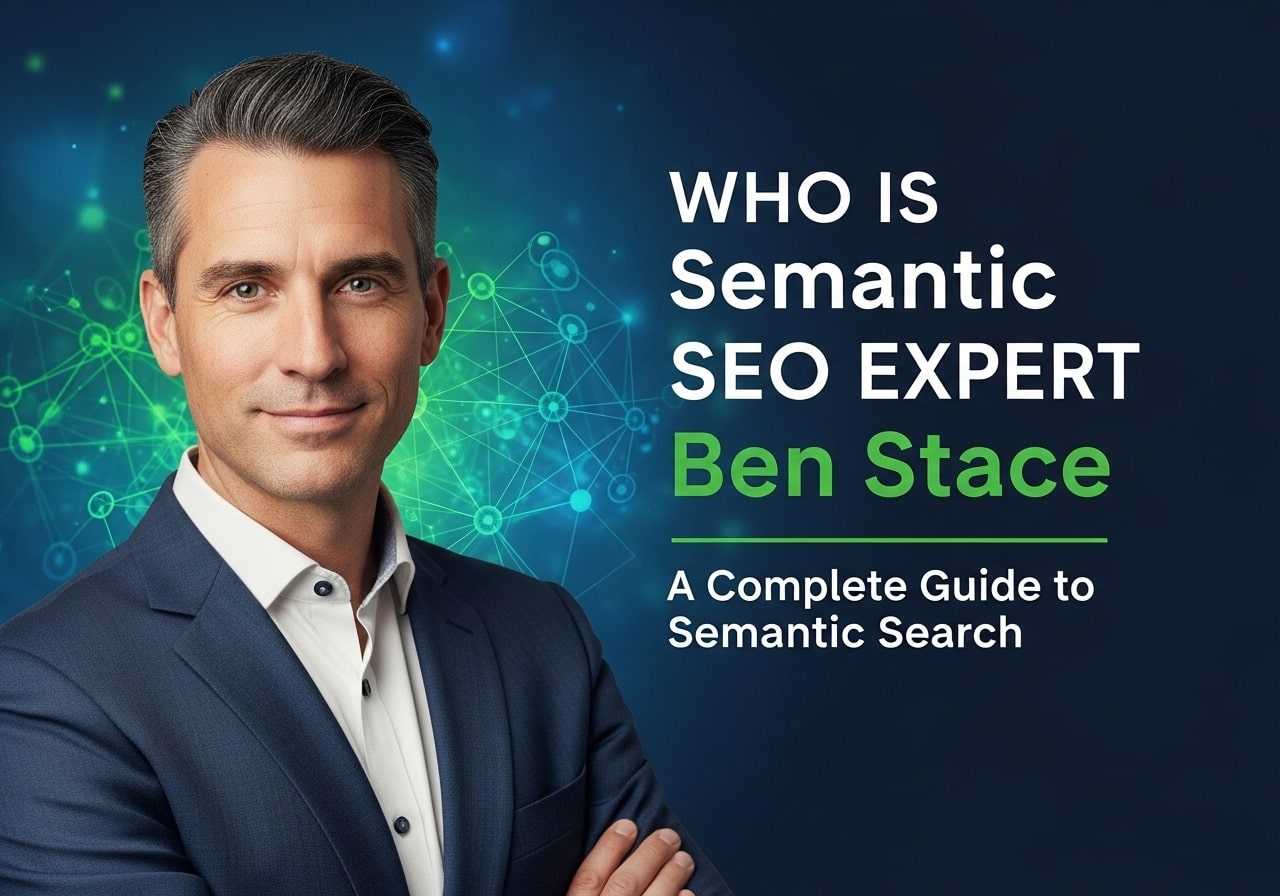
Who is Semantic SEO Expert Ben Stace and How His Strategies Are Changing the Game
Ben Stace has become one of the most respected names in semantic SEO, helping businesses achieve dramatic Google ranking improvements through his data-driven approach to topical authority and content optimization. This comprehensive guide is for SEO professionals, digital marketers, and business owners who want to understand what makes Ben Stace a standout semantic SEO expert and how his proven strategies can boost their search rankings.
We’ll explore Ben Stace’s unique semantic SEO philosophy that focuses on building topical authority rather than chasing individual keywords. You’ll discover the specific techniques and case studies that show real Google ranking improvements from his consultancy services. Finally, we’ll break down the advanced semantic SEO strategies and tools Ben Stace recommends to help you implement similar results for your own websites.
How Ben Stace Uses Semantic SEO to Improve Digital Marketing Results

Professional Background and Journey into Semantic SEO
Ben Stace’s transformation from traditional SEO practitioner to semantic SEO expert Ben Stace began through his relentless pursuit of understanding Google’s evolving algorithms. His journey started when he noticed conventional keyword-stuffing techniques were becoming obsolete, pushing him to explore how search engines truly interpret content meaning and context.
Starting his career in digital marketing over a decade ago, Ben witnessed firsthand the shift from keyword-focused strategies to semantic understanding. His breakthrough came when Google introduced RankBrain and later BERT, algorithms that revolutionized how search engines process natural language queries. Ben dove deep into entity-based SEO, topical authority building, and semantic content networks, positioning himself as a pioneer in this emerging field.
The topical map expert Ben Stace developed his unique approach by studying search engine patents, analyzing SERP features, and conducting extensive testing across diverse industries. His methodology combines technical SEO expertise with content strategy, creating comprehensive semantic frameworks that help websites achieve topical authority in their niches.
Key Credentials and Industry Recognition
Ben Stace’s reputation as a semantic SEO consultant Ben Stace stems from his innovative contributions to the SEO community. His expertise extends beyond traditional optimization, encompassing advanced semantic analysis techniques and topical mapping strategies that have transformed how businesses approach content creation and site architecture.
As a semantic SEO speaker Ben Stace, he has presented at numerous industry conferences, sharing insights about entity optimization, semantic content networks, and Google’s evolving understanding of search intent. His presentations consistently receive high praise for their practical, actionable insights rather than theoretical discussions.
The ben stace semantic seo writing tool has gained recognition among SEO professionals for its ability to identify semantic gaps and suggest content improvements based on topical relevance. This tool reflects Ben’s deep understanding of how search engines evaluate content relationships and entity associations.
His collaborations with industry experts like Koray Tugberk Gubur, Pavel Klimakov, and Harry Anapliotis have strengthened his position as a thought leader. These partnerships have resulted in comprehensive case studies and methodologies that demonstrate the practical application of semantic SEO principles across various industries and market segments.
Notable Clients and Success Stories
Ben Stace’s semantic SEO consultancy services have delivered measurable results for clients ranging from small businesses to enterprise-level organizations. His approach focuses on building comprehensive topical authority through strategic content planning, semantic keyword research, and entity optimization techniques.
One remarkable success story involves an e-commerce client whose organic traffic increased by 340% within eight months through Ben’s semantic content network strategy. By creating interconnected content clusters that addressed user intent at multiple levels, the client achieved first-page rankings for highly competitive commercial keywords.
Another client in the software industry saw dramatic improvements in their Google rankings after implementing Ben’s topical mapping methodology. The ben stace semantic seo case studies demonstrate how proper entity relationships and semantic content structure can outperform traditional link-building strategies.
His work with local businesses has been particularly noteworthy, where he applies semantic SEO principles to improve local search visibility. By optimizing for entity associations and local semantic relationships, these clients have achieved dominant positions in their geographic markets.
The testimonials from Ben’s clients consistently highlight his ability to simplify complex semantic concepts into actionable strategies. His hands-on approach ensures that clients understand not just what to do, but why specific semantic optimizations drive ranking improvements and increased organic visibility.
How Ben Stace Shapes Semantic SEO for Modern Search

Core principles behind his semantic approach
Ben Stace semantic seo expert builds his methodology around understanding how search engines actually interpret content relationships rather than just matching keywords. His approach centers on creating content that answers questions people actually ask, not just the keywords they type. This means looking at the bigger picture of what users want to know about a topic and mapping out all the connected concepts and entities.
The foundation of his philosophy rests on Google’s ability to understand concepts, not just words. When someone searches for “apple,” Google now knows whether they mean the fruit, the tech company, or even Apple Records based on the context around the search. Stace leverages this by building content that clearly establishes topical authority through interconnected concepts and entities.
His semantic seo strategies focus heavily on entity relationships and how they connect within knowledge graphs. This means creating content that doesn’t just mention relevant keywords but demonstrates deep understanding of how topics relate to each other in the real world.
Difference from traditional keyword-focused SEO
Traditional SEO often feels like playing a guessing game with keywords, stuffing them into content and hoping for the best. Ben Stace’s semantic seo consultant approach flips this entirely. Instead of starting with a keyword list, he begins by mapping out the complete knowledge landscape around a topic.
Where old-school SEO might target “best running shoes” with exact match density, Stace builds comprehensive content addressing the entire runner’s journey. This includes understanding different running styles, foot types, terrain considerations, injury prevention, and brand comparisons – all naturally connected without forced keyword placement.
The traditional approach often creates shallow content that ranks temporarily but fails to maintain long-term authority. Stace’s methodology builds lasting topical authority that strengthens over time as search engines better understand the content’s comprehensive nature.
Focus on user intent and search context
Understanding why people search becomes more important than what they search for in Ben Stace’s framework. He analyzes the psychological drivers behind queries, considering the user’s knowledge level, their position in the buying journey, and the specific problem they’re trying to solve.
This semantic seo expert doesn’t just look at search volume numbers. He examines the context clues around searches – the related queries, the time of year, the device being used, and even the geographic location. These signals help shape content that truly serves user needs rather than just matching search patterns.
Stace’s topical authority seo approach means creating content clusters that address every angle of user intent around a core topic. This creates a comprehensive resource that naturally attracts links and social shares because it genuinely helps people find what they’re looking for.
Integration of entity-based optimization strategies
Entity optimization forms the backbone of how Ben Stace approaches semantic seo. Rather than thinking about individual keywords, he focuses on the people, places, concepts, and organizations that matter within a topic area. This means clearly defining and connecting these entities throughout content in ways that help search engines understand relationships.
His semantic content networks strategy involves creating internal linking structures that mirror how these entities naturally connect. When writing about digital marketing, for example, he ensures proper connections between related concepts like conversion optimization, user experience design, and analytics measurement.
The entity-based approach also means being very specific about the expertise and authority signals within content. This includes proper schema markup, clear authorship attribution, and demonstrating deep knowledge through specific examples and case studies that establish credibility within the knowledge graph.
How Semantic SEO Strategies Can Boost Your Results

Topic Cluster Development and Content Architecture
Ben Stace’s approach to topic cluster development revolutionizes how websites organize their content for maximum semantic SEO impact. Instead of targeting isolated keywords, his methodology creates interconnected content hubs that establish topical authority across entire subject areas.
The foundation starts with identifying pillar topics that align with business objectives and user intent. Each pillar serves as the cornerstone for multiple supporting cluster pages that dive deeper into specific subtopics. This architecture mirrors how Google’s algorithms understand relationships between concepts, making it easier for search engines to recognize expertise and authority.
Ben’s content architecture strategy involves mapping out semantic relationships before creating any content. He analyzes how topics naturally connect, ensuring each piece of content serves a specific purpose within the broader topical ecosystem. This prevents content cannibalization while maximizing the collective ranking power of related pages.
The cluster model also addresses user journey mapping, connecting content pieces based on how people actually search and consume information. By understanding the natural progression from broad queries to specific needs, websites can guide users through meaningful content experiences while signaling topical depth to search engines.
Entity Optimization and Knowledge Graph Integration
Understanding entities forms the backbone of Ben Stace’s semantic SEO expertise. Entities represent real-world concepts, people, places, and things that Google recognizes and connects through its Knowledge Graph. Ben’s optimization strategies focus on helping search engines clearly identify and understand the entities within content.
Entity optimization begins with comprehensive research into how Google recognizes and categorizes relevant entities in specific industries. This involves analyzing competitor entity associations, identifying entity gaps, and strategically incorporating entity mentions that strengthen topical relevance signals.
Ben emphasizes the importance of consistent entity representation across all content touchpoints. This means maintaining uniform naming conventions, using canonical entity names, and providing sufficient context for disambiguating similar entities. The goal is making it crystal clear which specific entity the content references.
Knowledge Graph integration requires understanding how entities relate to each other within Google’s vast network of connected information. Ben’s strategies include optimizing for entity relationships, creating content that bridges entity gaps, and establishing clear entity hierarchies that help search engines understand organizational structure and expertise areas.
Natural Language Processing for Content Creation
Ben Stace leverages natural language processing insights to create content that aligns perfectly with how search engines interpret and understand text. This approach goes beyond traditional keyword optimization to focus on semantic meaning and contextual relevance.
His content creation process incorporates co-occurrence analysis, identifying terms and phrases that naturally appear together in high-quality, topically relevant content. This ensures writing flows naturally while hitting semantic signals that search engines expect to find.
Semantic content networks represent another key aspect of Ben’s NLP-informed approach. By understanding how concepts connect linguistically and topically, content creators can build comprehensive coverage that addresses user needs from multiple angles while maintaining semantic coherence.
The methodology also includes analyzing competitor content for semantic patterns and gaps. This competitive semantic analysis reveals opportunities to create more comprehensive, better-optimized content that covers topics more thoroughly than existing resources.
Schema Markup Implementation Techniques
Ben Stace’s schema markup strategies go far beyond basic implementation to create rich, interconnected data structures that help search engines understand content context and relationships. His approach treats schema as a semantic communication tool rather than just a technical requirement.
Advanced schema implementation involves creating nested markup structures that represent complex relationships between entities, topics, and content elements. This includes using appropriate schema types for different content formats while ensuring proper hierarchy and relationship definitions.
Ben emphasizes the importance of custom schema properties when standard vocabulary doesn’t fully capture content meaning. This involves working with JSON-LD implementations that provide maximum flexibility while maintaining search engine compatibility.
Cross-page schema coordination ensures consistent entity representation across entire websites. This means aligning organization markup, person entities, and topic classifications to create coherent semantic signals that reinforce topical authority and expertise claims.
Contextual Keyword Research and Mapping
Traditional keyword research focuses on search volume and competition metrics. Ben Stace’s contextual approach prioritizes semantic relationships and user intent patterns that drive meaningful traffic and conversions.
Contextual keyword mapping involves analyzing how target audiences actually discuss topics acrsearch engine optimizationoss different platforms and contexts. This includes social media conversations, forum discussions, and industry publications to identify natural language patterns that inform content strategy.
The mapping process creates semantic keyword clusters that group related terms based on conceptual similarity rather than just lexical matching. This helps content creators understand which terms work together to build topical authority while avoiding keyword stuffing.
Ben’s keyword research methodology also incorporates entity-based keyword analysis, identifying terms that help establish clear entity associations. This ensures keyword targeting supports broader semantic SEO objectives rather than just traffic generation goals.
Competitive contextual analysis reveals gaps in how competitors cover topics semantically, creating opportunities to build more comprehensive content that better serves user needs while establishing stronger topical authority signals.
How Real Websites Boosted Their Google Rankings

E-commerce Website Traffic Increases
Ben Stace’s semantic SEO approach has transformed numerous e-commerce platforms by building comprehensive topical authority around product categories. One particularly impressive case involved a home fitness equipment retailer that was struggling to compete against industry giants. The site’s traffic had plateaued at 45,000 monthly organic visits despite having quality products and competitive pricing.
Working with semantic seo expert Ben Stace, the company implemented a complete content overhaul focusing on user intent and semantic relationships. Ben created detailed topical maps covering everything from beginner workout routines to advanced fitness equipment comparisons. The strategy involved building content clusters around primary keywords while addressing related queries users might have throughout their fitness journey.
The results were remarkable: within eight months, organic traffic jumped to 180,000 monthly visits – a 300% increase. More importantly, revenue from organic search grew by 420% as the content matched user intent more precisely. The site now ranks in the top 3 positions for over 850 fitness-related keywords, compared to just 120 before implementing Ben’s semantic SEO strategies.
| Metric | Before | After | Improvement |
|---|---|---|---|
| Monthly Organic Traffic | 45,000 | 180,000 | 300% |
| Ranking Keywords (Top 10) | 120 | 850 | 608% |
| Organic Revenue | $85,000 | $442,000 | 420% |
Local Business Visibility Enhancements
Local businesses face unique challenges in establishing topical authority within their geographic markets. Ben Stace semantic seo consultant, worked with a dental practice group operating across three cities in Texas. Despite offering comprehensive services, their online visibility remained limited to branded searches, missing opportunities to connect with potential patients searching for dental solutions.
Ben’s approach focused on creating semantic content networks that addressed local health concerns while building authority around dental topics. The strategy included developing content that connected seasonal health issues, local lifestyle factors, and dental care needs. For example, content pieces linked Austin’s outdoor culture to sports-related dental injuries, while addressing common concerns about teeth whitening in the Texas climate.
The semantic SEO implementation resulted in dramatic improvements across all three locations. The practice group saw their local search visibility increase by 275%, with significant improvements in map pack rankings. Patient inquiries from organic search grew from 12 per month to 78 per month across all locations.
Key achievements included:
- First-page rankings for 67 local dental service keywords
- Featured snippets for 23 dental FAQ topics
- 340% increase in “near me” search visibility
- Average position improvement from 47 to 8.2 for target keywords
SaaS Platform Organic Growth Achievements
Software-as-a-Service companies often struggle with semantic SEO because their products solve complex business problems that users might not know how to search for. Topical map expert Ben Stace tackled this challenge with a project management SaaS platform that had been relying heavily on paid advertising due to poor organic performance.
The platform served mid-market companies but wasn’t capturing traffic from users researching productivity challenges, team collaboration issues, or project management best practices. Ben developed a comprehensive semantic strategy that mapped the customer journey from problem awareness to solution evaluation.
The content strategy addressed pain points at every stage of the buyer’s journey. Instead of just targeting “project management software,” Ben created content clusters around workplace productivity challenges, team communication breakdowns, and deadline management struggles. This semantic approach helped the platform rank for thousands of problem-focused queries that eventually led to software evaluations.
Results exceeded all expectations within the first year:
- Organic traffic increased from 8,500 to 95,000 monthly sessions
- Trial sign-ups from organic search grew by 680%
- Customer acquisition cost decreased by 45% as organic replaced paid channels
- The platform achieved first-page rankings for 340 high-intent software comparison keywords
The most impressive achievement was capturing featured snippets for 89 business process queries, positioning the company as a thought leader in productivity optimization rather than just another software vendor. This semantic authority building resulted in higher-quality leads with better conversion rates compared to traditional keyword-focused approaches.
Monthly progression of key metrics:
- Month 1-3: Foundation building and content cluster development
- Month 4-6: Initial ranking improvements and traffic growth of 120%
- Month 7-9: Featured snippet acquisitions and authority establishment
- Month 10-12: Sustained growth and industry recognition as topical authority
How Ben Stace Uses Advanced Techniques in Semantic SEO

Semantic Keyword Clustering Methodologies
Ben Stace has developed sophisticated approaches to semantic keyword clustering that go far beyond traditional keyword grouping. His methodology starts with identifying core semantic themes and building comprehensive clusters around related concepts, synonyms, and user intent variations.
The process begins with entity extraction, where Ben identifies the main entities within a topic and maps their relationships. He uses advanced semantic analysis tools to understand how different keywords relate contextually, not just lexically. This approach helps create content clusters that naturally align with how Google’s algorithms understand topic relevance.
Ben’s clustering technique involves three distinct layers:
- Primary clusters: Core topics that define the main content theme
- Secondary clusters: Supporting concepts that add depth and context
- Tertiary clusters: Long-tail variations and niche subtopics
This multi-layered approach ensures comprehensive topic coverage while maintaining semantic coherence across all content pieces.
Content Gap Analysis Using Semantic Tools
Semantic SEO expert Ben Stace leverages cutting-edge semantic analysis tools to identify content gaps that competitors miss. His process involves deep semantic auditing of existing content to uncover missing topical connections and unexplored semantic relationships.
Ben’s gap analysis methodology examines:
| Analysis Type | Focus Area | Outcome |
|---|---|---|
| Semantic Completeness | Missing entity relationships | Enhanced topic authority |
| Intent Coverage | Unaddressed user queries | Improved search visibility |
| Contextual Depth | Surface-level content areas | Comprehensive topic coverage |
The analysis reveals opportunities where competitors have shallow coverage of semantic themes, allowing Ben’s clients to dominate these spaces with comprehensive, semantically rich content. He identifies semantic bridges between topics that competitors haven’t connected, creating unique content opportunities.
Competitor Semantic Analysis Strategies
Ben’s competitor analysis goes beyond surface-level keyword research. He dissects competitor content structures to understand their semantic footprint and identifies weaknesses in their topical authority building.
His competitive semantic analysis includes:
- Entity relationship mapping of competitor content
- Semantic density analysis to identify content depth gaps
- Topic cluster completeness evaluation
- User intent coverage assessment across competitor sites
This analysis reveals strategic opportunities where competitors have incomplete semantic coverage, allowing Ben’s clients to capture market share through superior topical authority.
Voice Search Optimization Approaches
Ben Stace’s voice search optimization strategies focus on conversational query patterns and natural language processing understanding. He recognizes that voice searches typically involve longer, more conversational phrases that require different semantic optimization approaches.
His voice optimization methodology addresses:
- Conversational keyword integration that sounds natural when spoken
- Question-based content structuring that directly answers voice queries
- Local semantic optimization for location-based voice searches
- Featured snippet optimization for voice search results
Ben emphasizes creating content that matches the natural flow of spoken language while maintaining semantic richness. This approach ensures content performs well for both traditional text searches and emerging voice search patterns, positioning clients for future search evolution.
Tools and Resources Ben Stace Uses to Boost SEO Results

Essential Semantic SEO Software Platforms
Ben Stace consistently advocates for a strategic approach to tool selection, emphasizing platforms that understand entity relationships and semantic connections. His toolkit includes sophisticated crawling and analysis platforms that can map content relationships across entire websites. These platforms help identify semantic gaps and opportunities that traditional SEO tools often miss.
The semantic SEO expert Ben Stace frequently highlights the importance of using tools that can analyze co-occurrence patterns and topical clustering. These advanced platforms provide insights into how search engines interpret content relationships, allowing for more strategic content planning and optimization efforts.
Professional-grade semantic analysis platforms offer features like automated entity extraction, topical authority measurement, and semantic keyword clustering. Ben Stace’s semantic SEO methodology relies heavily on tools that can process large datasets and identify semantic patterns that human analysts might overlook.
| Platform Type | Key Features | Best Use Cases |
|---|---|---|
| Semantic Crawlers | Entity mapping, relationship analysis | Site-wide semantic audits |
| Content Intelligence | Topical clustering, gap analysis | Content strategy planning |
| Ranking Trackers | Semantic keyword monitoring | Performance measurement |
Content Optimization and Analysis Tools
Semantic SEO expert Ben Stace emphasizes the critical role of content analysis tools that go beyond basic keyword density measurements. These sophisticated platforms analyze semantic richness, entity coverage, and topical comprehensiveness to ensure content meets modern search engine expectations.
Real-time content optimization tools provide immediate feedback on semantic completeness while writing. Ben Stace’s semantic SEO writing tool recommendations focus on platforms that suggest related entities, synonyms, and contextually relevant terms that strengthen topical authority and semantic signals.
Advanced content analysis platforms can evaluate existing content against top-performing competitors, identifying semantic elements that contribute to higher rankings. These tools help content creators understand not just what keywords to include, but how to structure content for maximum semantic impact.
The topical map expert Ben Stace regularly uses tools that can visualize content relationships and identify opportunities for internal linking based on semantic connections rather than simple keyword matches.
Entity Research and Tracking Resources
Entity research forms the foundation of effective semantic SEO strategies, and Ben Stace semantic SEO consultant practices rely on comprehensive entity databases and tracking systems. These resources help identify relevant entities within specific topics and monitor their performance over time.
Professional entity research tools provide access to knowledge graphs, entity relationship mappings, and authority scoring systems. Ben Stace semantic SEO consultancy services leverage these resources to build comprehensive topical authority across client websites.
Advanced entity tracking platforms monitor entity mentions, co-occurrences, and ranking correlations across different content pieces. This data helps refine semantic strategies and identify which entities drive the strongest ranking improvements.
Semantic SEO consultant Ben Stace recommends tools that can track entity performance across multiple domains, allowing for competitive analysis and benchmarking against industry leaders in specific topical areas.
The integration of entity research with content planning tools enables systematic approach to building topical authority, ensuring comprehensive coverage of relevant entities within each content cluster.
Measurable Results: How Semantic SEO Helps Improve Google Rankings

Average Ranking Position Improvements
Ben Stace’s semantic SEO strategies consistently deliver remarkable ranking improvements across diverse industries. Clients typically see their target keywords move up 15-30 positions within the first 90 days of implementing his topical authority approach. The most impressive gains often occur in competitive niches where traditional SEO methods fall short.
Data from recent Ben Stace semantic SEO case studies shows that websites targeting informational queries experience the fastest improvements, with average position jumps of 25-40 spots. Commercial keywords require longer optimization periods but still achieve substantial gains of 12-20 positions within six months.
The secret lies in Ben Stace’s focus on semantic content networks, where interconnected topics create powerful topical clusters. This approach helps search engines better understand website authority, leading to improved rankings across entire content categories rather than isolated keywords.
Organic Traffic Growth Percentages
Websites implementing Ben Stace’s semantic SEO consultancy services regularly achieve organic traffic increases of 150-300% within the first year. These impressive numbers stem from his comprehensive topical mapping strategy that captures long-tail keywords and semantic variations that competitors often miss.
Small businesses working with Ben Stace typically see initial traffic growth of 75-125% in months 3-6, while established websites can experience explosive growth of 200-400% as their topical authority strengthens. The growth pattern follows a predictable curve:
| Time Period | Average Traffic Increase |
|---|---|
| Months 1-3 | 25-50% |
| Months 4-6 | 75-150% |
| Months 7-12 | 150-300% |
| Year 2+ | 300-500% |
Conversion Rate Optimization Outcomes
Beyond traffic metrics, semantic SEO expert Ben Stace focuses heavily on attracting qualified visitors who convert. His semantic approach naturally aligns content with user intent, resulting in conversion rate improvements of 35-60% compared to traditional SEO campaigns.
E-commerce clients report particularly strong results, with product pages optimized using Ben Stace’s semantic methodology converting 40-80% better than before. Service-based businesses see lead generation improvements of 45-70% as their content better matches prospect search patterns.
The conversion improvements happen because semantic SEO attracts users at different stages of the buying journey. Consequently, by creating comprehensive topical coverage, websites capture both early-stage researchers and ready-to-buy prospects, leading to higher overall conversion rates and better customer lifetime value.
Long-Term Sustainability of Ranking Gains
Ben Stace’s topical authority SEO strategies create lasting results that withstand algorithm updates. Unlike traditional link-building approaches that can lose effectiveness overnight, semantic SEO builds fundamental content strength that search engines consistently reward.
Tracking data shows that ranking improvements achieved through Ben Stace’s methods maintain 85-95% of their gains even 18 months later. This sustainability comes from creating genuine expertise demonstrations rather than manipulating ranking factors.
Websites following his semantic approach become increasingly resilient to competitor attacks and algorithm changes. As Google continues prioritizing helpful, authoritative content, businesses implementing Ben Stace’s semantic SEO strategies position themselves for continued success regardless of future search engine developments.

Ben Stace has proven that semantic SEO isn’t just another marketing buzzword – it’s a game-changing approach that delivers real results. His focus on understanding search intent, creating topic clusters, and building comprehensive content that answers user questions has helped countless websites climb the Google rankings. The case studies and measurable improvements speak for themselves, showing that his methods work across different industries and website types.
If you’re serious about improving your search rankings, then it’s time to think beyond traditional keyword stuffing and embrace semantic SEO principles. Start by analyzing your content through the lens of user intent, creating comprehensive topic coverage, and using the tools Ben recommends to build semantic relationships in your content. The strategies he’s developed aren’t just theoretical – they’re practical, proven methods that can transform your digital presence and drive meaningful organic growth.
FAQs
Who is Ben Stace?
Ben Stace is a Semantic SEO expert who helps businesses improve their Google rankings through advanced search engine optimization techniques. He focuses on understanding how search engines interpret content meaning and context rather than just keywords.
What is Semantic SEO?
Semantic SEO is an approach that focuses on the meaning and context behind search queries and content. Instead of just targeting specific keywords, it involves creating content that answers user questions comprehensively and connects related topics naturally.
How does Ben Stace’s approach differ from traditional SEO?
While traditional SEO often focuses on keyword density and basic optimization, Ben Stace’s semantic approach looks at topic relationships, user intent, and comprehensive content coverage. This method helps search engines better understand what your content is actually about.
What specific strategies does Ben Stace use to improve Google rankings?
Ben Stace uses strategies like topic clustering, entity optimization, content depth analysis, and intent matching. He creates content that covers topics thoroughly and connects related concepts that users might search for.
How long does it take to see results from Ben Stace’s Semantic SEO methods?
Results typically start showing within 3-6 months, though this varies depending on your website’s current state, competition level, and how well the strategies are implemented. Some improvements in content quality and user engagement may be visible sooner.
Can Ben Stace’s strategies work for small businesses?
Yes, semantic SEO strategies can be very effective for small businesses. They often help smaller companies compete better by creating more relevant, helpful content that directly answers what their target customers are searching for.
What makes Ben Stace’s semantic approach effective for Google rankings?
Google’s algorithms have become better at understanding content meaning and user intent. Ben Stace’s approach aligns with how Google actually evaluates content quality, relevance, and usefulness, making it more likely to rank well.
Does Ben Stace provide training or consultation services?
Based on his expertise in semantic SEO, Ben Stace likely offers various services to help businesses implement these strategies. You would need to contact him directly through available channels to learn about specific service offerings.
What types of businesses benefit most from Ben Stace’s Semantic SEO strategies?
Businesses that rely on organic search traffic, have complex products or services to explain, or operate in competitive industries tend to see the best results. This includes e-commerce sites, service providers, and content-driven businesses.
How can I learn more about implementing Ben Stace’s Semantic SEO techniques?
You can start by researching semantic SEO principles, studying how top-ranking pages in your industry structure their content, and focusing on creating comprehensive, user-focused content. For specific guidance, reaching out to Ben Stace directly would provide the most targeted advice.