Your local business’s online visibility depends heavily on how well you manage your business listings across the web. Local SEO listing management is the process of claiming, optimizing, and maintaining your business information on directories like Google My Business, Yelp, and dozens of other platforms that help customers find you.
This guide is designed for small business owners, digital marketers, and service-based businesses who want to improve their local search rankings and attract more customers in their area. You’ll learn practical strategies that work for everything from restaurants and retail stores to plumbers, dentists, and other service area businesses.
We’ll walk you through the essential platforms where your business needs to appear, starting with Google My Business and expanding to industry-specific directories that matter most for your business type. You’ll also discover how to maintain NAP consistency (your business name, address, and phone number) across all listings, which search engines use as a trust signal when ranking local businesses.
Finally, we’ll cover review management strategies that turn customer feedback into a competitive advantage and show you how to track your progress with metrics that actually matter for local search success.
Understanding Local SEO Listing Fundamentals

What Local Business Listings Are and Why They Matter
Local business listings are digital profiles that display your company’s essential information across various online directories, search engines, and platforms. Think of them as your business’s digital calling card – they include your business name, address, phone number, website, hours of operation, and often customer reviews and photos.
Local seo listing management has become the backbone of modern business visibility. These listings appear on platforms like Google My Business, Yelp, Facebook, Apple Maps, and hundreds of other directories that customers use daily to find services and products. When someone searches for “plumber near me” or “best pizza in Manchester,” these listings determine which businesses show up first.
The power of local business listings extends beyond simple directory placement. They create a web of credible information about your business that search engines use to verify your legitimacy and relevance. Every listing acts as a digital endorsement, telling search engines that your business exists, operates in specific locations, and serves real customers.
For service-based businesses, listings become even more critical. Unlike retail stores with physical storefronts, service companies rely heavily on digital discovery. Local seo for service area businesses depends on robust listing profiles that clearly communicate service areas, specialties, and availability.
Modern consumers expect instant access to business information. They want to know if you’re open, how to contact you, what others say about your services, and how to reach your location. Local listings provide this information at the exact moment potential customers need it most.
How Search Engines Use Local Listings for Rankings
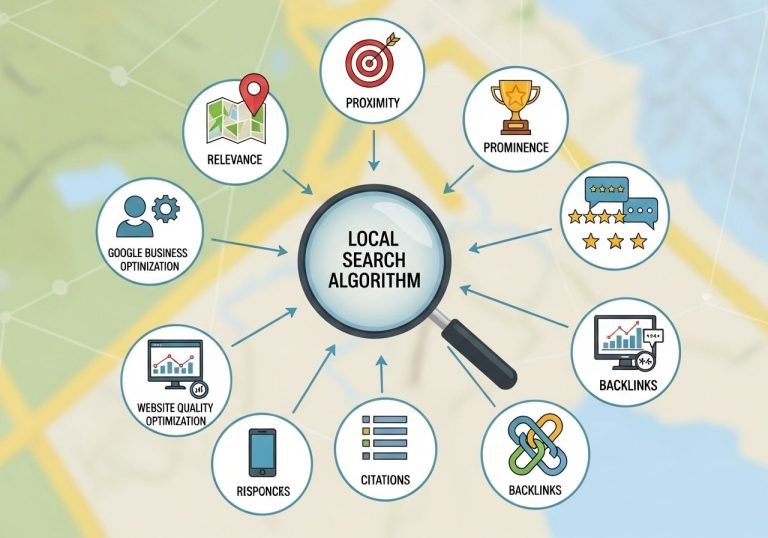
Search engines have transformed local listings into ranking signals that directly impact where your business appears in search results. Google’s algorithm considers listing consistency, completeness, and engagement as key factors when determining local seo local listings rankings.
Google local seo for service area businesses operates on a sophisticated system that evaluates multiple signals from your listings:
| Ranking Factor | Impact Level | What Search Engines Evaluate |
|---|---|---|
| NAP Consistency | High | Name, Address, Phone matching across platforms |
| Listing Completeness | High | All fields filled with accurate information |
| Review Quantity & Quality | Very High | Number of reviews and average rating |
| Engagement Signals | Medium | Clicks, calls, direction requests |
| Category Relevance | High | Proper business category selection |
Search engines cross-reference information from your listings with data from other sources. When they find consistent information across multiple platforms, they gain confidence in your business’s authenticity and relevance. This confidence translates into higher rankings and increased visibility.
The algorithm also weighs the authority of different listing platforms differently. A complete Google My Business profile carries more weight than a basic directory listing, but having presence across multiple reputable platforms creates a stronger overall signal.
Local listing optimization services focus on these algorithmic preferences, ensuring that businesses maximize their ranking potential through strategic listing management.
The Direct Connection Between Listings and Customer Discovery
The relationship between well-managed listings and customer acquisition is remarkably direct. Studies show that 97% of consumers use online search to find local businesses, and 88% of mobile searches for local information result in a call or visit within 24 hours.
Your listings serve as the first impression for potential customers. When someone finds your business through search, they quickly scan your listing for trust signals: recent positive reviews, complete contact information, professional photos, and up-to-date business hours. Missing or outdated information often sends customers straight to competitors.
Local seo examples demonstrate this connection clearly. Restaurants with complete listings including menus, photos, and current hours see 70% more customer visits than those with basic information only. Service businesses with detailed service descriptions and service area information generate 45% more qualified leads.
The discovery process follows a predictable pattern:
- Customer searches for a product or service
- Search engine displays relevant local listings
- Customer evaluates options based on listing information
- Customer contacts or visits the business
What is local listing management becomes clear when you realize that each step in this discovery process depends on your listing quality. Poor listings break the chain and lose customers before they ever contact you.
Mobile search adds another layer of urgency to this discovery process. When people search on mobile devices, they typically want immediate answers and quick access to contact information. Well-optimized listings provide click-to-call buttons, driving directions, and instant access to reviews – exactly what mobile searchers need to make fast decisions.
Essential Platforms for Maximum Local Visibility

Google Business Profile Setup and Optimization
Google Business Profile stands as the cornerstone of local seo listing management, serving as your digital storefront for local search results. Creating a comprehensive profile starts with claiming your business listing and verifying your ownership through Google’s verification process. Once verified, optimize every field available – business name, address, phone number, website URL, business hours, and category selection.
The description section allows up to 750 characters to showcase what makes your business unique. Include relevant local seo keywords naturally while highlighting your services, specialties, and value proposition. Upload high-quality photos of your storefront, interior, products, team, and completed work. Visual content significantly impacts local search rankings and customer engagement.
Regular posting keeps your profile active and demonstrates business vitality. Share updates about new services, promotions, events, or company news. Google Posts appear directly in search results and can drive additional traffic to your website or physical location.
Enable messaging features to allow direct customer communication through your Google Business Profile. This creates another touchpoint for potential customers and can improve conversion rates for service-based businesses.
Bing Places for Business and Yahoo Local Listings
While Google dominates local search, Bing Places for Business captures a significant portion of search traffic, particularly among certain demographics and geographic regions. The platform offers similar optimization opportunities as Google Business Profile but with less competition, making it easier to achieve prominent placement in local search results.
Creating your Bing Places listing follows a straightforward process. Claim your business, verify ownership, and populate all available fields with consistent NAP information. Bing allows more detailed business descriptions and accepts a wider variety of business categories, giving you additional opportunities to target specific local seo keywords.
Yahoo Local Listings, while having smaller market share, still contributes to your overall local listing management strategy. Many business directories and citation sources pull information from Yahoo, making it a valuable secondary platform for maintaining consistent business information across the web.
Both platforms support customer reviews, photos, and business updates. The reduced competition on these platforms often means higher visibility for the same optimization efforts required on Google.
Industry-Specific Directory Submissions
Industry-specific directories provide targeted visibility within your business sector while building valuable citations for local seo. These specialized platforms often carry more weight with search engines due to their topical relevance and authority within specific industries.
For service-based businesses, directories like Angie’s List, HomeAdvisor, and Thumbtack connect you directly with customers actively seeking your services. Professional service providers benefit from platforms like Avvo for legal services, Healthgrades for healthcare, or TripAdvisor for hospitality businesses.
Research directories that your competitors use and where your target customers typically search for businesses like yours. Quality matters more than quantity – focus on authoritative directories with strong domain authority and active user bases rather than submitting to hundreds of low-quality sites.
Maintain consistent business information across all directory submissions. Any discrepancies in NAP data can confuse search engines and negatively impact your local search rankings. Use local listing management software to streamline this process and monitor consistency across multiple platforms.
Social Media Platform Business Profiles
Social media profiles serve dual purposes in local seo strategy – they act as citation sources while providing direct customer engagement opportunities. Facebook Business Pages offer robust local features including location services, customer reviews, and event promotion capabilities.
Complete your Facebook profile with accurate business information, including your address, phone number, hours, and website. Enable location services and encourage customers to check in at your business location. Regular posting and customer interaction signals to search engines that your business is active and engaging.
Instagram Business profiles provide location tagging features and local hashtag opportunities. Use location-specific hashtags and geotag your posts to increase visibility within your service area. Stories featuring your location can appear in location-based story collections.
LinkedIn Business pages work particularly well for B2B service providers and professional services. Complete your company page with detailed service descriptions and location information. LinkedIn’s local search functionality helps potential clients find businesses within their geographic area.
Twitter profiles contribute to your overall online presence and citation profile. Include location information in your bio and use local hashtags in relevant tweets. Engage with local community discussions and events to build local relevance signals.
Optimizing Your Business Information for Search Success

Crafting Compelling Business Descriptions with Keywords
Your business description serves as the digital storefront that potential customers encounter first. This critical piece of content needs to strike the perfect balance between informative and engaging while naturally incorporating local SEO keywords. Start by highlighting your unique value proposition within the first 50 words, then expand into specific services, expertise, and what sets you apart from competitors.
When writing descriptions for service area businesses, focus on the problems you solve rather than just listing services. For example, instead of simply stating “plumbing services,” describe how you “provide emergency plumbing repairs and preventative maintenance to keep homes and businesses running smoothly.” This approach naturally incorporates relevant keywords while speaking directly to customer pain points.
Geographic relevance plays a huge role in local listing optimization. Mention your service areas, neighborhoods you serve, and local landmarks where appropriate. This helps search engines understand your service radius and connects you with nearby customers. For multi-location businesses, customize descriptions for each location while maintaining brand consistency.
Keep descriptions between 150-300 words for most platforms, though Google My Business allows up to 750 characters. Use active voice, avoid industry jargon, and include a clear call-to-action. Regular updates to your descriptions can signal freshness to search algorithms and keep content relevant to seasonal services or new offerings.
Selecting the Right Business Categories and Attributes
Business categories and attributes act as fundamental signals that help search engines understand what you do and match you with relevant searches. Google My Business offers primary and additional categories, with the primary category carrying the most weight for local SEO rankings. Choose the most specific category that accurately describes your core business function rather than selecting broad, generic options.
Research shows that businesses with properly selected categories receive 30% more visibility in local search results. For service-based businesses, avoid location-specific categories unless you operate from a physical storefront that customers visit. Instead, focus on service-type categories that reflect your actual business model.
Attributes provide additional context about your business operations and can significantly impact customer decision-making. These include details like:
- Business hours and availability
- Payment methods accepted
- Accessibility features
- Service options (online estimates, emergency services)
- Special features (women-owned, veteran-owned)
Different platforms offer varying attribute options, so customize your selections based on each platform’s available choices. Yelp, for instance, provides extensive attribute options for restaurants, while Facebook focuses more on service-related attributes for local businesses.
Review your categories and attributes quarterly to ensure they remain accurate and take advantage of new options as platforms expand their offerings.
Adding High-Quality Photos and Virtual Tours
Visual content directly impacts customer engagement and conversion rates in local listings. Businesses with photos receive 42% more requests for directions and 35% more click-throughs to their websites compared to those without images. This makes photo optimization a critical component of local listing management.
Start with exterior shots that help customers identify your location, then move to interior photos showcasing your workspace, team, and services in action. For service area businesses without physical storefronts, focus on photos of your team, equipment, completed projects, and behind-the-scenes work processes. These images build trust and demonstrate professionalism.
Photo specifications vary by platform, but generally aim for:
- High resolution (minimum 720×720 pixels)
- Good lighting and sharp focus
- Horizontal orientation for cover photos
- Consistent branding across images
Virtual tours and 360-degree photos provide immersive experiences that keep potential customers engaged longer. Google Street View integration and virtual walkthroughs can set your listing apart from competitors, especially for businesses where the physical environment influences customer decisions.
Update photos regularly to reflect seasonal changes, new services, or facility improvements. Fresh visual content signals active business management and can improve local search rankings.
Implementing Local Schema Markup
Local schema markup provides search engines with structured data about your business, making it easier for them to understand and display your information accurately in search results. This technical SEO element can significantly enhance your visibility in local search and improve click-through rates.
Basic LocalBusiness schema should include your business name, address, phone number, operating hours, and website URL. More advanced implementations can include service areas, specific services offered, customer reviews, and pricing information. For service area businesses, use the “areaServed” property to specify geographic coverage without listing a physical address that customers might visit.
Service-specific schema markup helps search engines understand the range of services you provide. Use the “Service” schema type to detail individual offerings, pricing structures, and service areas. This granular approach can help you appear in more specific local searches.
Tools like Google’s Structured Data Testing Tool and Schema.org provide guidance on proper implementation. While technical knowledge helps, many local listing management platforms now offer automated schema generation, making this optimization accessible to businesses without coding expertise.
Monitor your schema implementation through Google Search Console to identify and fix any errors. Proper schema markup doesn’t guarantee enhanced search features, but it significantly increases your chances of appearing in rich snippets, local packs, and other prominent search result formats that drive higher click-through rates.
Managing NAP Consistency Across All Platforms
Standardizing Name, Address, and Phone Number Formats
Your business’s NAP information serves as the foundation for local SEO success. When search engines encounter consistent NAP data across multiple platforms, they build confidence in your business’s legitimacy and location. This consistency directly impacts your local search rankings and visibility.
Start by establishing a master format for your business information. Choose one version of your business name and stick to it everywhere. If your official business name is “Smith & Associates Marketing LLC,” don’t use variations like “Smith and Associates” or “Smith & Associates Marketing” on different platforms. The same principle applies to your address – decide whether you’ll use “Street” or “St.,” “Suite” or “Ste.,” and maintain that format consistently.
Phone number formatting requires equal attention. Pick one format (such as (555) 123-4567) and use it across all local listings management platforms. Avoid mixing formats like 555-123-4567 or 555.123.4567, as these variations can confuse search algorithms.
For service area businesses operating without a physical storefront, establish clear guidelines for address representation. Some businesses list their home office address, while others use a P.O. Box. Whatever you choose, maintain consistency across all platforms to support your local SEO efforts.
Document your standardized NAP format in a master spreadsheet. This reference guide prevents team members from accidentally creating variations when managing listings across different platforms.
Identifying and Fixing Citation Inconsistencies
Citation inconsistencies damage your local search performance by creating confusion for both search engines and potential customers. These discrepancies often develop organically as businesses grow, move locations, or update their information across various platforms at different times.
Begin your audit by searching for your business name in Google and examining the first few pages of results. Look for directory listings, review sites, and local business platforms that mention your business. Common inconsistency patterns include abbreviated street names, missing suite numbers, old phone numbers, and slight variations in business names.
Pay special attention to major citation sources like Google My Business, Yelp, Facebook, Apple Maps, and industry-specific directories. These platforms carry significant weight in local search algorithms, making accuracy crucial for your local seo listing management strategy.
Create a comprehensive list of every platform where your business appears. Many businesses discover citations they never created – these often come from data aggregators that automatically populate business information across multiple sites. While you can’t control every citation source, you can claim and update the most important ones.
Focus your correction efforts on high-authority sites first. Update your information on Google My Business, major review platforms, and industry directories before tackling smaller, less influential sites. This approach maximizes the impact of your time investment while building stronger local SEO foundations.
Tools for Monitoring NAP Accuracy
Effective local listing management requires ongoing monitoring rather than one-time fixes. Several tools can help you track NAP consistency across the web and identify new citations as they appear.
Google Alerts provides a free starting point for citation monitoring. Set up alerts for your business name, phone number, and address variations. While basic, this tool helps you discover new mentions and potential inconsistencies as they develop.
Dedicated local SEO tools offer more comprehensive monitoring capabilities. BrightLocal’s Citation Tracker scans hundreds of sites for your business information, highlighting inconsistencies and scoring your citation accuracy. Moz Local provides similar functionality with automated reports that track changes over time.
For service area businesses managing multiple locations, tools like Yext or Synup automate the monitoring process across extensive networks of directories. These platforms can update your information simultaneously across dozens of sites, saving significant time while maintaining consistency.
Set up regular monitoring schedules rather than sporadic checks. Monthly reviews work well for most businesses, though companies in competitive markets or those frequently updating their information might benefit from weekly monitoring.
Consider the monitoring tools’ coverage when making your selection. Some focus heavily on general directories, while others excel at industry-specific citations. Choose tools that align with your business type and target the platforms most relevant to your customers’ search behavior.
Review Management Strategies That Drive Results

Encouraging Positive Customer Reviews
Getting customers to leave reviews doesn’t happen by accident. The most successful businesses create a systematic approach that makes leaving reviews feel natural and appreciated. Start by identifying the right moments to ask for feedback. The sweet spot usually comes right after a positive interaction when customers are feeling satisfied with your service.
Make the review process as simple as possible. Send follow-up emails with direct links to your Google Business Profile, Yelp, or other relevant platforms. Include clear instructions and mention that reviews help you serve other customers better. Many local seo listing management strategies fail because businesses overcomplicate this step.
Train your team to naturally incorporate review requests into conversations. A simple “If you’re happy with our service today, we’d really appreciate a quick review online” works wonders. For service area businesses, timing matters even more since you might not see customers regularly.
Consider offering small incentives, but stay within platform guidelines. A discount on future services or entry into a monthly drawing can motivate action without violating review policies. The key is making customers feel valued, not pressured.
Professional Response Techniques for All Review Types
Every review deserves a response, whether it’s glowing or critical. Your responses become part of your local seo presence and influence potential customers’ decisions. For positive reviews, keep responses brief but personal. Thank the customer by name, mention specific details from their review, and invite them back.
Negative reviews require more careful handling. Respond quickly, usually within 24-48 hours. Start by acknowledging their concerns and apologizing for their experience. Avoid getting defensive or making excuses. Instead, explain how you’ll address the issue and invite them to discuss it privately.
Local listing management experts recommend following a simple formula for challenging reviews:
- Acknowledge: “Thank you for taking time to share your feedback”
- Apologize: “We’re sorry this didn’t meet your expectations”
- Act: “We’ve addressed this with our team to prevent future issues”
- Invite: “Please contact us directly so we can make this right
Mixed reviews (3-star ratings) often get ignored, but they’re golden opportunities. These customers are on the fence and can be won over with thoughtful responses that address their specific concerns.
Leveraging Reviews to Improve Local Search Rankings
Reviews directly impact your local seo performance through multiple ranking factors. Google considers review quantity, quality, velocity, and diversity when determining local search positions. Fresh reviews signal business activity and customer engagement, both crucial ranking elements.
The star rating itself matters tremendously. Businesses with 4+ star averages significantly outperform lower-rated competitors in local search results. But it’s not just about the numbers – Google analyzes review content for keywords related to your business and services.
Smart local listing optimization involves encouraging reviews that naturally include location-specific terms and service keywords. When customers mention your city, neighborhood, or specific services, these reviews strengthen your local relevance signals.
Review responses also contribute to your local seo efforts. Use them strategically to include relevant keywords while staying natural and helpful. If someone reviews your plumbing service in Manchester, your response might naturally mention “Manchester plumbing services” while thanking them.
Monitor review patterns across all platforms where you have local business listings. Consistent positive feedback across Google, Yelp, Facebook, and industry-specific sites creates a powerful signal to search engines about your business quality and local authority.
Track which locations or services get mentioned most in reviews. This data helps inform your broader local seo listing management strategy and content creation efforts.
Tracking Performance and Measuring Local SEO Success

Key Metrics for Local Listing Performance
Monitoring your local listing performance requires tracking specific metrics that directly impact your business visibility and customer acquisition. The most critical metrics include listing impressions, which show how often your business appears in search results, and click-through rates (CTR) that measure the percentage of people who click on your listing after seeing it.
Search ranking positions across different local search queries provide valuable insights into your local seo listing management effectiveness. Track where your business appears for primary keywords, branded searches, and “near me” queries. Customer actions like phone calls, website visits, and direction requests from your listings reveal real engagement levels.
Review metrics deserve special attention, including total review count, average rating, review velocity (how frequently you receive new reviews), and response rates to customer feedback. These factors significantly influence local search rankings and customer trust.
| Metric Type | Key Indicators | Tracking Frequency |
|---|---|---|
| Visibility | Impressions, Search Rankings | Weekly |
| Engagement | CTR, Calls, Directions | Daily |
| Reputation | Reviews, Ratings, Response Rate | Daily |
| Conversion | Website Visits, Bookings | Weekly |
Using Analytics Tools to Monitor Visibility
Google Business Profile Insights provides comprehensive data about how customers find and interact with your business listings. The platform shows search queries that led to your listing, customer actions taken, and photo performance metrics. Use this free tool as your primary dashboard for local listing performance.
Third-party local listing management software offers advanced analytics across multiple platforms simultaneously. These tools consolidate data from Google, Bing, Facebook, Yelp, and other directory sites, providing a unified view of your local seo performance. Popular options include BrightLocal, Whitespark, and Moz Local.
Google Analytics helps track website traffic originating from local listings. Set up UTM parameters for different listing sources to identify which platforms drive the most valuable visitors. Google Search Console reveals which local search terms bring traffic to your website and highlights opportunities for keyword optimization.
For businesses with multiple locations, location-specific tracking becomes essential. Create separate analytics profiles for each business location to identify top-performing areas and locations needing improvement. This granular approach helps optimize local seo for service area businesses more effectively.
Converting Listing Views into Actual Customers
Converting listing visibility into revenue requires strategic optimization beyond basic listing management. Your business description should include clear calls-to-action that guide potential customers toward desired actions like calling, visiting, or booking appointments.
High-quality photos significantly impact conversion rates. Listings with professional photos receive 42% more requests for directions and 35% more click-throughs to websites compared to those with poor or missing images. Include photos of your storefront, team, products, and completed work to build trust and credibility.
Posting regular updates through your Google Business Profile keeps your listing active and engaging. Share news, offers, events, and helpful tips related to your industry. These posts appear in search results and can influence customer decisions to choose your business over competitors.
Response time to customer inquiries directly affects conversion rates. Set up instant notifications for messages and reviews to ensure quick responses. Customers often choose businesses that respond faster, even if they’re not the cheapest option.
Track phone call conversions using call tracking numbers specific to your listings. This data reveals which listings generate actual business conversations versus just casual inquiries. Many local listing management services offer integrated call tracking features.
Regular Auditing and Optimization Schedules
Establishing consistent auditing schedules keeps your local listings performing at peak levels. Monthly comprehensive audits should check NAP consistency across all platforms, verify business information accuracy, and identify new listing opportunities or citation sources.
Weekly quick checks focus on immediate issues like new negative reviews requiring responses, broken links, or outdated business hours. These rapid audits prevent small problems from becoming major visibility issues.
Quarterly deep audits involve competitive analysis to see how your listings compare to local competitors. Analyze their listing strategies, photo quality, review generation tactics, and posting frequency. Use these insights to improve your own local seo listing management approach.
Create standardized checklists for different audit types to ensure consistency:
Monthly Audit Checklist:
- Verify business information accuracy across top 20 directories
- Check for new citation opportunities
- Analyze competitor listing strategies
- Review photo performance and update as needed
- Assess keyword performance and optimization opportunities
Weekly Quick Check:
- Monitor new reviews and respond promptly
- Check for duplicate listings
- Verify business hours accuracy
- Review recent Google Business Profile insights
- Update posts or offers as needed
Set up automated monitoring where possible using tools that alert you to ranking changes, new reviews, or listing inconsistencies. This proactive approach helps maintain strong local search visibility while reducing manual workload.
Document all changes and optimizations with timestamps to track what improvements led to better performance. This historical data helps refine your optimization strategy and proves ROI for local seo services investments.

Managing your local business listings isn’t just about getting your name out there—it’s about creating a solid foundation for customers to find and trust your business. When you keep your NAP information consistent across all platforms, optimize your business details with the right keywords, and stay on top of customer reviews, you’re building a digital presence that search engines and customers both love. The key platforms like Google Business Profile, Bing, and industry-specific directories become powerful tools when you treat them as extensions of your storefront.
Your local SEO success comes down to consistency and patience. Track your progress through analytics, pay attention to how customers interact with your listings, and keep refining your approach based on what the data tells you. Small businesses that commit to this process see real results—better search rankings, more website traffic, and ultimately more customers walking through their doors. Start with the basics, stay consistent, and watch your local visibility grow month by month.
FAQs
What is local SEO listing management?
Local SEO listing management is the process of creating, updating, and maintaining your business information across online directories and platforms like Google My Business, Yelp, and Facebook. It helps people in your area find your business when they search online.
Why are local business listings important for my business?
Local business listings help customers discover your business when they search for products or services near them. They also build trust with search engines and customers by showing consistent, accurate information about your business across multiple platforms.
Which platforms should I focus on for my local listings?
Start with the most important ones: Google My Business, Yelp, Facebook Business, and Apple Maps. Then consider industry-specific directories and local business directories in your area. Focus on quality over quantity.
How often should I update my business listings?
Update your listings immediately whenever your business information changes, such as hours, phone number, or address. Even if nothing changes, review your listings monthly to ensure accuracy and respond to any new reviews.
What information should be included in my business listings?
Include your complete business name, accurate address, phone number, website URL, business hours, business category, and a clear description of your services. Add high-quality photos of your business, products, or services.
How do I handle negative reviews on my listings?
Respond to negative reviews professionally and promptly. Acknowledge the customer’s concern, apologize if needed, and offer to resolve the issue. Keep your response brief and avoid getting defensive. This shows potential customers that you care about service quality.
Can inconsistent business information hurt my local SEO?
Yes, having different information across various platforms confuses search engines and customers. Make sure your business name, address, and phone number are exactly the same everywhere. Even small differences can hurt your search rankings.
How long does it take to see results from local listing optimization?
You may see some improvements within a few weeks, but it typically takes 2-3 months to see significant results. Local SEO is an ongoing process that requires consistent effort and patience.
Should I pay for premium listings on directories?
Start with free listings first and make sure they’re fully optimized. Consider paid options only for high-traffic directories that are relevant to your industry and show clear benefits for your business type.
How do I track the performance of my local listings?
Use Google My Business insights to see how customers find and interact with your listing. Monitor website traffic from local searches using Google Analytics, track phone calls from listings, and keep an eye on your search rankings for local keywords.