Your business name is your first impression in local search results, and getting it right can make the difference between customers finding you or your competitors. Small business owners, entrepreneurs, and local service providers who want to dominate their local market need to understand how to optimize their business name for local search and climb to the top of Google rankings.
When someone searches for businesses like yours in their area, Google’s algorithm decides which names appear first. Your business name isn’t just what goes on your sign – it’s a powerful tool that can boost your visibility and drive more customers through your doors.
We’ll walk you through the strategic selection of business names that work with local SEO algorithms, not against them. You’ll learn the technical steps to properly implement your optimized business name across all platforms, from your Google Business Profile to your website. We’ll also cover how to track your progress and measure what’s actually working, so you can see real results from your efforts.
Understanding Local Search Algorithm Fundamentals

How Google evaluates business names for local relevance
Google’s local search algorithm examines business names through multiple lenses to determine their relevance to nearby users. The search engine analyzes whether your business name contains location-specific terms, industry keywords, or geographic modifiers that signal local intent. When someone searches “pizza Brooklyn” or “dentist near me,” Google prioritizes businesses whose names naturally align with these geographic and service-based queries.
The algorithm weighs business names against user search patterns in your area. If your business name includes words that locals commonly use when searching for your services, you’ll gain a significant advantage. Google also cross-references your business name with your physical address, website content, and online citations to verify authenticity and prevent keyword stuffing attempts.
Business names that sound natural while incorporating location or service terms typically perform better than generic names. “Downtown Auto Repair” will likely outrank “Smith’s Garage” for local automotive searches because it includes both service and location indicators that Google can easily interpret and match with user intent.
Key ranking factors that impact local search visibility
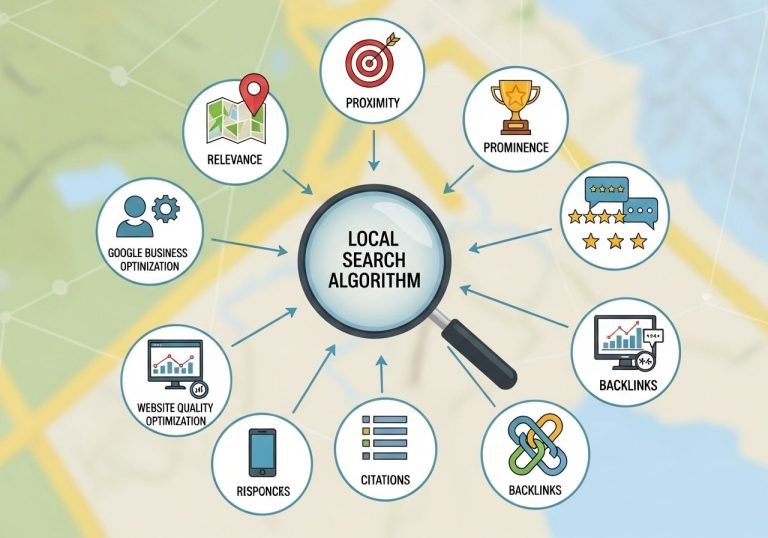
Distance plays a crucial role in how Google displays local search results. Your business name becomes especially important when multiple similar businesses exist in the same area. Names that clearly indicate your specialty or location can help Google distinguish your business and present it to the most relevant searchers.
Prominence combines online and offline reputation signals that Google uses to evaluate business authority. Your business name’s consistency across directories, review sites, and social media platforms directly impacts this ranking factor. Variations in how your name appears online can confuse Google’s algorithm and dilute your local search strength.
Primary ranking factors include:
- NAP consistency (Name, Address, Phone) across all online platforms
- Google My Business completeness and optimization
- Customer review volume and quality
- Local citation quantity and accuracy
- Website mobile-friendliness and loading speed
- Localized content relevance
Relevance measures how well your business matches what someone is searching for. Business names that naturally incorporate relevant keywords without appearing manipulative tend to rank higher. Google’s algorithm has become sophisticated enough to detect when businesses artificially stuff keywords into their names solely for ranking purposes.
The connection between business names and geographical signals
Geographic signals in business names create powerful connections between your brand and specific locations. When your business name includes neighborhood names, city references, or regional identifiers, Google interprets these as strong location signals that help determine when and where to display your business in search results.
Local landmarks, street names, or area nicknames in business names can significantly boost local search performance. “Pike Place Coffee Roasters” immediately signals Seattle location relevance, while “Sunset Strip Hair Salon” connects directly to that famous Los Angeles area. These geographic references help Google understand your service area and match you with locally-focused searches.
Geographic signal types:
| Signal Type | Example | SEO Impact |
|---|---|---|
| City Name | “Austin Web Design” | High local relevance |
| Neighborhood | “SoHo Art Gallery” | Hyper-local targeting |
| Regional Term | “Bay Area Consulting” | Broader area coverage |
| Landmark Reference | “Times Square Tours” | Tourist/visitor appeal |
Google also analyzes how your business name relates to local search behavior patterns. If people in your area commonly use specific terms or phrases when searching for services, incorporating these naturally into your business name can improve your visibility. The key lies in balancing geographic signals with brand identity while avoiding obvious keyword manipulation that could trigger algorithm penalties.
Your business name becomes part of your overall local SEO strategy, working alongside your Google Business Profile, local citations, and website content to establish strong geographic relevance signals that help potential customers find you when they need your services.
Strategic Business Name Selection for Local SEO

Incorporating Location-Specific Keywords Naturally
When selecting your business name, weaving in geographic identifiers can significantly boost your local search visibility without sounding forced. The key lies in making location references feel organic rather than obviously inserted for SEO purposes.
Start by identifying your primary service area and consider how locals refer to it. People might search for “downtown Portland bakery” or “North Dallas plumber,” so incorporating these natural location descriptors can help you capture these searches. However, resist the urge to stuff multiple cities into your business name – Google’s algorithm favors authenticity over keyword density.
Consider variations like neighborhood names, local landmarks, or regional identifiers that residents actually use. Riverside Auto Repair” works better than “Chicago Illinois Car Fix Shop” because it sounds natural and references a specific area people recognize.
The most effective approach involves subtle integration where the location enhances rather than dominates your brand identity. Think “Metro Atlanta Dental Group” rather than “Atlanta Georgia Metro Area Dentist Office.” The former flows naturally while still capturing location-based searches.
Balancing Brand Identity with Search Optimization
Creating a business name that serves both branding and SEO goals requires careful consideration of how customers will remember and search for your business. Your name should tell a story about who you are while making it easy for local customers to find you online.
Strong brand identity doesn’t have to sacrifice search optimization. Many successful local businesses achieve both by focusing on their unique value proposition alongside their geographic focus. “Sunshine Veterinary Clinic” paired with consistent local SEO practices often outperforms “Best Pet Doctor Phoenix Arizona” because customers connect emotionally with memorable, trustworthy names.
Consider how your business name will appear across all digital platforms. A name that works well for voice searches, mobile typing, and traditional desktop searches gives you maximum flexibility. Short, memorable names with clear local connections tend to perform best across all these scenarios.
Remember that your business name is just one ranking factor. You can strengthen weaker name optimization through strategic Google My Business optimization, consistent local citations, and quality content that reinforces your local relevance.
Avoiding Over-Optimization Penalties and Keyword Stuffing
Google’s algorithms have become sophisticated at detecting manipulative naming practices that prioritize keywords over user experience. Business names packed with multiple keywords, service descriptions, or excessive location references can trigger penalties that harm rather than help your rankings.
Watch for red flags like including multiple services in your name (“Joe’s Plumbing Heating Electrical Repair Services”) or cramming in every possible keyword variation. These tactics often backfire because they create poor user experiences and signal to Google that you’re trying to game the system.
The safest approach focuses on one primary keyword or location reference that feels natural within your brand context. “Denver Home Inspections” works well, while “Denver Colorado Home House Building Inspection Services LLC” raises red flags for both users and search engines.
Monitor how other successful local businesses in your industry handle naming conventions. Those ranking well typically use clean, simple names that incorporate location or service naturally rather than aggressively. This approach builds long-term SEO value while creating names customers can easily remember and recommend.
Research Techniques for Identifying High-Value Local Keywords
Effective local keyword research starts with understanding how your target customers actually search for businesses like yours. Use Google’s autocomplete feature by typing your service plus your city – the suggestions reveal real search patterns from local users.
Analyze successful competitors in your market to identify naming patterns that work. Look at businesses ranking well in local search results and map packs. Notice how they incorporate location references and whether they focus on broad geographic areas or specific neighborhoods.
Local keyword research tools can provide valuable insights into search volume and competition levels for different geographic modifiers. Pay attention to seasonal variations – some location-based searches spike during certain times of year, affecting which keywords deliver the most value.
Test different keyword combinations through Google Ads or other paid platforms before committing to a business name. This data shows which terms generate qualified local traffic and which ones might sound good in theory but don’t drive actual customer searches.
Don’t overlook voice search optimization in your research. People often use different phrasing when speaking versus typing, so consider how customers might verbally ask for your services. “Find a bakery near me” differs from “downtown bakery,” and understanding these patterns helps inform naming decisions that capture both search types.
Technical Implementation of Optimized Business Names

Setting up consistent NAP citations across directories
Getting your business name, address, and phone number (NAP) consistent across all online directories is like making sure everyone in town knows exactly how to find you. Search engines treat inconsistent information as a red flag, which can seriously hurt your local search rankings.
Start with the major directories first – Google My Business, Yelp, Facebook Business, Apple Maps, and Bing Places. Make sure your business name appears exactly the same way across all platforms. If you’re “Smith’s Pizza Kitchen” on Google, don’t be “Smith Pizza Kitchen” on Yelp.
Create a master spreadsheet with your exact business information to maintain consistency. Include variations of your business name if you commonly use abbreviations or different formats, but pick one primary version for most listings. Local citation management tools like Moz Local or BrightLocal can help automate this process and catch inconsistencies you might miss.
Pay special attention to industry-specific directories. A restaurant should be listed on OpenTable and Zomato, while a contractor needs profiles on Angie’s List and HomeAdvisor. These niche directories often carry more weight for local search results in specific industries.
Don’t forget about smaller local directories and chamber of commerce websites. These hyperlocal citations can provide significant ranking boosts, especially in smaller markets where competition is less fierce.
Optimizing Google My Business profile with strategic naming
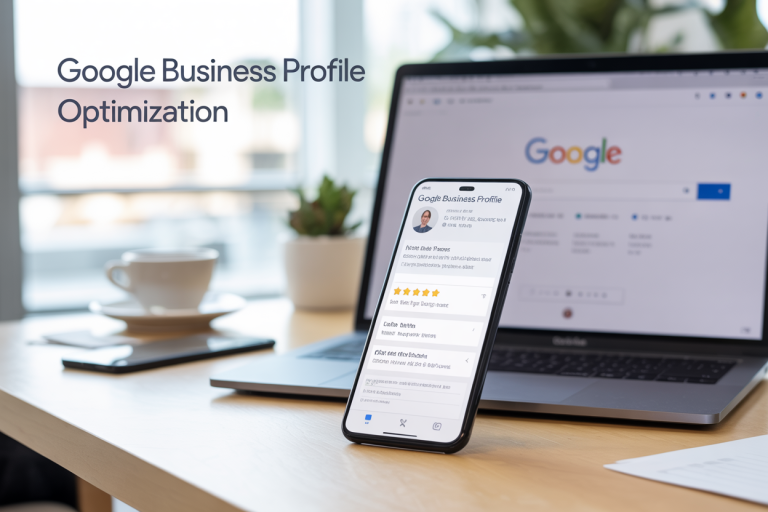
Your Google My Business profile is your digital storefront, and the business name field is prime real estate for local search optimization. Google’s guidelines state that your business name should reflect what customers see on your storefront, but there’s room for strategic optimization within these rules.
If your business naturally includes location or service keywords, use them. “Chicago Auto Repair” is better than just “Joe’s Garage” for local search, assuming that’s your actual business name. However, avoid keyword stuffing – Google penalizes profiles with names like “Best Pizza Chicago Downtown Delivery Restaurant.
Consider your complete business identity when optimizing. If you operate multiple locations, each should have location-specific names when appropriate. “Tony’s Pizza – Downtown” and “Tony’s Pizza – Westside” help Google understand your geographic coverage better than generic names.
The business description section offers another opportunity to reinforce your optimized naming strategy. Use this space to naturally incorporate location keywords and service terms that support your business name optimization. Keep descriptions conversational and customer-focused rather than stuffed with keywords.
Regular monitoring is essential since Google sometimes reverts business name changes or flags profiles for review. Set up alerts to catch any unauthorized changes and respond quickly to maintain your optimized naming strategy.
Implementing schema markup for enhanced search visibility
Schema markup acts like a translator between your website and search engines, helping Google understand exactly what your business name represents and where you operate. Local business schema is particularly powerful for improving how your business name appears in search results.
Start with basic LocalBusiness schema markup on your homepage. This code tells search engines your official business name, address, phone number, and operating hours. The structured data helps Google confidently display your business information in local search results and knowledge panels.
Organization schema provides another layer of optimization for your business name. This markup type allows you to specify alternate names, social media profiles, and brand information that reinforces your business identity across search results.
Breadcrumb schema becomes crucial when you create location-specific pages. This markup helps search engines understand your site structure and how different business locations relate to your main brand name. It’s particularly valuable for multi-location businesses trying to optimize each branch for local search.
Testing your schema implementation is critical. Google’s Rich Results Test tool and Schema.org validator can catch errors that might prevent search engines from properly reading your business name and location data. Regular testing ensures your markup continues working as search algorithms evolve.
Creating location-specific landing pages with optimized titles
Location-specific landing pages give you multiple opportunities to optimize your business name for different geographic areas and search queries. Each page should target specific location and service combinations while maintaining your brand consistency.
Structure your page titles to include your business name, primary service, and target location. “Smith’s Pizza Kitchen | Best Pizza Delivery in Downtown Chicago” works better than generic titles that don’t specify location or services. The business name placement in titles signals authority to search engines.
Create unique, valuable content for each location page rather than duplicating information across pages. Include local landmarks, neighborhood-specific information, and community connections that reinforce your business name’s association with each area you serve.
Internal linking between location pages helps distribute authority and reinforces your business name across your entire website. Link from your main business page to location-specific pages using anchor text that includes your business name and location keywords.
Don’t overlook meta descriptions for location pages. These snippets often appear in search results and provide another opportunity to reinforce your optimized business name while encouraging clicks from local searchers.
Regular performance monitoring helps identify which location pages perform best and which need optimization improvements. Google Analytics and Search Console data can reveal how different business name variations and location combinations perform in actual search results.
Measuring and Tracking Local Search Performance

Essential metrics for monitoring local ranking improvements
Your business name optimization efforts need concrete numbers to prove they’re working. Start by tracking your average position for target keywords that include your business name and location-based searches. Google My Business insights provide valuable data on how customers find your listing – whether through direct searches for your business name, discovery searches for your category, or branded searches.
Click-through rates from local search results tell you if your optimized business name attracts attention. Monitor impressions versus clicks to see if your name changes drive more engagement. Local pack appearances matter too – track how often your business shows up in the coveted three-pack results for relevant searches.
Phone calls, direction requests, and website clicks from your Google Business Profile reveal real customer actions. These engagement metrics often improve when you optimize your business name for local search effectively. Don’t forget to watch your overall local visibility score, which combines ranking positions across multiple location-based keywords.
Tools for tracking keyword position and visibility changes
BrightLocal offers comprehensive local SEO tracking that monitors your business name performance across different search scenarios. The platform tracks both desktop and mobile rankings, giving you a complete picture of how to optimize your business for local search success.
Google Search Console remains free and powerful for monitoring search performance. Set up property verification for your website and Google My Business listing to see which queries bring customers to your business. The performance report shows impression data for searches containing your business name.
SEMrush and Ahrefs provide advanced local keyword tracking features. Both tools let you monitor competitor business names alongside your own, revealing opportunities to adjust your optimization strategy. Moz Local tracks citation consistency and local search visibility, helping you understand how your business name performs across directories.
| Tool | Best For | Key Features |
|---|---|---|
| Google Search Console | Free monitoring | Search queries, impressions, CTR |
| BrightLocal | Local rankings | Multi-location tracking, white-label reports |
| SEMrush | Competitive analysis | Keyword gaps, local pack tracking |
| Moz Local | Citation management | NAP consistency, duplicate detection |
Analyzing competitor performance and market positioning
Study how competing businesses structure their names for local search advantage. Look at businesses ranking above you for location-based keywords and analyze their naming conventions. Some competitors might include location identifiers in their business names, while others rely on category keywords.
Map out the local competitive landscape by searching for your target keywords from different locations. Notice which business names consistently appear in local pack results and what patterns emerge. This research reveals effective naming strategies you can adapt for your own business.
Track competitor Google My Business activity and engagement metrics when possible. Tools like SpyFu and SEMrush show competitor keyword rankings, helping you identify gaps in your local search optimization strategy. Monitor their customer review patterns and response rates to understand how comprehensive local optimization affects their search visibility.
Watch for seasonal changes in competitor performance. Some businesses adjust their Google My Business categories or descriptions, which can impact their local search rankings. Stay alert to new competitors entering your market and analyze how their business names affect the local search landscape.
Social media monitoring tools reveal how competitors promote their business names across platforms. This broader view helps you understand their complete digital strategy and identify opportunities to strengthen your own local search presence through optimized business name usage.
Advanced Optimization Strategies for Maximum Impact

Leveraging Customer Reviews to Reinforce Local Relevance
Customer reviews act as powerful signals for local search algorithms, and smart businesses use them strategically to boost their business name visibility. When customers naturally mention your business name in reviews, it creates authentic local relevance signals that Google values highly.
Encourage satisfied customers to include your full business name and location details in their reviews. A review saying “ABC Auto Repair on Main Street fixed my transmission perfectly” carries more local SEO weight than generic praise. Train your team to politely request specific location mentions when following up with happy customers.
Response strategy matters just as much as the reviews themselves. When you reply to reviews, naturally include your business name and local keywords. This creates additional opportunities for Google to associate your optimized business name with local search queries.
Monitor review platforms beyond Google My Business. Yelp, Facebook, and industry-specific sites all contribute to your local search footprint. Consistent business name usage across all platforms reinforces your brand’s local authority.
Building Location-Based Backlink Profiles
Local backlinks from authoritative regional sources significantly impact how Google perceives your business name’s local relevance. Focus on earning links from local chambers of commerce, city websites, regional business directories, and community organizations.
Target local news outlets for coverage opportunities. When journalists write about your business, they typically use your exact business name, creating valuable local citation opportunities. Press releases about community involvement, local hiring, or regional partnerships often generate these coveted local backlinks.
Partner with other local businesses for cross-promotional opportunities. Joint ventures, community events, and collaborative marketing efforts naturally generate local backlinks while reinforcing your business name’s connection to specific geographic areas.
| Backlink Source Type | Local SEO Impact | Difficulty to Obtain |
|---|---|---|
| Chamber of Commerce | High | Medium |
| Local News Sites | Very High | Hard |
| Community Organizations | Medium | Easy |
| Local Business Partners | Medium | Easy |
Optimizing for Voice Search and Mobile Local Queries
Voice search fundamentally changes how people discover local businesses. Instead of typing “pizza restaurant,” users ask “Where’s the best pizza place near me?” Your business name optimization strategy must account for these conversational search patterns.
Mobile local queries often include immediate intent signals like “open now,” “near me,” or “directions to.” Your business name should appear in content that naturally addresses these voice search patterns. Create FAQ sections that answer common voice queries about your business location and services.
Schema markup becomes crucial for voice search optimization. Structured data helps search engines understand your business name’s relationship to location, hours, and services. This information directly feeds voice assistant responses when users make local inquiries.
Consider how people actually say your business name versus how they type it. If your business name has unique spelling or pronunciation, create content that includes phonetic variations and common misspellings.
Creating Content That Supports Your Optimized Business Name
Content marketing amplifies your business name’s local search performance when executed strategically. Create location-specific landing pages that naturally incorporate your business name alongside local keywords and geographic identifiers.
Blog about local events, community news, and regional topics while consistently using your full business name. This approach builds topical authority around your location while reinforcing your business name’s local relevance signals.
Develop customer case studies and success stories that mention both your business name and specific local details. Stories about helping local customers solve problems create authentic content that supports local search optimization efforts.
Video content performs exceptionally well for local businesses. Create virtual tours, customer testimonials, and community involvement videos that prominently feature your business name and location.
Seasonal and Event-Based Local Optimization Tactics
Local search behavior fluctuates dramatically based on seasons, holidays, and regional events. Smart businesses adjust their optimization strategies to capitalize on these temporal opportunities while reinforcing their business name’s local connections.
Create event-specific content around local festivals, seasonal activities, and community celebrations. When the annual harvest festival comes to town, publish content that connects your business name to the event and local search terms people use during that time.
Seasonal service adjustments require corresponding content updates. If you’re a landscaping business, create snow removal content during winter months while maintaining consistent business name usage across all seasonal campaigns.
Monitor local event calendars and plan content campaigns around high-traffic periods. Sports seasons, school events, and community gatherings create opportunities to insert your optimized business name into trending local conversations.
Update your Google My Business posts regularly with seasonal information, special offers, and local event participation. These updates keep your business name active in local search results while demonstrating ongoing community engagement.
Track local search volume patterns throughout the year to identify optimization opportunities. Some months may see increased searches for specific services, allowing you to adjust your business name optimization strategy accordingly.
Your business name plays a bigger role in local search success than most people realize. By understanding how local search algorithms work and choosing a name that includes relevant keywords, you’re setting yourself up to rank higher when customers search for businesses like yours. The technical side matters too – making sure your name appears consistently across all online platforms and directories will signal to Google that your business is legitimate and trustworthy.
Don’t just set it and forget it though. Keep an eye on your local search rankings and be ready to fine-tune your approach as you learn what works best for your specific market. Start by auditing your current business name’s performance in local searches, then make the necessary adjustments to boost your visibility. Remember, even small changes to how you present your business name online can lead to more customers finding you when they need your services most.
FAQs
Does my business name affect my Google search rankings?
Yes, your business name can impact your local search rankings. Google considers how well your business name matches what people search for in your area. A clear, descriptive business name that includes relevant keywords can help you appear higher in local search results.
Should I include my city or location in my business name?
Including your city or area in your business name can help with local searches. For example, “Mike’s Plumbing Seattle” may rank better for local plumbing searches than just “Mike’s Plumbing.” However, make sure it sounds natural and professional.
Can I change my existing business name to improve search rankings?
You can change your business name, but consider the costs first. You’ll need to update your Google Business Profile, website, social media, and legal documents. If your current name isn’t helping you get found online, the change might be worth it for long-term growth.
What makes a business name good for local SEO?
A good business name for local SEO is clear, includes relevant keywords that customers search for, mentions your location when appropriate, and is easy to spell and remember. Avoid overly creative names that don’t tell people what you do.
How do I know if my current business name is helping or hurting my rankings?
Check where you appear when you search for your services plus your city name. If competitors with keyword-rich names consistently rank higher than you, your business name might be holding you back. Also, look at your Google Business Profile views and website traffic from local searches.
Should I stuff keywords into my business name?
No, avoid cramming too many keywords into your business name. This looks spammy to both Google and customers. Choose one or two important keywords that naturally fit with your location or service type.
Will Google penalize me for having keywords in my business name?
Google won’t penalize you for having relevant keywords in your business name, as long as it’s your actual registered business name. However, they may take action if you add fake keywords to an existing business name in your Google Business Profile.
How long does it take to see results after optimizing my business name?
After updating your business name across all platforms, you may start seeing changes in local search results within 2-4 weeks. However, it can take 2-3 months to see the full impact on your Google rankings and local visibility.
What other factors matter besides my business name for local rankings?
While your business name helps, Google also looks at customer reviews, your Google Business Profile completeness, website content, local citations, and how often people click on your business listing. Your business name is just one piece of the puzzle.
Do I need to update my business name everywhere at the same time?
Yes, consistency is important for local SEO. Update your business name on Google Business Profile, your website, social media accounts, business directories, and anywhere else your business is listed online. Mixed information can confuse Google and hurt your rankings.