
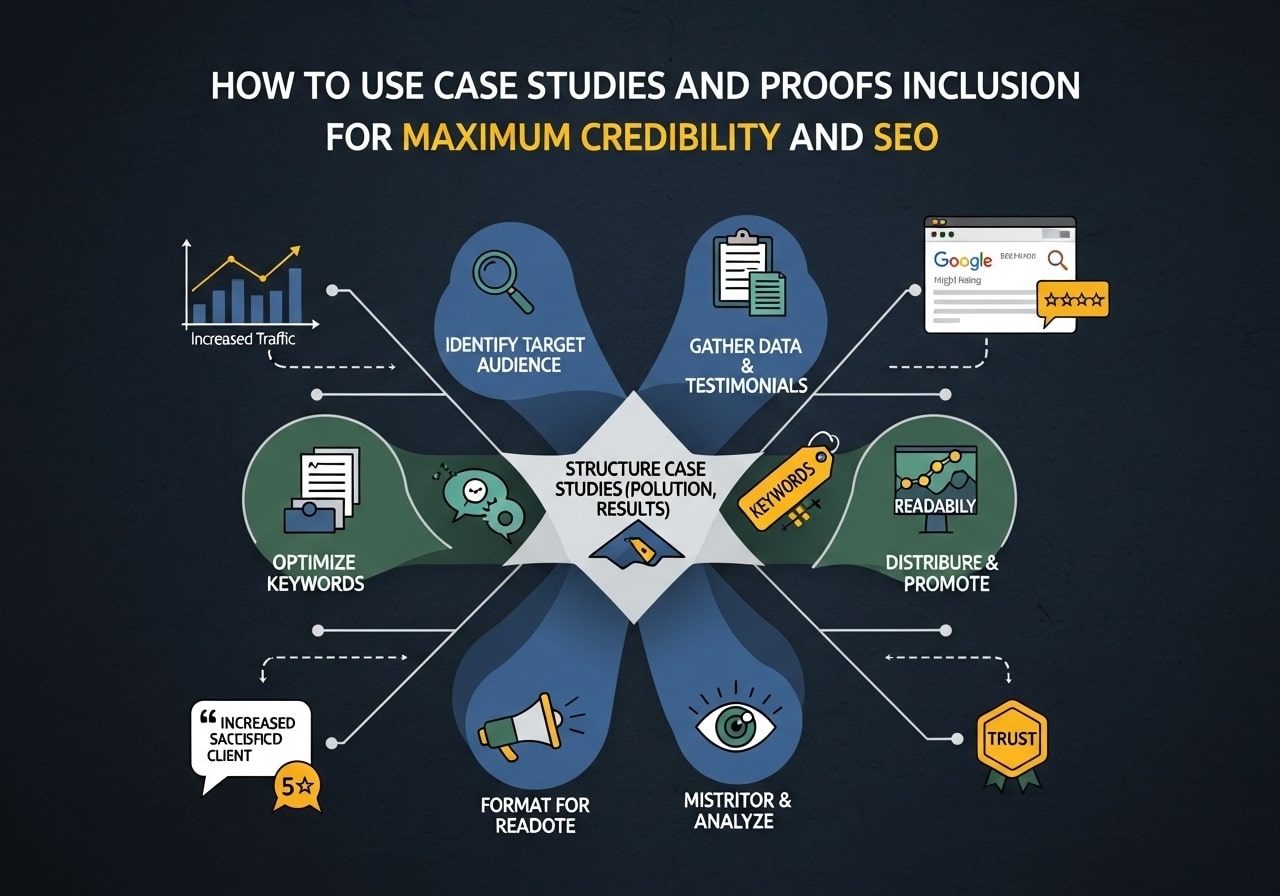
What is Case Studies and Proofs Inclusion?
Case studies and proofs inclusion refers to the strategic practice of adding real evidence, testimonials, and documented results to your marketing content. This approach helps build trust with your audience by showing them concrete examples of how your product or service has helped others achieve their goals.
When we talk about case studies inclusion, we mean more than just adding random success stories. It involves carefully selecting and presenting evidence that directly relates to your audience’s specific needs and concerns. This evidence can take many forms, from detailed customer success stories to simple before-and-after comparisons.
The inclusion of evidence in your content strategy is not optional in today’s market. Consumers are more skeptical than ever, and they need proof before making purchasing decisions. They want to see that others like them have succeeded with your solution.
Why Evidence Matters in Modern Marketing
Today’s consumers are bombarded with marketing messages. They’ve learned to filter out claims that sound too good to be true. This is where case studies and proofs inclusion becomes your secret weapon.
Research shows that 92% of people read reviews before making a purchase decision. Similarly, case studies are read by 73% of successful companies’ audiences. These numbers tell us that people actively seek proof before they buy.
When you use proofs by cases, you’re essentially letting your satisfied customers do the selling for you. This peer-to-peer recommendation is far more powerful than any marketing claim you could make.
The inclusion of evidence also helps address common objections before they arise. If a potential customer is worried about implementation time, a case study showing quick results can ease those concerns immediately.
Types of Proof You Should Include
Customer Success Stories
These are detailed accounts of how specific customers achieved their goals using your product or service. When creating customer success stories, focus on:
- The customer’s initial challenge
- The solution you provided
- The specific results achieved
- Measurable outcomes whenever possible
Testimonials and Reviews
Short, powerful statements from satisfied customers work well throughout your content. These can be:
- Video testimonials
- Written quotes
- Star ratings
- Social media mentions
Before and After Comparisons
Visual proof showing the transformation your service creates is incredibly powerful. This could include:
- Performance metrics improvements
- Visual transformations
- Revenue increases
- Process improvements
Industry Recognition and Awards
Third-party validation through awards, certifications, or industry recognition adds credibility to your claims.
The Psychology Behind Case Studies Inclusion
Understanding why case studies inclusion works so well requires looking at basic human psychology. People are naturally social creatures who look to others for guidance when making decisions.
This behavior is called social proof, and it’s one of the strongest psychological triggers in marketing. When people see that others like them have succeeded with your solution, it reduces their perceived risk of trying it themselves.
Proof-of-inclusion in your content strategy also taps into the storytelling aspect of human nature. Our brains are wired to remember stories better than facts and figures. A well-told case study creates an emotional connection that pure data cannot match.
The key is making sure your audience can see themselves in the stories you tell. If you’re targeting small business owners, your case studies should feature small business owners, not large corporations.
How to Structure Multiple Case Studies
When planning multiple case study design, organization is crucial. You don’t want to overwhelm your audience, but you also want to provide enough variety to appeal to different segments.
The Rule of Three
Three case studies is often the perfect number for most situations. This gives you enough variety to show different use cases without overwhelming your readers. Here’s how to structure them:
- Focus on the most common use case or biggest pain point your audience faces.
- Show a different industry or customer type to demonstrate versatility.
- Highlight your most impressive results or unique application.
When to Use Five Case Studies
5 case studies work well for longer-form content like whitepapers or detailed landing pages. This allows you to cover:
- Different industries
- Various company sizes
- Multiple use cases
- Different geographic regions
- Various implementation approaches
Organizing Two Case Studies
Two case studies can be effective when you want to show contrasting approaches or compare different solutions. This works particularly well for:
- Before and after scenarios
- Different implementation strategies
- Comparing old vs. new approaches
- Small business vs. enterprise examples
Best Practices for Inclusion of Evidence
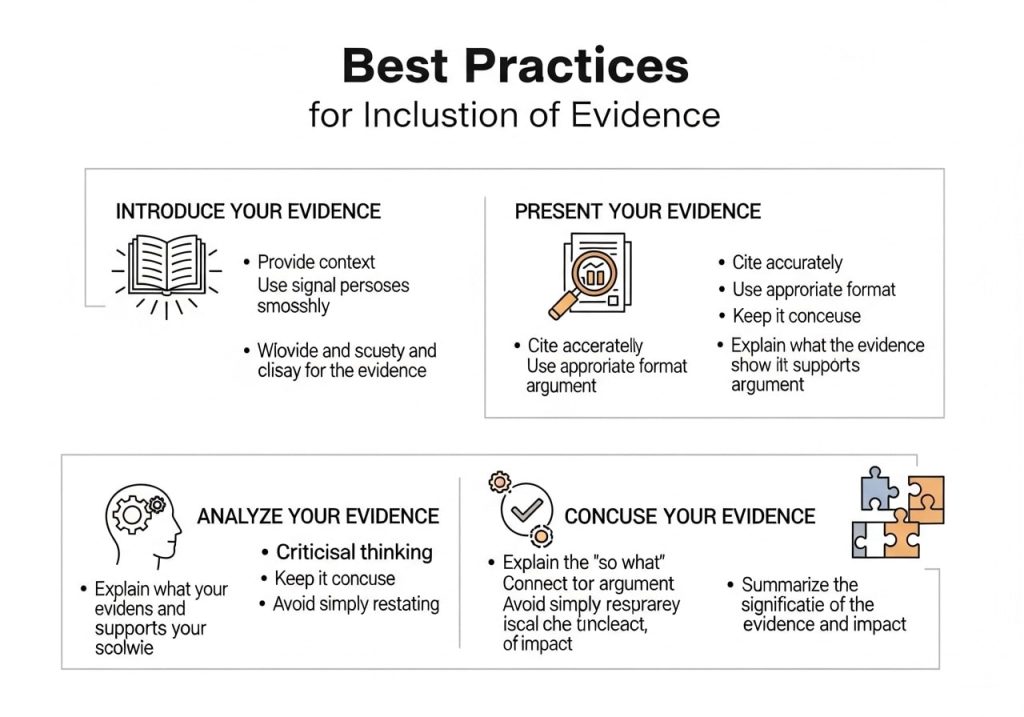
Make It Relevant
Every piece of evidence you include should directly relate to your audience’s situation. A case study about a Fortune 500 company won’t resonate with small business owners looking for affordable solutions.
Use Specific Numbers
Vague claims like “increased efficiency” are less powerful than “reduced processing time by 40%.” Always try to include specific, measurable results in your case studies.
Tell Complete Stories
Don’t just share the good parts. Include the challenges, setbacks, and how they were overcome. This makes your case studies more believable and relatable.
Update Regularly
Old case studies can actually hurt your credibility. Make sure your evidence stays current and relevant to today’s market conditions.
Mix Formats
Don’t rely only on written case studies. Include:
- Video testimonials
- Infographics showing results
- Audio interviews
- Interactive case study presentations
- Social media proof
Common Mistakes to Avoid
Mistake 1: Using Fake or Exaggerated Claims
This might seem obvious, but the temptation to embellish results is strong. Don’t do it. One fake case study can destroy your entire reputation.
Mistake 2: Making Case Studies Too Long
While detail is important, remember that people have short attention spans. Focus on the most important information and make it easy to scan.
Mistake 3: Forgetting to Get Permission
Always get written permission from customers before using their stories. This protects you legally and ensures they’re comfortable with how their information is presented.
Mistake 4: Focusing Only on Big Wins
Not every case study needs to show massive transformations. Sometimes, small improvements are more relatable and believable.
Mistake 5: Using Only Text
Visual elements make case studies more engaging and easier to understand. Include charts, graphs, photos, or other visual proof whenever possible.
Measuring Success of Your Proof Strategy

To know if your case studies and proofs inclusion strategy is working, you need to track specific metrics:
Engagement Metrics
- Time spent on pages with case studies
- Click-through rates on case study links
- Social shares of case study content
- Comments and interactions
Conversion Metrics
- Lead generation from case study pages
- Sales attributed to case study content
- Email signups after reading case studies
- Demo requests following case study consumption
Trust Indicators
- Reduced sales cycle length
- Fewer objections during sales calls
- Higher close rates
- Increased average deal size
Tools and Resources
Case Study Creation Tools
Several tools can help streamline your case study creation process:
Canva: For creating visual case study presentations and infographics.
Loom: Perfect for recording video testimonials and case study interviews.
Google Forms: Useful for collecting information from customers for case studies.
Typeform: Creates engaging surveys to gather case study data.
Content Management
HubSpot: Offers case study templates and tracking capabilities.
WordPress: Provides numerous case study plugins and themes.
Notion: Great for organizing and collaborating on case study content.
Real-World Examples
Let’s look at how different companies successfully implement case studies and proofs inclusion:
Software Company Example
A project management software company created a series of case studies showing how different types of teams use their product. They included:
- A marketing team that reduced project completion time by 30%
- A construction company that improved client communication
- A nonprofit that better managed volunteer coordination
Each case study followed the same structure but highlighted different benefits, making the content relevant to various audience segments.
Service Business Example
A digital marketing agency used proof by cases to show their expertise across different industries. Their approach included:
- Detailed ROI calculations for each client
- Screenshots of actual results dashboards
- Video testimonials from decision-makers
- Before-and-after comparisons of key metrics
E-commerce Example
An online retailer used customer success stories to reduce cart abandonment. They included:
- Reviews and photos from actual customers
- Unboxing videos shared by buyers
- Social media mentions and user-generated content
- Return rate statistics to address quality concerns
Creating Your Evidence Collection System
Building an effective case studies and proofs inclusion strategy requires a systematic approach to collecting and organizing evidence.
Step 1: Identify Your Best Customers
Look for customers who:
- Achieved significant results
- Are willing to share their stories
- Represent your target market
- Had interesting challenges or unique use cases
Step 2: Develop Interview Questions
Create a standard set of questions that help you gather compelling information:
- What was your situation before using our solution?
- What made you choose us over competitors?
- What results have you seen?
- What would you tell others considering our solution?
- Can you provide specific numbers or metrics?
Step 3: Create Collection Processes
Set up systems to regularly collect new proof:
- Follow-up surveys after project completion
- Regular check-ins with successful customers
- Monitoring social media for positive mentions
- Encouraging reviews and testimonials
Step 4: Organize Your Evidence Library
Create a system for storing and categorizing your case studies:
- By industry or customer type
- By use case or application
- By results achieved
- By customer size or geography
Advanced Strategies for Proof Integration
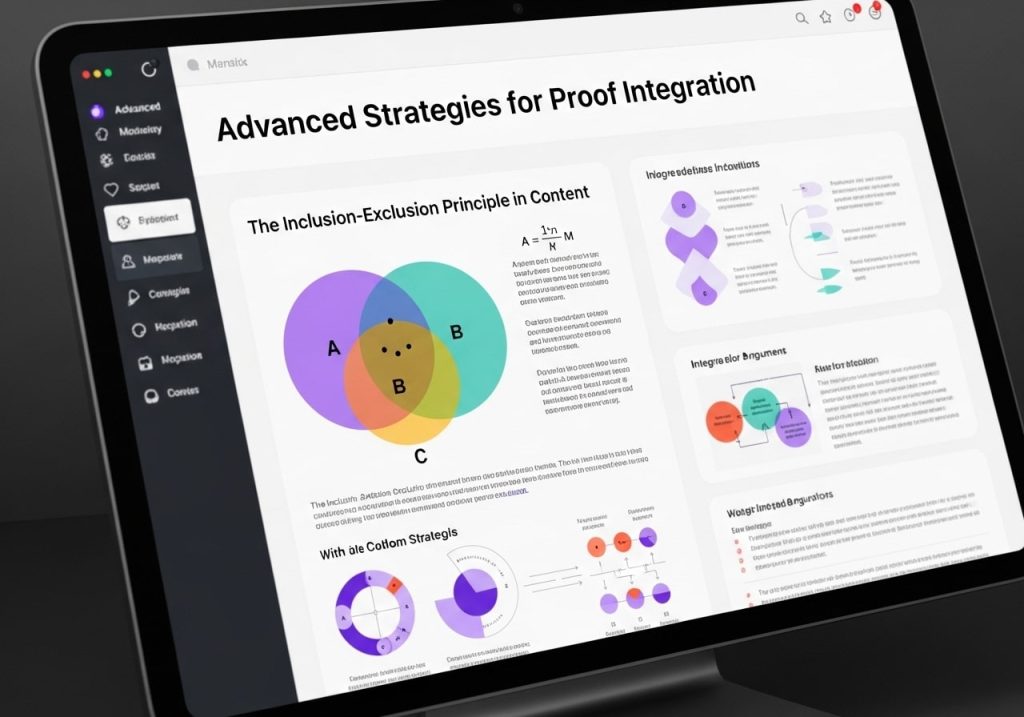
The Inclusion-Exclusion Principle in Content
Just as the inclusion-exclusion principle works in mathematics, you can apply similar logic to your evidence strategy. Include various types of proof while excluding elements that might confuse or overwhelm your audience.
Focus on including:
- Relevant customer examples
- Measurable results
- Relatable challenges
- Clear outcomes
Exclude:
- Outdated information
- Irrelevant industries
- Confidential details
- Overly complex explanations
Creating Proof Hierarchies
Not all evidence carries the same weight. Create a hierarchy of proof types:
Highest Impact Tier 1:
- Detailed case studies with specific metrics
- Video testimonials from recognizable customers
- Third-party validation and awards
Tier 2 Medium Impact:
- Written customer quotes
- Before/after comparisons
- Usage statistics and adoption rates
Tier 3 Supporting Evidence:
- Social media mentions
- Review site ratings
- Industry certifications
Seasonal and Timely Proof
Keep your evidence fresh and relevant by:
- Updating case studies with current results
- Adding new testimonials regularly
- Featuring seasonal success stories
- Highlighting recent wins and achievements
Overcoming Common Challenges
Challenge 1: Customers Won’t Participate
Many customers are willing to help but need the right approach:
- Make it easy for them by doing most of the work
- Offer something valuable in return (like a featured spotlight)
- Start with informal conversations before formal interviews
- Use their feedback to improve your service
Challenge 2: Limited Success Stories
If you’re new or don’t have many customers yet:
- Use beta customer results
- Share your own transformation story
- Partner with other businesses for joint case studies
- Focus on smaller but meaningful improvements
Challenge 3: Confidentiality Concerns
When customers can’t be named publicly:
- Use anonymous case studies with industry details
- Focus on the results without identifying information
- Get permission for partial information sharing
- Create composite case studies based on multiple customers
Future Trends in Evidence-Based Marketing
The field of case studies and proofs inclusion continues to evolve. Here are trends to watch:
Interactive Case Studies
More companies are creating interactive experiences where prospects can explore case study data themselves, filter by industry, or compare different scenarios.
Real-Time Proof
Live dashboards showing current customer results provide ongoing proof of value rather than static historical examples.
AI-Powered Personalization
Artificial intelligence helps match prospects with the most relevant case studies based on their industry, company size, and specific challenges.
Video-First Approach
Short, engaging video case studies are becoming more popular than long-form written content, especially for social media distribution.
Community-Driven Proof
Customer communities where users share their own success stories create ongoing streams of authentic proof content.
Call to Action
Start implementing case studies and proofs inclusion in your marketing strategy today. Begin by identifying three successful customers who might be willing to share their stories. Reach out to them with a simple request for a brief conversation about their experience.
Remember, the best time to collect proof is right after a customer achieves success. Don’t wait until you need the case study to start building your evidence library.
What’s your first step going to be? Will you identify potential case study candidates, create an interview template, or review your existing content to see where additional proof could make an impact? The key is to start somewhere and build momentum from there.
Your future customers are waiting to see proof that your solution works. Give them the evidence they need to make confident decisions, and watch your conversion rates improve as a result.
FAQs
What exactly are case studies and why should I include them on my website?
Case studies are detailed examples of how you’ve helped real clients solve problems. They show your work process from start to finish, including the challenges you faced and the results you achieved. Including them on your website builds trust with visitors because they can see actual proof of your skills rather than just reading claims about what you can do.
How do case studies help with SEO rankings?
Case studies create fresh, unique content that search engines love. They naturally include relevant keywords about your services and industry. Plus, they tend to be longer pieces of content, which gives you more opportunities to rank for different search terms. When people spend time reading your case studies, it shows search engines that your content is valuable.
What information should I include in each case study?
Start with the client’s problem or challenge. Then explain your approach and the steps you took to solve it. Include specific numbers and results whenever possible – like increased sales, improved website traffic, or time saved. Don’t forget to mention any obstacles you overcame along the way. This complete picture makes your case study more believable and helpful.
How many case studies do I need on my website?
You don’t need dozens of case studies. Start with 3-5 solid examples that showcase different types of work or industries you serve. Quality beats quantity here. It’s better to have a few detailed, well-written case studies than many shallow ones. You can always add more over time as you complete new projects.
Should I get permission from clients before publishing their case studies?
Yes, always ask for permission first. Some clients prefer to stay anonymous, which is fine – you can still share the story without naming them. Getting written permission protects you legally and shows respect for your clients’ privacy. Many clients are happy to be featured because it gives them exposure too.
Where should I place case studies on my website for best SEO results?
Create a dedicated case studies section that’s easy to find from your main menu. Also link to relevant case studies from your service pages. For example, if someone’s reading about your web design services, link to a web design case study. This internal linking helps search engines understand your site structure and keeps visitors engaged longer.
How can I make my case studies more engaging to read?
Tell a story instead of just listing facts. Use before-and-after comparisons, include screenshots or photos when possible, and break up long text with headings and bullet points. Quote your clients directly – their own words about the results carry more weight than your descriptions. Keep the language simple and focus on benefits the reader can relate to.
What other types of proof can I include besides case studies?
Client testimonials, reviews, awards, certifications, and portfolio pieces all work as social proof. You can also include statistics about your business, like how many projects you’ve completed or years of experience. Media mentions, speaking engagements, and client logos (with permission) also build credibility.
How often should I update my case studies?
Add new case studies every few months if possible, and review existing ones yearly. Remove outdated examples that no longer represent your current work quality or services. Fresh case studies show that you’re actively working with clients and staying current in your field. This ongoing activity also gives search engines new content to index.
Can I repurpose case studies for better SEO coverage?
Absolutely. Turn a detailed case study into a blog post, create social media posts highlighting key results, or break it into smaller pieces for email newsletters. You can also create video versions or infographics. Just make sure each version offers something unique rather than duplicating the exact same content across your site.