What Are Keyword Research Tools and Why Do You Need Them? Finding the right keyword research tools can make or break your online success. Whether you’re running a blog, an e-commerce store, or trying to rank your app in the app store, understanding what people are searching for is crucial for getting found online.
Think of keyword research tools as your digital compass. They help you discover what your potential customers are typing into search engines, how often they’re searching for specific terms, and how difficult it might be to rank for those keywords. Without these insights, you’re essentially shooting in the dark.
The beauty of modern keyword research tools is that many of them are entirely free to start with. That means even if you’re starting or working with a tight budget, you can still access valuable data to guide your content strategy.
Why Traditional Guessing Doesn’t Work
Many beginners make the mistake of assuming they know what their audience is searching for. However, the reality is often quite different. What seems like an obvious search term to you might not be how your customers actually phrase their queries. It is where keyword research tools become invaluable – they show you the actual search behavior of real people.
Free Keyword Research Tools Every Beginner Should Know
When you’re just starting, free keyword research tools can provide tremendous value without any upfront investment. Let’s explore the best keyword research tools for beginners free options that can help you get started on the right foot.
Google Keyword Planner: Your First Stop
The Google Keyword Planner remains one of the most popular choices for good reason. Is Google Keyword Planner free? Yes, it is completely free to use, though you’ll need a Google Ads account to access it. Is Google keyword planner free anymore? Absolutely – Google continues to offer this tool at no cost.
How do I access the Google Keyword Tool? Simply create a Google Ads account, navigate to the Tools & Settings menu, and click on Keyword Planner. You don’t need to run any ads to use the tool.
How accurate is Google Keyword Planner? The data comes directly from Google’s search engine, making it highly reliable for search volume estimates and keyword suggestions. Can Google Keyword Planner help with SEO? Definitely – it’s one of the most effective tools for finding SEO opportunities and understanding search trends.
Google Trends: Understanding Search Patterns
Is Google Trends free? Yes, Google Trends is completely free and provides valuable insights into how search interest changes over time. This tool is perfect for identifying seasonal trends, comparing different keywords, and understanding regional search preferences.
Google Trends helps you see whether interest in a particular keyword is growing, declining, or remaining stable. This information is crucial for long-term content planning and identifying emerging opportunities.
Keywords Everywhere: Browser Extension Convenience
Can I use keywords everywhere for free? While Keywords Everywhere used to be completely free, it now operates on a credit-based system. However, the credits are very affordable, and the tool provides excellent value by showing keyword data directly in your browser while you search.
This browser extension displays search volume, competition data, and related keywords right in your Google search results, making it incredibly convenient for quick research.
Ubersuggest: Neil Patel’s Free Tool
Ubersuggest offers a generous free tier that provides keyword suggestions, search volume data, and basic competitive analysis. It’s particularly good for finding long tail keyword research tool free options and discovering content ideas.
Google Keyword Planner: The Essential Starting Point
Let’s dive deeper into Google Keyword Planner since it’s often the first free keyword research tool that beginners encounter. Understanding how to use this tool effectively can significantly improve your keyword research process.
Setting Up Google Keyword Planner
Getting started with Google Keyword Planner is straightforward. You’ll need to create a Google Ads account, but you don’t need to create or run any campaigns. Once you’re in, you’ll find two main options: “Discover new keywords” and “Get search volume and forecasts.”
The “Discover new keywords” feature is perfect when you’re starting from scratch. You can enter your website URL, and Google will suggest relevant keywords based on your content. Alternatively, you can enter seed keywords related to your business.
Understanding the Data
Google Keyword Planner provides several key metrics:
- Average monthly searches: This shows how many times people search for a keyword each month
- Competition level: Indicates how many advertisers are bidding on the keyword
- Top of page bid ranges: Shows what advertisers typically pay for clicks on this keyword
Remember that the competition level refers to paid advertising competition, not organic search competition. However, it can still provide insights into the commercial value of keywords.
Finding Long-Tail Keywords
One of the best ways to use Google Keyword Planner is for discovering long-tail keywords. These are longer, more specific phrases that typically have lower search volume but higher conversion rates. They’re often easier to rank for and can drive highly targeted traffic to your site.
Platform-Specific Keyword Research Tools
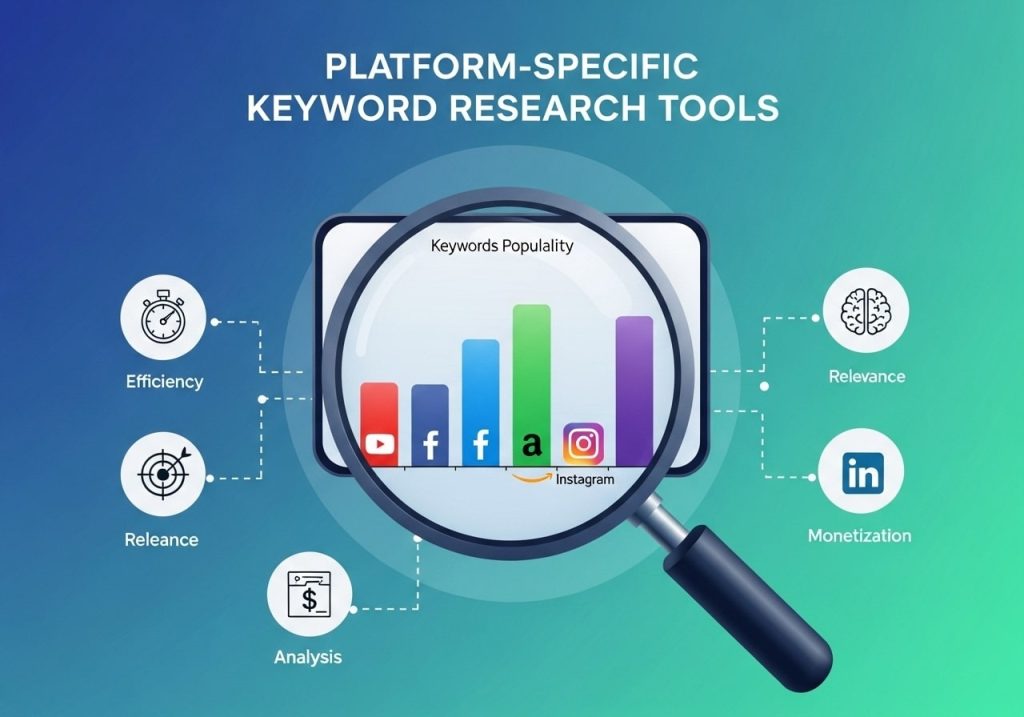
Different platforms require different keyword strategies, and thankfully, there are specialized tools for each major platform.
Amazon KDP Keyword Research
For authors and publishers, finding the right keywords can make the difference between a bestseller and a book that never gets discovered. The amazon kdp keyword research tool options include both free and paid solutions.
Titans pro amazon kdp keyword research tool is one of the premium options that provides detailed insights into Amazon’s search ecosystem. However, you can also start with free tools like Amazon’s own search suggestions and Google Keyword Planner to find relevant terms.
When researching keywords for Amazon KDP, focus on:
- Genre-specific terms
- Problem-solving phrases your book addresses
- Terms your target readers actually use
App Store Optimization (ASO)
Mobile app developers need specialized tools for app store optimization. ASO keyword research tool options help you understand what terms people use when searching for apps.
Free aso keyword research tool options include:
- App Annie (now Data.ai) – offers limited free access
- Google Play Console – free for Android developers
- App Store Connect – free for iOS developers
The app store keyword research tool landscape includes both free and premium options. ASO free keyword research tool choices are more limited than web SEO tools, but they can still provide valuable insights for app developers on a budget.
International Markets: Baidu and Beyond
For businesses targeting Chinese markets, a baidu keyword research tool becomes essential. Baidu operates differently from Google, and Chinese users have different search behaviors. Tools like Baidu Index provide insights into search trends and popular keywords in the Chinese market.
Fiverr and Freelancing Platforms
If you’re offering services on platforms like Fiverr, understanding what buyers search for is crucial. While there isn’t a dedicated fiverr keyword research tool free option, you can use general keyword research tools to understand what services people are looking for and how they phrase their searches.
Premium Tools: Ahrefs vs SEMrush
While free tools are great for getting started, premium tools offer more comprehensive data and advanced features. Let’s compare two of the most popular premium keyword research tools.
Ahrefs: The SEO Professional’s Choice
Is Ahrefs free? No, Ahrefs doesn’t offer a free tier, but they do provide a 7-day trial for $7. This tool is considered one of the most comprehensive SEO platforms available.
Ahrefs excels at:
- Showing detailed keyword difficulty scores
- Providing extensive backlink data
- Offering competitor analysis features
- Including a massive database of keywords
The keyword difficulty metric in Ahrefs is particularly valuable because it’s based on the actual backlink profiles of top-ranking pages, giving you a realistic assessment of how hard it might be to rank for specific terms.
SEMrush: The All-in-One Marketing Platform
Is Semrush free? SEMrush offers a limited free account that allows you to perform up to 10 searches per day. This can be enough for small-scale research, but serious marketers usually need a paid plan.
SEMrush provides:
- Comprehensive competitor analysis
- PPC and organic keyword data
- Social media and content marketing tools
- Local SEO features
One of SEMrush’s strongest features is its ability to show you exactly which keywords your competitors are ranking for, allowing you to identify gaps in your own strategy.
Which Premium Tool Should You Choose?
The choice between Ahrefs and SEMrush often comes down to your specific needs:
- Choose Ahrefs if you’re primarily focused on SEO and need detailed backlink analysis
- Choose SEMrush if you want an all-in-one marketing platform with PPC, social media, and content tools
Both tools offer excellent keyword research capabilities, so you can’t go wrong with either choice.
Specialized Keyword Research Tools for Different Needs
Beyond the mainstream tools, there are specialized keyword research tools designed for specific industries and use cases.
Long-Tail Keyword Specialists
Long tail keyword research tool free options are particularly valuable because long-tail keywords often convert better than generic terms. Tools like Answer the Public help you discover question-based keywords that people are actually asking.
These longer, more specific phrases might have lower search volume, but they often indicate higher intent from searchers. Someone searching for “best running shoes for flat feet under $100” is much closer to making a purchase than someone just searching for “running shoes.”
Local SEO Tools
For businesses with physical locations, local keyword research requires a different approach. Tools like Moz Local and BrightLocal help you understand what people search for when looking for local businesses.
Local keyword research often involves:
- Location-specific modifiers
- “Near me” searches
- Service + location combinations
E-commerce Keyword Tools
Online stores need to understand product-focused keywords. Tools like Merchant Words and Sonar provide insights into what people search for when they’re ready to buy.
E-commerce keyword research focuses on:
- Product names and variations
- Brand comparisons
- Purchase-intent keywords
How to Choose the Best Keyword Research Tools for Your Business
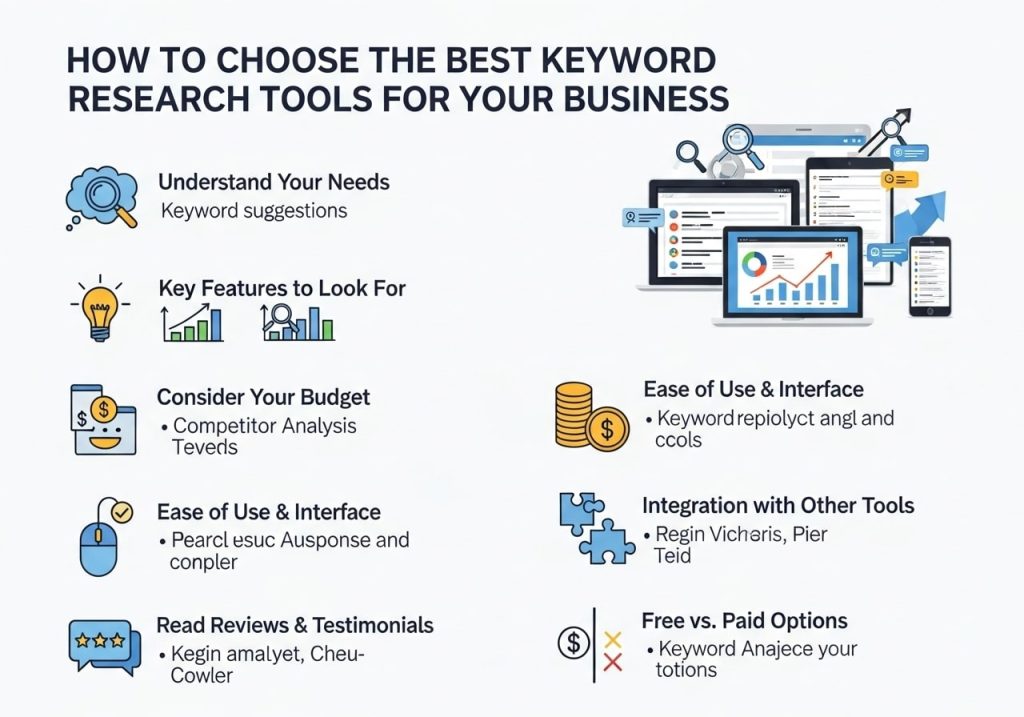
Selecting the right keyword research tools depends on several factors. Here’s how to make the best choice for your specific situation.
Consider Your Budget
Start with free tools if you’re just beginning or have budget constraints. The best keyword research tools for beginners are often the free ones because they provide enough data to get started without any financial commitment.
As your business grows and your needs become more sophisticated, you can invest in premium tools that offer more detailed data and advanced features.
Evaluate Your Technical Skills
Some tools are more user-friendly than others. If you’re not technically inclined, look for tools with intuitive interfaces and good customer support. Google Keyword Planner, while powerful, can be overwhelming for complete beginners.
Think About Your Goals
Different tools excel in different areas:
- For basic SEO: Start with Google Keyword Planner and Google Trends
- For comprehensive SEO: Consider Ahrefs or SEMrush
- For app development: Use ASO-specific tools
- For Amazon selling: Focus on Amazon-specific keyword tools
- For local business: Prioritize local SEO tools
Consider Integration Needs
If you’re already using certain marketing tools, look for keyword research tools that integrate well with your existing setup. This can save you time and provide a more streamlined workflow.
Tips for Getting the Most Out of Your Keyword Research
Having the right tools is just the beginning. Here’s how to maximize the value you get from your keyword research efforts.
Start with Seed Keywords
Begin with a list of basic terms related to your business or topic. These seed keywords will help you discover related terms and phrases that you might not have considered.
Use your keyword research tools to expand these seed keywords into comprehensive lists of related terms, questions, and phrases.
Focus on Search Intent
Understanding why people search for specific terms is just as important as knowing what they search for. Search intent typically falls into four categories:
- Informational: People looking for information
- Navigational: People trying to find a specific website
- Transactional: People ready to make a purchase
- Commercial investigation: People researching before buying
Match your content to the search intent behind your target keywords for better results.
Don’t Ignore Low-Volume Keywords
While it’s tempting to focus only on high-volume keywords, low-volume terms can be incredibly valuable. They’re often easier to rank for and can be highly targeted to your specific audience.
Monitor Your Competitors
Use your keyword research tools to see what keywords your competitors are targeting. This can reveal opportunities you might have missed and help you understand the competitive landscape.
Regular Review and Updates
Keyword trends change over time. Search behavior evolves, new terms emerge, and old ones become less relevant. Make keyword research an ongoing process rather than a one-time activity.
Test and Measure
The ultimate test of any keyword research is how well those keywords perform in practice. Track your rankings, traffic, and conversions to see which keywords are actually driving results for your business.
Keyword research tools are essential for anyone serious about online success. Whether you start with free options like Google Keyword Planner or invest in premium tools like Ahrefs or SEMrush, the key is to begin researching and understanding your audience’s search behavior.
Remember that the best keyword research tool is the one you actually use consistently to guide your content and marketing decisions. Start with the free tools to build your skills, then gradually invest in more advanced options as your needs grow.
Ready to improve your search rankings? Choose one of these keyword research tools today and start discovering what your audience is really searching for. Your future traffic will thank you for the effort you put into proper keyword research.
FAQs
What are keyword research tools and why do I need them?
Keyword research tools help you find the words and phrases people type into search engines when looking for content like yours. These tools show you search volume, competition level, and related keywords. You need them because guessing what people search for rarely works – these tools give you real data to make smart decisions about your content.
Which keyword research tools are best for complete beginners?
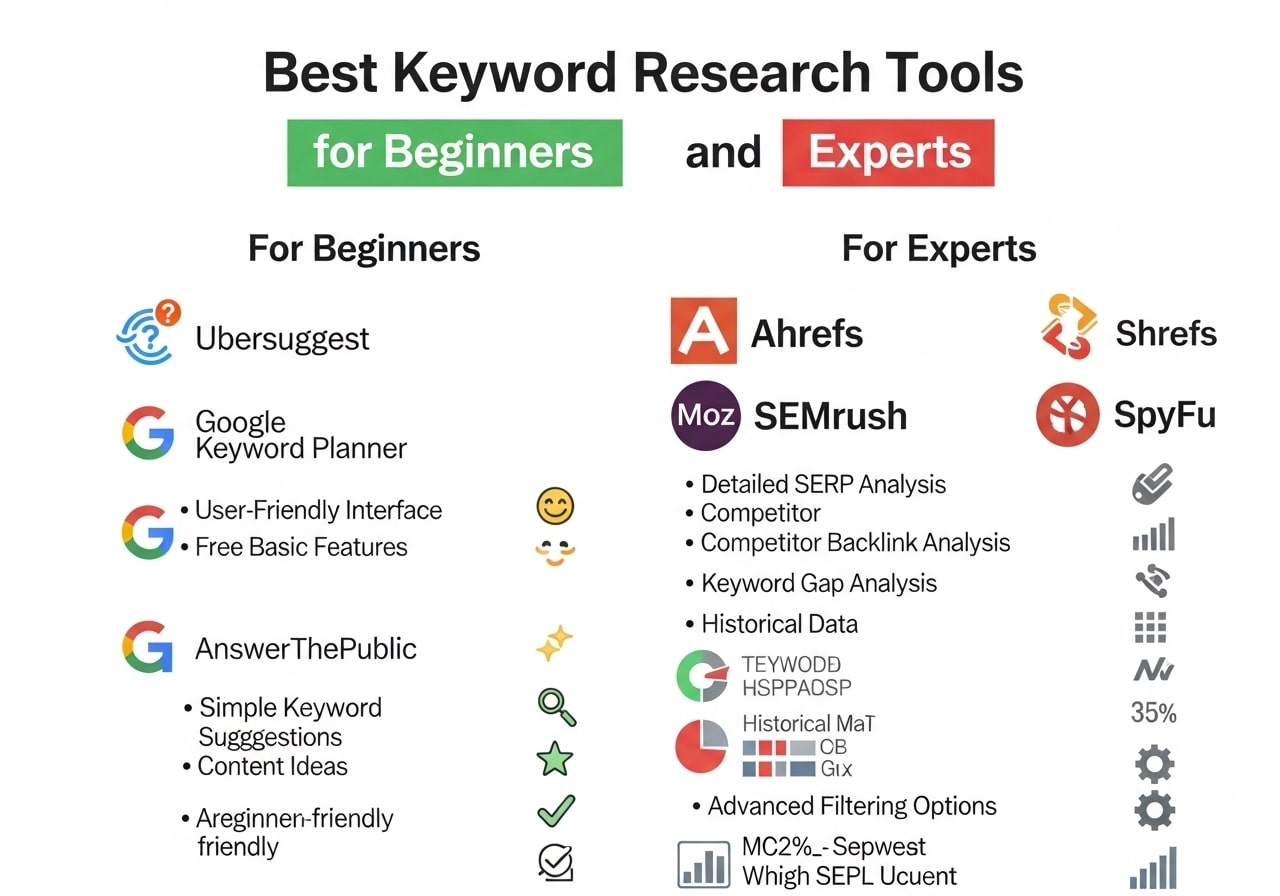
Google Keyword Planner is perfect for beginners since it’s free and comes directly from Google. Ubersuggest and AnswerThePublic are also beginner-friendly with simple interfaces. These tools don’t overwhelm you with too much data and help you understand the basics of keyword research without a steep learning curve.
What keyword research tools should experts consider using?
Advanced users often prefer Ahrefs, SEMrush, or Moz Pro because they offer deeper data analysis, competitor research, and tracking features. These tools provide more detailed metrics like keyword difficulty scores, SERP analysis, and historical data that help experts make more strategic decisions.
Are there any completely free keyword research tools worth using?
Yes, several free tools work well. Google Keyword Planner (requires Google Ads account), Google Trends, AnswerThePublic (limited free searches), and Ubersuggest (limited free searches) all provide valuable data. While they have limitations compared to paid tools, they’re great starting points and can handle basic research needs.
How much should I expect to spend on a good keyword research tool?
Free tools can handle basic needs, but paid tools typically range from $30 to $400 per month. Ubersuggest starts around $12/month, while comprehensive tools like Ahrefs or SEMrush cost $99-$400/month. Most small businesses and beginners find tools in the $30-$100 range meet their needs perfectly.
What’s the difference between free and paid keyword research tools?
Paid tools give you more data, including exact search volumes, detailed competition analysis, and unlimited searches. They also track your rankings over time and provide competitor insights. Free tools usually limit your daily searches and give estimated rather than precise data, but they still provide enough information for basic research.
Can I rely on just one keyword research tool or should I use multiple?
Using multiple tools gives you a more complete picture since each tool has different data sources and strengths. Many people start with one main tool and supplement it with free options like Google Trends or AnswerThePublic. This approach helps verify data and discovers keywords that one tool might miss.
How do I know which keywords are worth targeting from these tools?
Look for keywords with decent search volume but manageable competition for your website’s authority level. Long-tail keywords (3-4 words) are often easier to rank for than single words. Also consider search intent – make sure the keyword matches what your content actually provides to visitors.
Do keyword research tools work for all types of websites and industries?
Most tools work across different industries, but some perform better in certain areas. Local businesses might find Google My Business insights more valuable, while e-commerce sites benefit from tools that show commercial intent keywords. The key is understanding your specific audience and choosing tools that provide relevant data for your niche.
How often should I use keyword research tools to update my strategy?
Check your main keywords monthly to track performance and spot trends. Do deeper keyword research quarterly when planning new content or campaigns. Keep an eye on seasonal trends and industry changes that might affect your keywords. Regular monitoring helps you stay competitive and catch new opportunities as they emerge.