

When you want to improve your website’s search rankings, learning how to analyze competitor keywords becomes one of your most powerful strategies. This approach helps you discover what’s working for your competitors and find new opportunities to boost your own SEO performance.
What is Competitor Keyword Analysis?
Competitor keyword analysis is the process of researching and examining the keywords that your competitors rank for in search engines. This involves identifying which search terms drive traffic to their websites, understanding their content strategy, and finding gaps in their approach that you can fill.
What is an example of a competitor keyword? Let’s say you run a fitness blog. If your competitor ranks for “home workout routines,” “bodyweight exercises,” and “fitness equipment reviews,” these become competitor keywords you should analyze and potentially target.
The practice goes beyond simply copying what others do. It’s about understanding the search landscape in your industry and making informed decisions about your content strategy.
Why You Should Run Competitive Keyword Analysis
Why would you run competitive analyses of keywords? The benefits extend far beyond just finding new keyword ideas:
Discover Untapped Opportunities
When you analyze competitor keywords, you often find search terms you never considered. These might be long-tail keywords or niche topics that could drive qualified traffic to your site.
Understand Search Intent
By examining how competitors structure their content around specific keywords, you gain insights into what searchers actually want when they use those terms.
Identify Content Gaps
You might discover topics your competitors haven’t covered well, giving you a chance to create better, more comprehensive content.
Benchmark Your Performance
Competitor analysis helps you understand where you stand in your market and what it takes to compete effectively.
Can keyword research help with SEO? Absolutely. When combined with competitor analysis, keyword research becomes even more powerful because you’re making decisions based on real market data rather than guesswork.
Essential Tools for Competitor Analysis
SEMrush: The Complete Solution
What is competitor keyword analysis Semrush? SEMrush offers comprehensive competitor research features that show you exactly which keywords your competitors rank for, their search positions, and estimated traffic volumes.
Key SEMrush features for competitor analysis:
- Organic research reports
- Keyword gap analysis
- Position tracking
- Backlink analysis
- PPC research
SpyFu: Ad Intelligence
What is SpyFu used for? SpyFu specializes in revealing your competitors’ paid and organic search strategies. It’s particularly useful for understanding PPC campaigns and finding profitable keywords.
Other Valuable Tools
- Ahrefs: Excellent for backlink analysis and keyword research
- Moz: Great for local SEO competitor analysis
- Google Keyword Planner: Free tool for basic keyword research
- SimilarWeb: Useful for traffic analysis and website performance
How to Analyze Competitor Keywords: Step-by-Step Process
Step 1: Identify Your True Competitors
What is the first step in the analysis of competitors position? Start by identifying who you’re actually competing against in search results, not just in business.
Search for your target keywords and note which websites consistently appear in the top 10 results. These are your SEO competitors, and they might be different from your business competitors.
Step 2: Use Keyword Research Tools
How to construct a competitor analysis? Begin with tools like SEMrush or Ahrefs:
- Enter your competitor’s domain
- Navigate to their organic keywords report
- Filter results by search volume and position
- Export the data for further analysis
Step 3: Categorize the Keywords
Group the keywords you find into categories:
- High-volume, high-competition keywords
- Long-tail, specific keywords
- Brand-related keywords
- Local or geographic keywords
Step 4: Analyze Content Quality
Visit the pages that rank for your target keywords. Examine:
- Content length and depth
- Content structure and formatting
- Use of images and media
- User engagement signals
How to make a good keyword analysis? Focus on understanding not just what keywords competitors use, but how they use them in their content.
Understanding Keyword Competition Levels
How to see how competitive a keyword is? Several factors determine keyword difficulty:
Competition Metrics
- Keyword Difficulty Score: Most tools provide a 0-100 score
- Search Volume: Higher volume often means more competition
- Cost Per Click (CPC): Higher CPC indicates commercial value
- Number of Results: More results suggest higher competition
Analyzing SERP Features
Look at search results to understand what you’re competing against:
- Featured snippets
- Local pack results
- Shopping results
- Knowledge panels
These features can affect how much organic traffic is available for any keyword.
Creating Your Competitor Analysis Framework
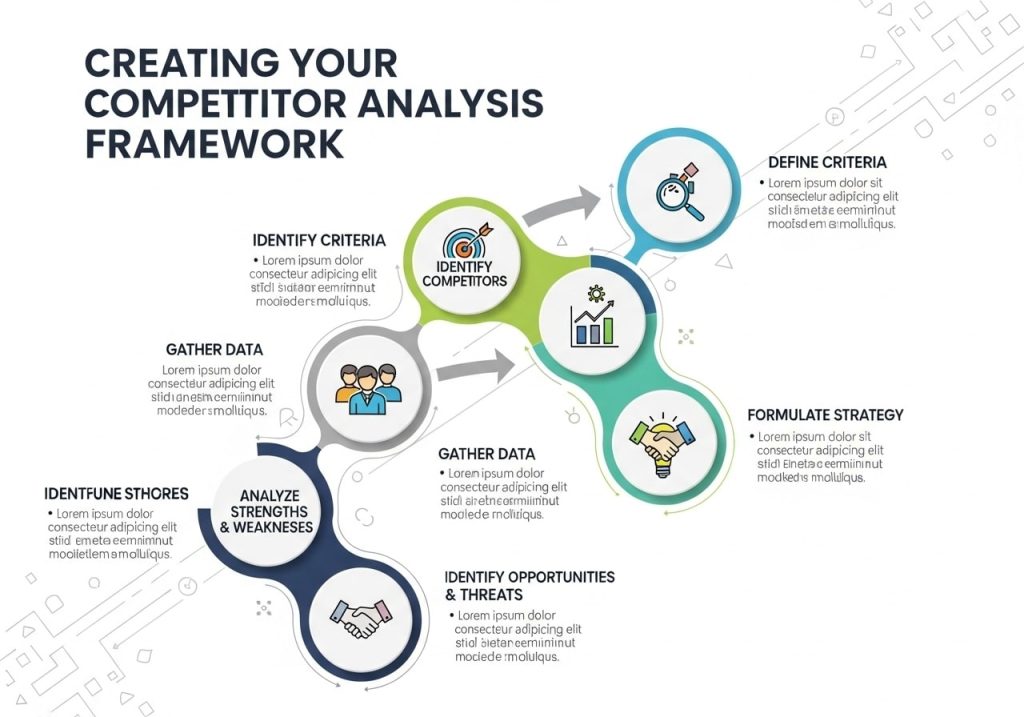
What is the framework for analyzing competition? A systematic approach ensures you don’t miss important insights:
The SWOT Analysis Approach
What is a SWOT analysis for competitors? SWOT (Strengths, Weaknesses, Opportunities, Threats) helps organize your competitive research:
Strengths: What do competitors do well?
- High-quality content
- Strong backlink profiles
- Good technical SEO
Weaknesses: Where do they fall short?
- Thin content on certain topics
- Slow page load speeds
- Poor mobile experience
Opportunities: What can you do better?
- Cover topics they’ve missed
- Create more comprehensive content
- Target underserved keywords
Threats: What challenges do they present?
- Strong brand recognition
- Large content teams
- Significant advertising budgets
Industry-Specific Frameworks
Home renovation competitors swot analysis might focus on:
- Local market presence
- Project portfolio quality
- Customer review ratings
- Service area coverage
B2b competitor analysis often emphasizes:
- Content marketing strategies
- Lead generation tactics
- Industry expertise demonstration
- Sales funnel optimization
Analyzing Competitor Traffic and Performance
How do you analyze competitor traffic? Understanding your competitors’ traffic sources reveals their overall digital strategy:
Traffic Sources to Examine
- Organic Search Traffic
- Which keywords drive the most traffic
- Seasonal traffic patterns
- Content performance
- Paid Search Traffic
- PPC keyword strategies
- Ad copy approaches
- Landing page optimization
- Social Media Traffic
- Platform preferences
- Content types that perform well
- Engagement strategies
- Direct and Referral Traffic
- Brand strength indicators
- Partnership opportunities
- Content marketing success
Using Traffic Analysis Tools
Tools like SimilarWeb and SEMrush provide traffic estimates that help you understand:
- Overall website performance
- Traffic trends over time
- Geographic traffic distribution
- Device preferences
PPC Competitor Analysis Examples
How to spy on competitors ads? Understanding competitor advertising strategies provides insights into profitable keywords and successful ad approaches.
Google Ads Intelligence
PPC competitor analysis examples include:
- Keyword Strategy Analysis
- Which keywords competitors bid on
- Bid estimates and competition levels
- Seasonal bidding patterns
- Ad Copy Analysis
- Messaging strategies
- Call-to-action approaches
- Unique selling propositions
- Landing Page Analysis
- Page design and layout
- Conversion optimization tactics
- User experience elements
Facebook and Social Media Ads
Use Facebook’s Ad Library to see:
- Active ad campaigns
- Ad creative approaches
- Targeting strategies
- Campaign duration
Building Your Competitor Analysis Template
Competitor analysis template powerpoint presentations should include:
Essential Slides for Your Analysis
- Executive Summary
- Key findings
- Strategic recommendations
- Priority actions
- Competitor Overview
- Market position
- Business model
- Target audience
- Keyword Analysis
- Top-performing keywords
- Keyword gaps
- Opportunity assessment
- Content Strategy
- Content types
- Publishing frequency
- Performance metrics
- Technical Analysis
- Site speed
- Mobile optimization
- SEO technical factors
Competitor analysis services often provide these templates, but creating your own ensures it matches your specific needs and industry requirements.
Industry-Specific Competitor Analysis
Home Remodeling Industry
Home remodeling competitors swot analysis should focus on:
- Local SEO Performance: How well do competitors rank for “kitchen remodeling [city]” type keywords?
- Visual Content Strategy: Do they showcase before/after photos effectively?
- Review Management: How do they handle online reputation?
- Service Area Coverage: What geographic areas do they target?
Amazon Marketplace
Amazon competitor analysis requires different approaches:
- Product Keyword Optimization: Which keywords drive product visibility?
- Pricing Strategies: How do competitors price similar products?
- Review Acquisition: What strategies do they use to get positive reviews?
- Product Image Optimization: How do they present their products visually?
Advanced Competitor Analysis Techniques

Content Gap Analysis
Identify topics your competitors haven’t covered by:
- Analyzing their content themes
- Finding questions their content doesn’t answer
- Looking for emerging trends in your industry
- Examining related industries for inspiration
Backlink Competitive Analysis
Understanding where competitors get their links helps you:
- Find link building opportunities
- Understand their content promotion strategies
- Identify industry publications and influencers
- Discover partnership possibilities
Technical SEO Comparison
Compare technical factors like:
- Page load speeds
- Mobile responsiveness
- SSL certificates
- Schema markup usage
- Internal linking strategies
Putting Your Analysis into Action
Prioritizing Opportunities
Not every competitor keyword deserves your attention. Focus on:
- Keywords with good search volume and reasonable competition
- Topics that align with your business goals
- Keywords where you can create superior content
- Long-tail variations with less competition
Creating Your Content Strategy
Use competitor insights to:
- Plan content that fills gaps in the market
- Optimize existing content for better performance
- Develop content series around profitable topics
- Improve your content’s depth and quality
Monitoring and Adjusting
Competitor analysis isn’t a one-time activity:
- Set up alerts for new competitor content
- Monitor ranking changes monthly
- Track competitor backlink acquisition
- Watch for new competitors entering your space
Common Mistakes to Avoid
Simply Copying Competitors
Don’t just copy what competitors do. Instead:
- Understand why their strategies work
- Adapt their approaches to your unique situation
- Look for ways to improve upon their methods
- Maintain your brand’s unique voice and approach
Focusing Only on Direct Competitors
Consider indirect competitors who might rank for your keywords:
- Large publications in your industry
- Aggregator sites
- Social media platforms
- Video platforms like YouTube
Ignoring User Intent
Remember that keywords represent real people with real needs:
- Understand what searchers want to accomplish
- Create content that truly serves their needs
- Consider the full customer journey
- Focus on providing value, not just ranking
The ability to analyze competitor keywords effectively gives you a significant advantage in today’s competitive digital landscape. By understanding what works for others in your space, you can make informed decisions about your own SEO strategy, create better content, and ultimately drive more qualified traffic to your website.
Remember that successful competitor analysis combines the right tools, systematic processes, and strategic thinking. Start with one or two main competitors, master the analysis process, then expand your research to include more players in your market.
Ready to start your competitor keyword analysis? Begin by identifying your top three search competitors and use the frameworks and tools discussed in this guide. The insights you gain will transform how you approach SEO and content marketing.
FAQs
What exactly is competitor keyword analysis?
Competitor keyword analysis is the process of finding and studying the keywords your competitors use to rank well in search engines. You basically look at what search terms bring traffic to their websites so you can target similar or better keywords for your own site.
Why should I bother analyzing my competitors’ keywords?
When you see what keywords work for your competitors, you save time and guesswork. Instead of starting from scratch, you can find proven keywords that already bring traffic in your industry. You might also discover keyword opportunities you never thought of before.
How do I figure out who my real SEO competitors are?
Your SEO competitors aren’t always your business competitors. Search for your main keywords on Google and see which websites consistently show up in the top 10 results. These are your SEO competitors because they’re competing for the same search traffic you want.
What free tools can I use to find competitor keywords?
You can start with Google’s search suggestions, Google Keyword Planner, and Ubersuggest’s free version. Also try manually checking your competitors’ page titles, headings, and content. Google’s “People also ask” and “Related searches” sections give you hints about what keywords work in your niche.
Which paid tools work best for competitor keyword research?
Popular options include SEMrush, Ahrefs, and Moz. These tools show you exactly which keywords your competitors rank for, how much traffic those keywords bring, and how hard they are to rank for. Most offer free trials so you can test them out first.
What should I look for when I find my competitor’s keywords?
Focus on keywords with good search volume but not too much competition. Look for keywords where your competitors rank on page 2 or 3 – these might be easier for you to rank higher for. Also check for long-tail keywords that are more specific and often easier to rank for.
How can I find gaps in my competitor’s keyword strategy?
Look for topics your competitors don’t cover well or at all. Check if they’re missing certain types of content like how-to guides, product comparisons, or local searches. These gaps represent opportunities where you can create content and potentially rank easily.
Should I target the exact same keywords as my competitors?
Not always. While you should target some of the same profitable keywords, also look for related keywords they might have missed. Sometimes targeting slightly different or more specific keywords can be more effective, especially if you’re just starting out.
How often should I check my competitors’ keywords?
Check monthly or quarterly for major changes, but don’t obsess over it. Your competitors’ strategies change over time, and new competitors might enter your space. Set up alerts or schedule regular checks to stay updated without getting overwhelmed.
What’s the biggest mistake people make with competitor keyword analysis?
The biggest mistake is copying everything without thinking. Just because a keyword works for your competitor doesn’t mean it’s right for your website or audience. Always consider your own goals, resources, and what makes sense for your specific business before targeting any keyword.