
Getting hit by a Google core update can feel like watching your website traffic disappear overnight. If you’re wondering how to recover from Google core update penalties, you’re not alone. Many website owners face this challenge, but the good news is that google penalty recovery is possible with the right approach and patience.
Understanding Google Core Updates and Penalties
Google core updates happen several times a year, and they can significantly impact your website’s search rankings. These updates aren’t actually penalties in the traditional sense – they’re changes to how Google evaluates and ranks content. However, when your site loses rankings after an update, it feels just like a penalty.
Google releases these updates to improve search results for users. The search engine constantly refines its algorithm to show the most helpful, relevant, and trustworthy content. Sometimes, websites that previously ranked well might not meet the new standards.
What Makes Core Updates Different
Unlike other Google updates that target specific issues like spam or technical problems, core updates look at the overall quality of your content and website. They evaluate factors like:
- Content quality and depth
- User experience signals
- Website authority and trust
- Technical performance
- Mobile-friendliness
Signs Your Website Was Hit by a Google Core Update
Before you start the google recovery process, you need to confirm that a core update actually affected your site. Here are the main warning signs:
Traffic and Ranking Drops
The most obvious sign is a sudden drop in organic traffic, usually within a few days of a core update rollout. You might notice:
- 20-50% or more decrease in organic traffic
- Multiple keywords dropping in rankings simultaneously
- Pages that previously ranked on page 1 moving to page 2 or beyond
- Decreased impressions and clicks in Google Search Console
Timing Correlation
Check if your traffic drop aligns with known google core update history. Google typically announces major updates, and SEO communities on platforms like google core update reddit discussions often track these changes.
Broad Impact Across Your Site
Core updates usually affect multiple pages or your entire website, not just individual pages. If only one or two pages lost rankings, it might be a different issue.
Google Core Update History and Patterns
Understanding google core update history helps you recognize patterns and prepare for future updates. Here are some notable updates:
Recent Major Updates
- March 2024 Core Update: Focused on reducing unhelpful content
- October 2023 Core Update: Emphasized content quality and user experience
- August 2023 Core Update: Targeted content relevance and authority
- March 2023 Core Update: Improved evaluation of content helpfulness
Common Patterns
Google core updates typically:
- Roll out over 1-2 weeks
- Impact 2-5% of search queries significantly
- Focus on content quality improvements
- Reward helpful, people-first content
Step-by-Step Google Penalty Recovery Process
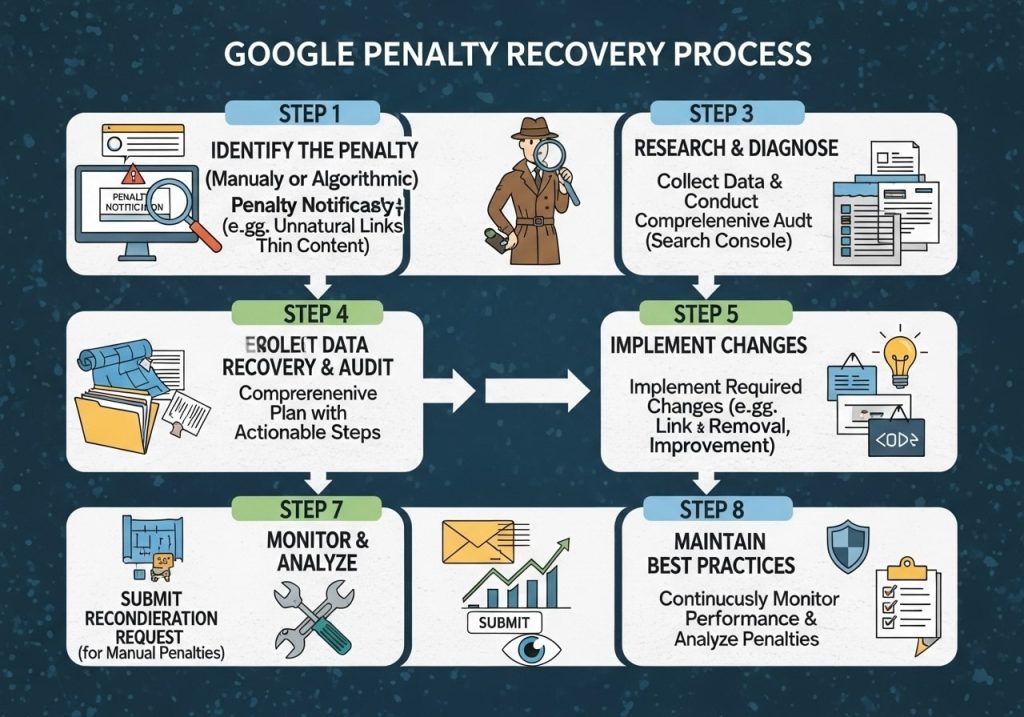
Now let’s dive into how to recover from a google core update. This process requires patience, as recovery can take several months.
Step 1: Analyze the Impact
Start by gathering data about what happened to your website:
Use Google Search Console to identify:
- Which pages lost the most traffic
- What queries were affected
- Any technical issues that appeared around the update
Check your analytics for:
- Traffic patterns before and after the update
- User behavior changes (bounce rate, time on site)
- Conversion rate impacts
Step 2: Content Quality Audit
Since core updates focus heavily on content quality, this is where you’ll likely find the biggest issues:
Review your content for:
- Thin or shallow content that doesn’t fully address user needs
- Outdated information that’s no longer accurate or relevant
- Duplicate or similar content across multiple pages
- Content that seems written for search engines rather than people
Ask yourself:
- Does this content provide real value to users?
- Would someone find this helpful and informative?
- Is the information accurate and up-to-date?
- Does it answer the user’s question completely?
Step 3: Improve Content Quality
This is the most important part of how to recover from google penalty situations:
Create comprehensive, helpful content:
- Add more depth and detail to thin pages
- Include practical examples and actionable advice
- Update statistics and information to current data
- Add visual elements like images, charts, or videos where helpful
Focus on user intent:
- Make sure your content matches what people are actually searching for
- Organize information in a logical, easy-to-follow structure
- Use clear headings and bullet points for readability
- Answer related questions users might have
Step 4: Technical SEO Review
While content is crucial, technical issues can also contribute to core update impacts:
Check these technical factors:
- Page loading speed (aim for under 3 seconds)
- Mobile responsiveness and usability
- Internal linking structure
- URL structure and navigation
- Schema markup implementation
Use tools like:
- Google PageSpeed Insights for performance
- Mobile-Friendly Test for mobile usability
- Google Search Console for technical errors
Step 5: Build Authority and Trust
Google core updates heavily weigh authority and trustworthiness:
Improve your site’s authority by:
- Getting mentioned or linked to by reputable websites in your industry
- Creating content that other sites want to reference
- Building relationships with other website owners and bloggers
- Participating in industry discussions and communities
Build trust signals:
- Add clear contact information and about pages
- Include author bios for content creators
- Display customer reviews and testimonials
- Show security certificates and privacy policies
How to Fix Google Penalty Issues
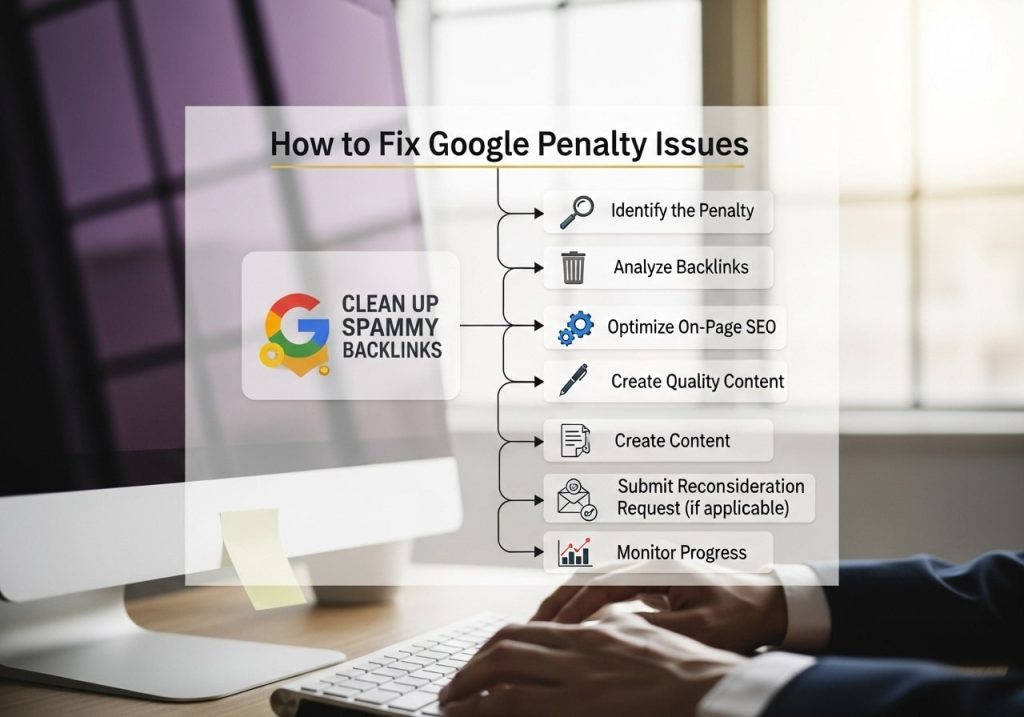
How to fix google penalty problems requires a systematic approach:
Identify Root Causes
Most core update impacts stem from:
- Content quality issues (most common)
- Poor user experience
- Lack of expertise, authority, or trustworthiness
- Technical problems
Prioritize Fixes
Focus your efforts where they’ll have the biggest impact:
- Start with your most important pages (homepage, main service pages, top traffic generators)
- Fix content quality issues first (this usually has the biggest impact)
- Address technical problems that affect user experience
- Build authority over time through consistent quality improvements
Monitor Progress
Recovery from google core update impacts takes time. Monitor your progress by:
- Checking Google Search Console weekly for ranking changes
- Tracking organic traffic trends in your analytics
- Monitoring user engagement metrics
- Keeping notes on what changes you made and when
Google Penalty Checker Tools and Methods
Several google penalty checker tools and methods can help you diagnose and monitor your recovery:
Free Tools In Google
Google Search Console (essential):
- Shows ranking changes over time
- Identifies pages with declining performance
- Reveals technical issues
Google Analytics:
- Tracks traffic patterns
- Shows user behavior changes
- Helps identify affected content areas
Google’s PageSpeed Insights:
- Checks page loading performance
- Provides mobile and desktop recommendations
Paid Tools
SEMrush or Ahrefs:
- Track keyword rankings over time
- Compare your performance to competitors
- Identify content gaps and opportunities
Screaming Frog:
- Crawls your entire website for technical issues
- Identifies content problems at scale
Creating a Long-term Recovery Strategy

Google penalty recovery isn’t a one-time fix – it requires ongoing effort:
Content Improvement Plan
Create a systematic approach to improving your content:
Monthly content audits:
- Review your lowest-performing pages
- Update outdated information
- Add more comprehensive information where needed
- Remove or consolidate thin content
Content creation strategy:
- Focus on topics where you can provide genuine expertise
- Create comprehensive guides rather than short articles
- Include original research, examples, or insights
- Make sure every piece of content serves a clear purpose
Technical Maintenance
Keep your website running smoothly:
- Regular performance monitoring and optimization
- Fix broken links and 404 errors promptly
- Keep your website software and plugins updated
- Monitor for security issues
Authority Building
Consistently work on building your website’s authority:
- Guest posting on reputable websites in your industry
- Creating linkable assets (research studies, comprehensive guides, tools)
- Participating in industry events and discussions
- Building relationships with other website owners
Common Mistakes to Avoid During Recovery
Many website owners make these mistakes when trying to recover from google penalty situations:
Rushing the Process
Recovery from core updates typically takes 3-6 months or more. Don’t expect immediate results, and don’t make drastic changes all at once. Google needs time to recrawl and reevaluate your content.
Focusing Only on Technical Issues
While technical SEO is important, core updates primarily focus on content quality. Don’t spend all your time on technical fixes while ignoring content problems.
Creating More Content Instead of Improving Existing Content
Adding new content won’t help if your existing content is the problem. Focus on improving what you have before creating more.
Copying Competitors
Just because a competitor ranks well doesn’t mean you should copy their approach. Focus on creating genuinely helpful content for your audience.
Ignoring User Experience
Content quality includes how easy it is for users to find and consume your information. Don’t ignore design, navigation, and usability.
Preventing Future Google Penalties
The best google penalty recovery guide is prevention:
Stay Informed About Updates
- Follow Google’s official announcements
- Join SEO communities and forums
- Monitor industry publications for update news
- Participate in discussions on platforms like reddit where SEO professionals share insights
Focus on Long-term Quality
Instead of chasing algorithm changes:
- Create content that genuinely helps your audience
- Focus on providing comprehensive, accurate information
- Build real relationships and earn natural links
- Regularly update and improve your existing content
Regular Website Maintenance
- Conduct quarterly content audits
- Monitor your website’s technical performance monthly
- Keep track of your rankings and traffic patterns
- Address issues promptly when they arise
When to Seek Professional Help
Sometimes, how to recover from google core update challenges require professional assistance:
Consider hiring help if:
- Your traffic dropped more than 50%
- You’re not seeing improvement after 6 months of effort
- You’re not sure what caused the ranking drops
- You don’t have time to implement recovery strategies yourself
- Your business depends heavily on organic search traffic
What to look for in SEO professionals:
- Experience with core update recovery specifically
- Case studies showing successful recoveries
- Clear explanation of their process and timeline
- Focus on content quality improvement, not just technical fixes
How to remove google penalty impacts requires patience, consistent effort, and a focus on creating genuinely helpful content. Remember that Google’s goal is to show users the best, most helpful results. If you align your website with that goal, you’ll be much more likely to recover and maintain strong rankings over time.
The key to successful google penalty recovery is understanding that these updates aren’t really penalties – they’re opportunities to improve your website and better serve your audience. By focusing on content quality, user experience, and building genuine authority in your field, you can not only recover from core update impacts but build a stronger, more resilient website.
Ready to start your recovery? Begin with a comprehensive content audit of your most important pages, and remember that recovery is a marathon, not a sprint. Stay consistent with your improvements, and you’ll likely see positive results in the months ahead.
FAQs
What exactly is a Google Core Update penalty?
A Google Core Update penalty happens when your website loses rankings and traffic after Google releases a major algorithm update. Your site might drop from page one to page three, or even further back. Google rolls out these updates several times a year to improve search results, and sometimes your site gets caught in the crossfire even if you haven’t done anything wrong.
How do I know if my site was hit by a core update?
Check your Google Analytics and Search Console for sudden drops in traffic that match up with Google’s core update dates. If your rankings and clicks dropped significantly within a few days of an announced update, you’ve likely been affected. The drop usually happens across multiple pages, not just one or two.
Can I recover from a core update penalty?
Yes, you can recover, but it takes time and patience. Most recoveries happen during the next core update, which typically comes 3-6 months later. Focus on improving your content quality, user experience, and overall website health rather than trying quick fixes.
How long does it take to recover from a core update hit?
Recovery usually takes 3-6 months, often coinciding with the next core update. Some sites see improvements sooner with consistent work, while others might take up to a year. The key is staying consistent with improvements and not panicking about daily ranking changes.
Should I make major changes to my website immediately after being hit?
No, avoid making drastic changes right away. Take time to analyze what might have caused the drop first. Making too many changes at once makes it hard to figure out what actually helps. Start with small, quality improvements and track their impact.
What’s the most important thing to focus on during recovery?
Focus on content quality above everything else. Google’s core updates primarily target content that doesn’t provide real value to users. Review your pages and ask yourself: “Does this genuinely help someone solve a problem?” If not, improve it or remove it.
Will creating new content help me recover faster?
Creating new, high-quality content can help, but don’t neglect your existing pages. Often, improving and updating your current content works better than starting from scratch. Google wants to see that your entire site provides value, not just your newest posts.
How do I stay calm while waiting for recovery?
Set realistic expectations and focus on what you can control. Check your rankings weekly, not daily. Keep working on improvements, but also diversify your traffic sources through email marketing, social media, and direct visits. Remember that many successful sites have bounced back from core update hits.
Are there any quick fixes for core update penalties?
No reliable quick fixes exist. Anyone promising instant recovery is likely trying to sell you something that won’t work. The best approach is consistent, long-term improvements to your content and user experience. Google rewards patience and genuine quality over shortcuts.
When should I consider getting professional help?
Consider hiring an SEO professional if you’re not seeing any improvement after 6-9 months of consistent work, or if you’re not sure how to identify and fix the issues. Look for someone who focuses on content quality and user experience rather than promising quick ranking boosts.