

The digital world changes fast, and what works for SEO today might not work tomorrow. Smart businesses are already thinking about future proof SEO strategies that will help them stay ahead of the game. When we talk about the future of SEO, we’re looking at trends, technologies, and user behaviors that will shape how people find and interact with websites in the coming years.
Why Future-Proof SEO is Crucial for Long-Term Success
Search engines update their algorithms hundreds of times each year. Google alone makes thousands of changes, with major updates happening several times annually. This constant evolution means that businesses need to think beyond quick fixes and focus on building lasting SEO foundations.
Future-proofing strategy in SEO means creating a sustainable approach that adapts to changes rather than breaking when algorithms shift. Traditional SEO tactics like keyword stuffing or buying low-quality backlinks might provide short-term gains, but they often lead to penalties and lost rankings over time.
The most successful websites understand that SEO isn’t just about ranking higher in search results. It’s about creating value for users while meeting search engines’ evolving requirements. This approach requires thinking about future proof strategies that align with both technological advances and changing user expectations.
Core Elements of Future-Proofing Strategies
Quality Content Creation
Content remains the foundation of effective SEO, but the definition of quality content continues to evolve. Search engines are getting better at understanding context, user intent, and content depth. This means businesses need to focus on creating comprehensive, helpful content that truly serves their audience.
When developing future-proofing business strategies for content, consider:
- Depth over breadth: Instead of creating many shallow articles, focus on fewer, more comprehensive pieces
- User intent matching: Understand what people actually want when they search for specific terms
- Expert knowledge: Demonstrate real expertise in your field through detailed, accurate information
- Regular updates: Keep content fresh and current to maintain relevance
Authority and Trust Building
Search engines increasingly prioritize websites that demonstrate expertise, authority, and trustworthiness. This concept, often called E-A-T, becomes more important as search engines try to combat misinformation and provide users with reliable sources.
Building authority requires:
- Consistent publishing: Regular content publication shows ongoing expertise
- Expert contributors: Having recognized experts create or review content
- Credible sources: Linking to and citing authoritative sources
- Transparent information: Clear author bios, contact information, and company details
Technical SEO: Building Strong Foundations
Technical SEO forms the backbone of any sustainable SEO strategy. While content attracts users and earns links, technical elements ensure search engines can properly crawl, understand, and index your website.
Site Speed and Performance
Website speed continues to be a crucial ranking factor, and its importance will only grow. Users expect fast-loading websites, and search engines prioritize sites that provide good user experiences.
Key performance areas include:
- Core Web Vitals: Google’s specific metrics for user experience
- Mobile page speed: Particularly important as mobile usage continues growing
- Server response time: The foundation of overall site performance
- Image optimization: Balancing quality with file size for faster loading
Structured Data Implementation
Structured data helps search engines understand your content better, leading to enhanced search results and better visibility. As search results become more visual and interactive, structured data becomes increasingly important.
Important structured data types:
- Organization markup: Basic business information
- Product schema: For e-commerce sites
- Article markup: For blog posts and news content
- Local business schema: For location-based businesses
Content Strategy for Long-Term Success
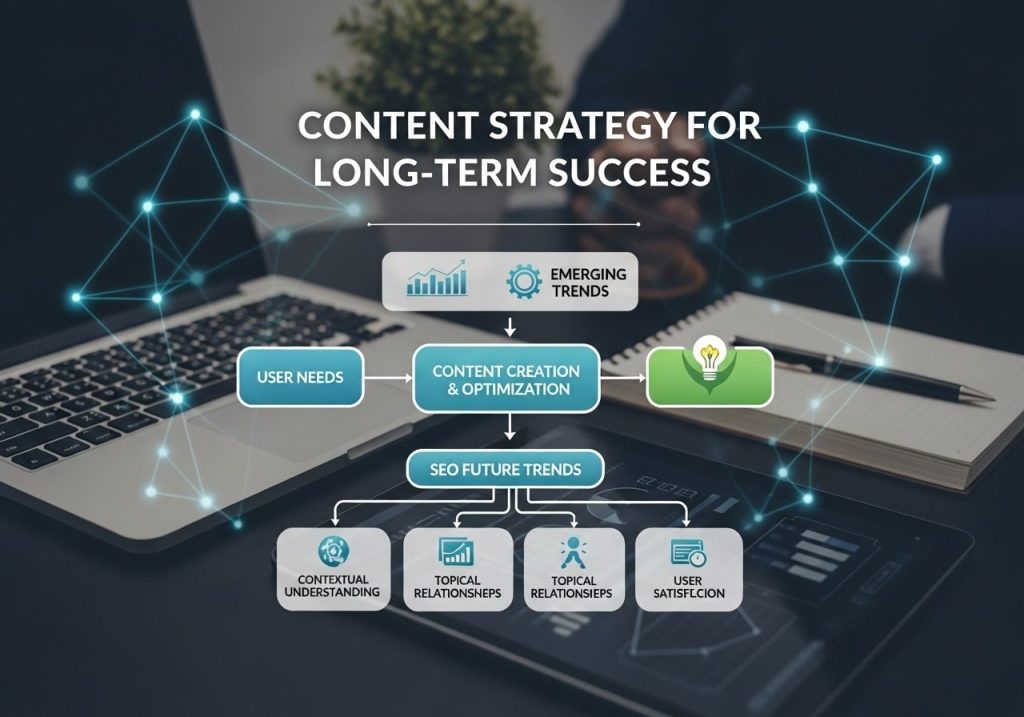
Creating content that stands the test of time requires understanding both current user needs and emerging trends. The future of SEO points toward more sophisticated content analysis, where search engines better understand context, relationships between topics, and user satisfaction.
Topic Clusters and Content Hubs
Instead of targeting individual keywords in isolation, successful websites build comprehensive topic clusters. This approach involves creating a main pillar page about a broad topic and supporting it with related subtopic pages.
Benefits of topic clusters:
- Better internal linking: Natural connections between related content
- Improved user experience: Visitors find more relevant information easily
- Enhanced topical authority: Demonstrates expertise across entire subject areas
- Future algorithm resistance: Less dependent on specific keyword rankings
Evergreen Content Development
While trending topics can drive short-term traffic, evergreen content provides lasting value. This type of content remains relevant and useful regardless of current events or seasonal trends.
Characteristics of effective evergreen content:
- Timeless topics: Subjects that remain relevant year after year
- Comprehensive coverage: Detailed information that serves as a reference
- Regular updates: Periodic refreshing to maintain accuracy
- Clear structure: Easy navigation and logical information flow
User Experience as an SEO Foundation
Search engines increasingly use user behavior signals to evaluate website quality. Factors like time on page, bounce rate, and return visits help search engines understand whether users find websites helpful and engaging.
Page Experience Signals
Google’s page experience update made user experience a direct ranking factor. This change represents a broader shift toward prioritizing websites that provide excellent user experiences.
Key page experience elements:
- Loading performance: How quickly content appears and becomes interactive
- Interactivity: How responsive the page is to user actions
- Visual stability: Whether page elements shift around during loading
- Mobile usability: How well the site works on mobile devices
Navigation and Site Architecture
Clear, logical site structure helps both users and search engines navigate your content effectively. Good architecture distributes ranking power throughout your site and makes it easy for visitors to find what they need.
Best practices for site architecture:
- Logical hierarchy: Organized structure from general to specific topics
- Internal linking: Strategic links between related pages
- Clear navigation: Easy-to-understand menu structure
- Breadcrumbs: Help users understand their location within the site
Mobile-First and Voice Search Optimization
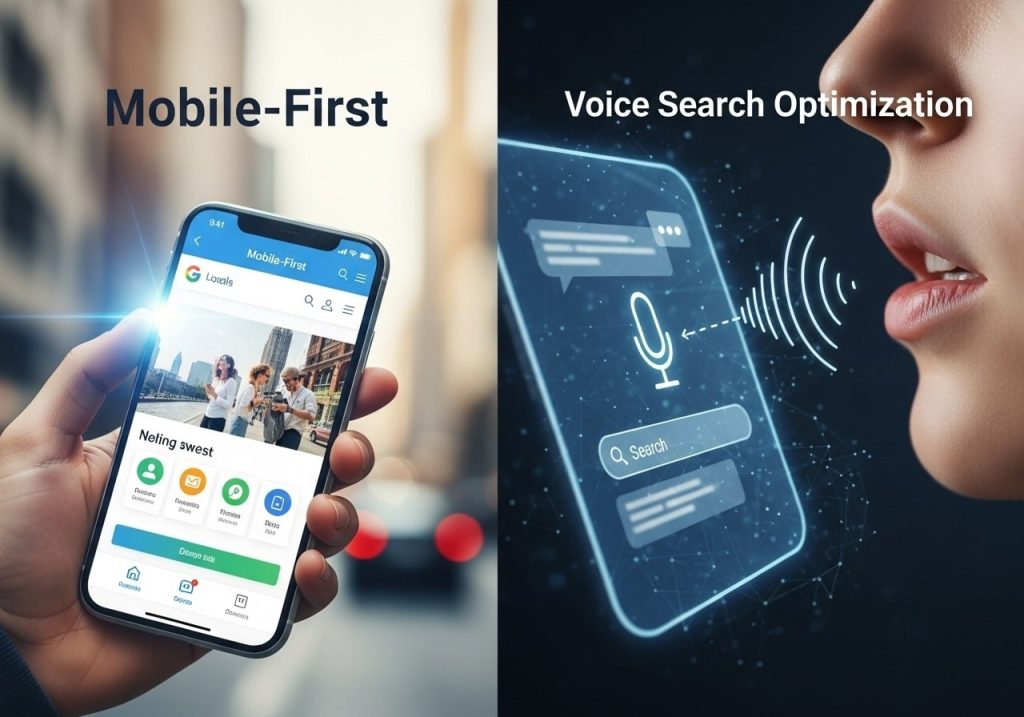
Mobile devices now account for the majority of web searches, and voice search continues growing rapidly. These trends require future-proofing technology approaches that prioritize mobile experiences and conversational search patterns.
Mobile-First Design
Google uses mobile-first indexing, meaning it primarily uses the mobile version of websites for ranking and indexing. This makes mobile optimization essential rather than optional.
Mobile optimization priorities:
- Responsive design: Sites that adapt to different screen sizes
- Touch-friendly interfaces: Easy navigation on touchscreen devices
- Fast mobile loading: Optimized performance on slower mobile connections
- Readable text: Appropriate font sizes without requiring zooming
Voice Search Preparation
Voice search queries tend to be longer and more conversational than typed searches. Preparing for this trend involves understanding how people speak their search queries rather than how they type them.
Voice search optimization strategies:
- Natural language content: Writing in conversational tones
- Question-based content: Anticipating and answering common questions
- Local optimization: Many voice searches have local intent
- Featured snippet targeting: Voice assistants often read featured snippet content
AI and Machine Learning in SEO
Artificial intelligence and machine learning are transforming how search engines understand and rank content. Future-proofing digital systems requires understanding these technologies and adapting strategies accordingly.
Understanding AI-Driven Search
Search engines use AI to better understand user intent, content quality, and the relationship between different pieces of information. This technology enables more nuanced ranking decisions based on context rather than simple keyword matching.
Implications for SEO strategy:
- Focus on user intent: Understanding why people search, not just what they search for
- Content relationships: How your content connects to broader topics and themes
- Quality signals: Various factors that indicate content value and reliability
- Personalization: How search results adapt to individual users
Adapting to Algorithm Changes
As AI becomes more sophisticated, algorithm updates may become more frequent but less disruptive for websites following best practices. The key is building strategies that align with search engines’ fundamental goals rather than trying to manipulate specific ranking factors.
Measuring Success and Adapting
Effective future proof SEO strategies require continuous monitoring and adjustment. Success metrics should focus on long-term growth and sustainability rather than short-term ranking fluctuations.
Key Performance Indicators
Important metrics for long-term SEO success:
- Organic traffic growth: Steady increase in search engine visitors
- Keyword diversity: Rankings for a wide variety of relevant terms
- User engagement: Time on site, pages per session, return visits
- Conversion rates: How well organic traffic meets business goals
Regular Strategy Reviews
Set up regular review processes to evaluate strategy effectiveness and identify needed adjustments. This might involve quarterly assessments of performance, competitor analysis, and industry trend evaluation.
Review areas should include:
- Performance against goals: Whether you’re meeting established objectives
- Competitor positioning: How your performance compares to similar businesses
- Industry changes: New trends or technologies affecting your sector
- User feedback: Direct input from your audience about their needs and preferences
Common Mistakes to Avoid
When implementing future-proofing strategies, avoid these common pitfalls that can undermine long-term success:
Over-Optimization
Trying too hard to optimize for search engines can actually hurt your rankings. Search engines prefer natural, user-focused content over content that’s clearly written primarily for ranking purposes.
Neglecting Technical Foundations
Focusing only on content while ignoring technical SEO issues can limit your success. Even the best content won’t perform well if search engines can’t properly access and understand your website.
Short-Term Thinking
SEO requires patience and long-term commitment. Strategies that promise quick results often lead to penalties or unsustainable practices.
Future-Proofing Examples from Industry Leaders
Many successful companies demonstrate effective future-proofing examples through their SEO approaches:
HubSpot built their SEO success by creating comprehensive educational content that serves their audience regardless of algorithm changes. Their blog covers topics in depth and gets updated regularly to maintain relevance.
Moz established authority in the SEO space by consistently sharing research, insights, and tools that help other marketers. This approach builds lasting value that doesn’t depend on specific ranking tactics.
Airbnb optimized for local search early and built a platform that naturally generates unique, location-specific content through user reviews and listings.
These future-proofing businesses with technology examples show how focusing on user value and technical excellence creates lasting SEO success.
The future of SEO belongs to businesses that prioritize user experience, create genuinely valuable content, and maintain technical excellence. By implementing these future proof SEO strategies, you’re building a foundation that will serve your business well regardless of how search engines evolve.
Remember that successful SEO isn’t about finding shortcuts or gaming the system. It’s about creating digital experiences that truly serve your audience while meeting search engines’ quality standards. This approach requires more effort upfront but provides much more stable, long-term results.
Start implementing these strategies gradually, focusing first on areas where you can make the biggest impact. Monitor your progress regularly and stay informed about industry developments to keep your approach current and effective.
What’s your experience with long-term SEO planning? Share your thoughts and questions in the comments below, and don’t forget to subscribe for more insights on building sustainable digital marketing strategies.
FAQs
What does “future-proof SEO” actually mean?
Future-proof SEO means building your website using strategies that will work well both now and in the years ahead. Instead of chasing quick fixes or tricks that might stop working, you focus on creating quality content and following best practices that search engines will always value.
Why should I care about future-proofing my SEO instead of just focusing on current rankings?
SEO rules change all the time. What works today might hurt your rankings tomorrow. By building a solid foundation now, you save yourself from constantly scrambling to fix problems every time Google updates its algorithm. Plus, you’ll see more steady, long-term growth.
What are the most important SEO strategies that will stay relevant for years?
The basics never go out of style: creating helpful, original content that answers real questions, making sure your website loads fast, organizing your site clearly, and getting other reputable websites to link to yours. These fundamentals have worked for years and will keep working.
How often do search engine algorithms change, and how does this affect my strategy?
Google makes thousands of small changes every year, plus several major updates. Most changes are minor, but the big ones can really shake things up. That’s why sticking to proven, ethical SEO practices protects you from most of these changes.
Should I still focus on keywords if I want future-proof SEO?
Yes, but think differently about them. Instead of stuffing keywords everywhere, focus on topics and user intent. Write naturally about subjects your audience cares about, and include related terms that people actually search for. This approach works better with modern search engines.
How important is mobile optimization for long-term SEO success?
Mobile optimization is huge and will only get more important. Most people search on their phones now, and Google prioritizes mobile-friendly sites. Make sure your site looks good and works well on all devices – this isn’t going anywhere.
What role does website speed play in future SEO strategies?
Website speed is critical and becoming more so. People expect fast-loading pages, and search engines know this. Slow sites frustrate users and get ranked lower. Invest in good hosting, optimize your images, and keep your site lean and fast.
How can I create content that will remain valuable over time?
Write about topics that won’t become outdated quickly. Answer common questions in your industry, explain complex concepts simply, and create comprehensive guides. Focus on helping people solve real problems rather than chasing trends.
Do I need to worry about voice search and AI in my SEO strategy?
Voice search is growing, but the same good practices apply. People ask questions naturally when speaking, so content that answers questions clearly will perform well. As for AI, search engines are getting better at understanding context and meaning, which rewards quality content even more.
How can I measure if my future-proof SEO strategies are working?
Look at steady, long-term growth rather than daily fluctuations. Track your rankings for important keywords, monitor your organic traffic over months (not days), and pay attention to user engagement metrics like time spent on your site. Consistent improvement over time shows your strategy is working.