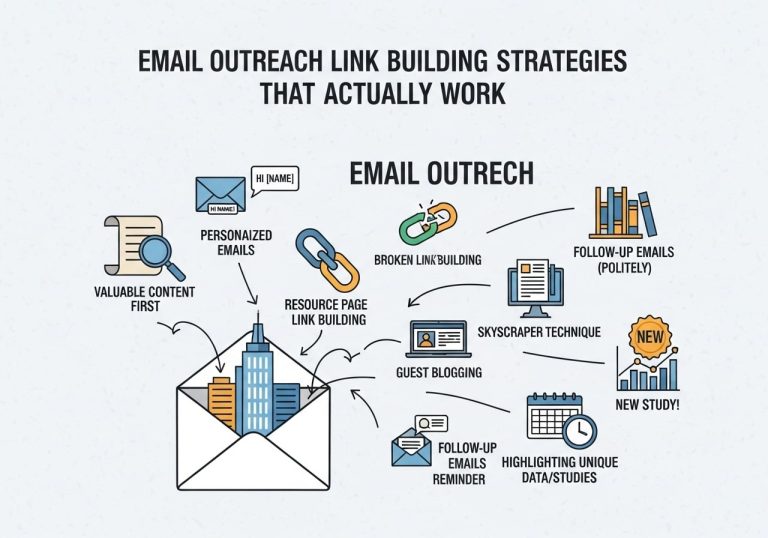
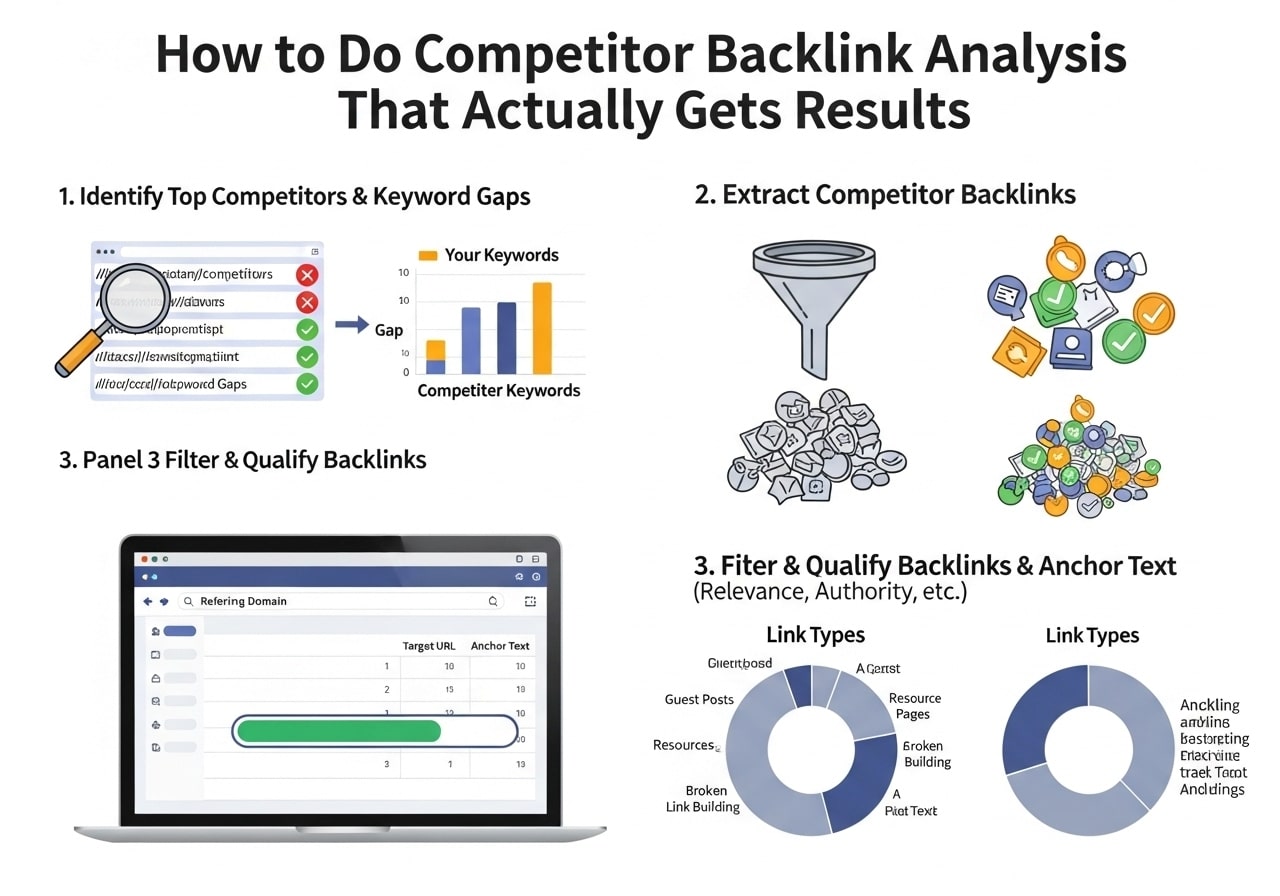
Learning how to do competitor backlink analysis can give you a massive advantage in SEO. When you understand what is backlink analysis and how your competitors build their link profiles, you can create a winning strategy that helps your website climb search rankings faster than ever before.
What is Backlink Analysis?
Backlink analysis is the process of examining the links pointing to a website from other sites across the internet. When you perform a backlink analysis, you’re looking at the quality, quantity, and types of websites that link back to a specific domain. This analysis helps you understand how a website has built its authority and trust with search engines.
A comprehensive backlink analysis reveals important information about:
- The total number of backlinks pointing to a site
- The number of unique domains linking to the site
- The quality and authority of linking websites
- The anchor text used in links
- The types of content that attract links
- Link building patterns and strategies
Understanding these elements is crucial because backlinks remain one of the most important ranking factors for search engines like Google. Websites with strong, diverse backlink profiles typically rank higher in search results.
Why Competitor Backlink Analysis Matters
Performing competitor backlink analysis gives you a roadmap to success. Instead of guessing what might work for link building, you can see exactly what’s already working in your industry. Here’s why this analysis is so valuable:
Identify Link Opportunities: By studying competitor backlinks, you can find websites that might also link to your content. If a site links to your competitor, there’s a good chance they might link to you too if you have valuable content.
Understand Industry Standards: Competitor analysis shows you what types of backlinks are common in your niche. You’ll learn whether your industry relies on guest posts, resource pages, directory listings, or other specific link types.
Spot Content Gaps: When you see what content attracts links for competitors, you can create similar or better content that has proven link-building potential.
Benchmark Your Performance: Comparing your backlink profile to competitors helps you understand where you stand and what you need to achieve to compete effectively.
Essential Tools for Competitor Backlink Analysis
To perform effective competitor backlink analysis, you need the right tools. Here are the most popular options:
Premium Tools
Ahrefs: One of the most comprehensive backlink analysis tools available. Ahrefs provides detailed information about competitor backlinks, including the ability to see new and lost links over time. You can easily find competitor backlinks with Ahrefs by entering their domain and exploring their backlink profile.
Majestic: Specializes in backlink data and offers unique metrics like Trust Flow and Citation Flow. Competitor backlink analysis using Ahrefs and Majestic together gives you the most complete picture of any link profile.
SEMrush: Offers backlink analysis as part of a broader SEO toolkit. Great for understanding both organic search and backlink strategies of competitors.
Free Tools for Competitor Backlink Analysis
Google Search Console: While limited to your own site, it’s invaluable for understanding your current backlink profile before analyzing competitors.
Ubersuggest: Offers basic backlink analysis features in their free plan, making it one of the better competitor backlink analysis tools free options.
Moz Link Explorer: Provides limited free backlink data that can be useful for initial competitor research.
Backlink Watch: A simple free tool that shows basic backlink information for any domain.
Step-by-Step Guide: How to Do Competitor Backlink Analysis
Here’s a detailed process for analyzing your competitors’ backlinks:
Step 1: Identify Your Competitors
Start by identifying who you’re really competing against in search results. Look at:
- Direct business competitors
- Websites ranking for your target keywords
- Sites that appear in the same search results as you
Create a list of 5-10 main competitors to analyze thoroughly.
Step 2: Use Backlink Analysis Tools
Enter each competitor’s domain into your chosen backlink analysis tool. Start with their homepage, but also analyze their most popular pages individually.
Step 3: Analyze Their Backlink Profile
Look at these key metrics:
- Total number of backlinks
- Number of referring domains
- Domain authority/trust scores of linking sites
- Geographic distribution of links
- Types of websites linking to them
- Most linked-to pages on their site
Step 4: Examine Link Quality
Not all backlinks are created equal. Focus on:
- Links from high-authority domains
- Links from relevant, industry-related sites
- Editorial links within content
- Links with natural, diverse anchor text
Step 5: Identify Link Building Patterns
Look for patterns in how competitors build links:
- Do they guest post frequently?
- Are they mentioned in industry roundups?
- Do they have many directory listings?
- Are they getting links from resource pages?
Step 6: Find Common Linking Domains
Use your tool to find domains that link to multiple competitors but not to you. These represent high-value opportunities.
Competitor Backlink Analysis Template
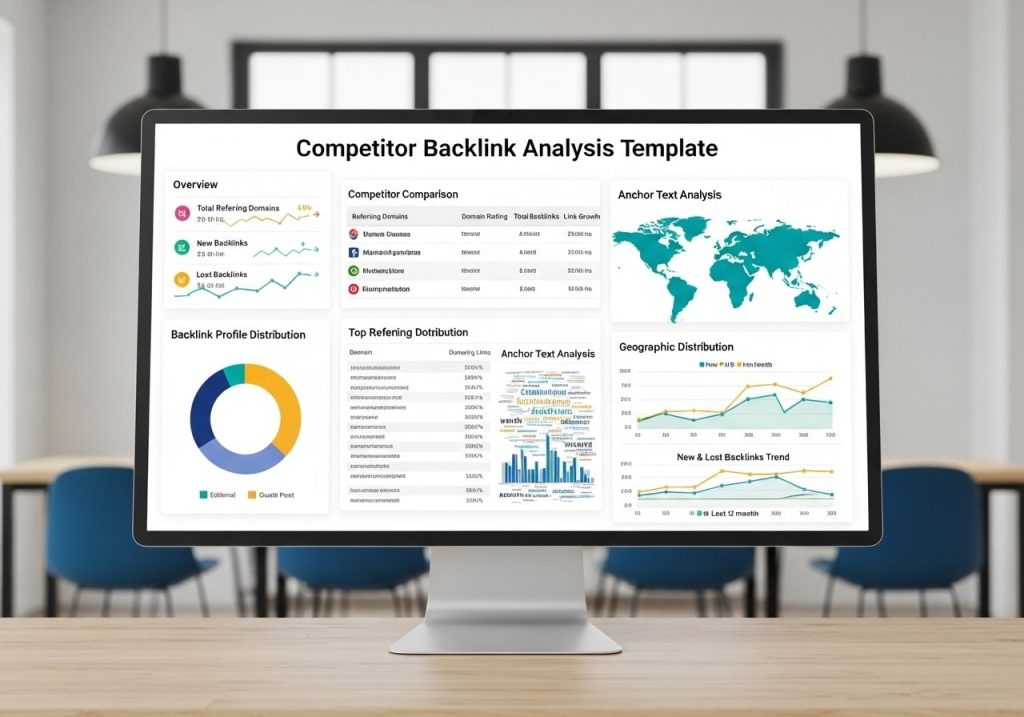
Create a systematic approach using this template:
Competitor Profile Template
- Competitor Name: [Company/Website Name]
- Domain: [competitor.com]
- Total Backlinks: [Number]
- Referring Domains: [Number]
- Domain Authority: [Score]
- Top Linking Domains: [List top 10]
- Most Linked Content: [URLs of their most popular pages]
- Common Link Types: [Guest posts, directories, etc.]
- Opportunities Identified: [Specific actions you can take]
Link Opportunity Tracking
Create a spreadsheet with these columns:
- Target Website
- Contact Information
- Link Type Opportunity
- Competitor They Link To
- Outreach Status
- Notes
This competitor backlink analysis template helps you stay organized and track your progress systematically.
How to Replicate Competitor Backlinks
Once you’ve identified valuable competitor backlinks, here’s how to replicate them:
Research the Linking Site
Before reaching out, understand:
- What type of content they typically link to
- Their linking guidelines or policies
- The context in which they linked to your competitor
- The person responsible for content decisions
Create Superior Content
Don’t just copy what your competitor did. Create something better:
- More comprehensive information
- More recent data or examples
- Better design and user experience
- Additional value that wasn’t available before
Craft Personalized Outreach
When reaching out to potential link sources:
- Reference their existing content
- Explain why your resource is valuable
- Make it easy for them to link to you
- Follow up appropriately without being pushy
Offer Mutual Value
Consider what you can offer in return:
- Share their content on your social media
- Mention them in your content
- Provide expert quotes for their articles
- Collaborate on future projects
Backlink vs Referring Domain: Understanding the Difference
Understanding the difference between backlinks and referring domains is crucial for proper analysis:
Backlinks are individual links pointing to your website. One website can create multiple backlinks to your site from different pages.
Referring Domains are unique websites that link to you. If a site links to you 10 times, that counts as 10 backlinks but only 1 referring domain.
Quality matters more than quantity. It’s generally better to have links from 100 different websites than 100 links from the same website. This is why referring domain count is often considered more important than total backlink count.
Creating Your Backlink Strategy Based on Analysis
Transform your competitor research into a actionable backlink strategy:
Prioritize High-Impact Opportunities
Focus your efforts on:
- High-authority sites that link to multiple competitors
- Industry-specific directories and resource pages
- Guest posting opportunities on relevant blogs
- Broken link replacement opportunities
Develop Content That Attracts Links
Based on your analysis, create:
- Industry reports and original research
- Comprehensive guides and tutorials
- Tools and calculators
- Infographics and visual content
- Expert roundups and interviews
Plan Your Outreach Campaign
Create a systematic outreach process:
- Segment prospects by opportunity type
- Create email templates for different scenarios
- Set up tracking to monitor response rates
- Schedule regular follow-ups
Monitor and Adjust
Regularly review your progress:
- Track new backlinks acquired
- Monitor changes in competitor backlink profiles
- Adjust strategy based on what’s working
- Identify new opportunities as they arise
Example of Backlink Strategy Implementation

Here’s a practical example of how to implement your findings:
Scenario: Your competitor analysis reveals that top competitors get many links from industry blogs through expert quotes and interviews.
Action Plan:
- Create a list of relevant industry publications
- Research journalists and editors who cover your topics
- Develop expertise in trending industry topics
- Offer yourself as an expert source
- Provide valuable quotes and insights when contacted
- Build relationships with key industry writers
This approach, based on competitor research, is more likely to succeed because you know it’s already working in your industry.
Common Mistakes to Avoid
Avoid these common pitfalls when analyzing competitor backlinks:
Focusing Only on Quantity: Don’t assume that the competitor with the most backlinks is doing everything right. Quality and relevance matter more than pure numbers.
Ignoring Context: A backlink from a high-authority site isn’t valuable if it’s completely irrelevant to your business or buried in a spam-like environment.
Copying Exactly: Don’t try to get the exact same links as competitors. Instead, use their success as inspiration for your own unique approach.
Neglecting Your Own Analysis: Always perform a backlink audit of your own site first. Understanding your starting point is crucial for setting realistic goals.
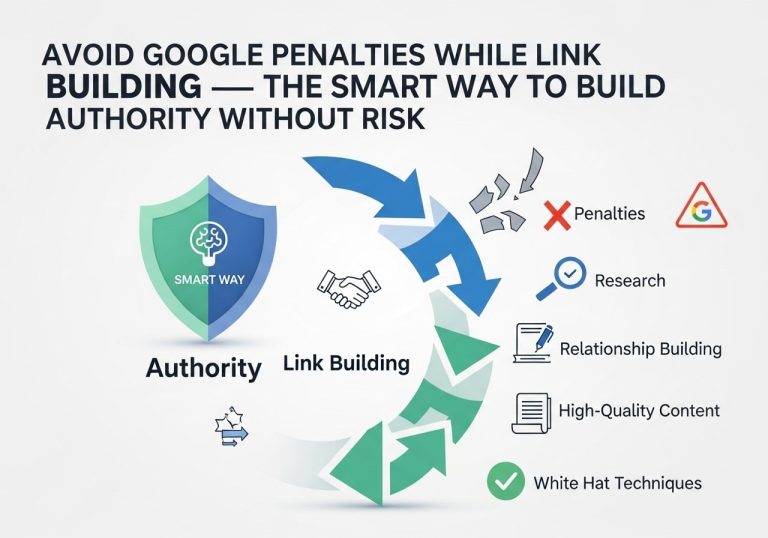
Not Considering Link Velocity: Pay attention to how quickly competitors acquire links. Sudden spikes might indicate paid links or black hat tactics you should avoid.
Advanced Competitor Analysis Techniques
Take your analysis further with these advanced methods:
Historical Link Analysis
Study how competitor backlink profiles have changed over time. This reveals:
- Seasonal link building patterns
- The impact of specific campaigns
- Which strategies provide lasting results
- Warning signs of penalty-causing tactics
Content-Specific Analysis
Instead of just analyzing domains, focus on specific pages:
- Which types of content attract the most links
- How content format affects link acquisition
- The relationship between content length and links
- Which topics generate the most interest
Geographic Link Analysis
Understand the geographic distribution of competitor backlinks:
- Local vs. national vs. international links
- Country-specific link building strategies
- Regional publications and directories
- Local business partnership opportunities
Measuring Success
Track these metrics to measure the success of your competitor-inspired backlink strategy:
- Referring Domain Growth: Monthly increase in unique domains linking to you
- Link Quality Score: Average authority of sites linking to you
- Organic Traffic: Increase in search engine traffic
- Keyword Rankings: Improvement in target keyword positions
- Competitive Gap: How your backlink profile compares to competitors over time
Set up regular reporting to monitor these metrics and adjust your strategy accordingly.
Mastering how to do competitor backlink analysis is one of the most valuable SEO skills you can develop. By systematically analyzing what works for your competitors and adapting those strategies for your own site, you can build a stronger backlink profile and improve your search rankings. Remember to focus on quality over quantity, create valuable content that naturally attracts links, and maintain ethical link building practices. Start with the competitor backlink analysis template provided here, choose the right tools for your budget, and begin building a backlink strategy that will help your website compete effectively in search results.
FAQs
What is competitor backlink analysis and why should I care about it?
Competitor backlink analysis is when you study the websites that link to your competitors. Think of it as checking out who your competitors know and how they built their network online. This matters because those same websites might be willing to link to your content too, which helps your website rank better in Google.
How do I find out which websites are linking to my competitors?
You can use tools like Ahrefs, SEMrush, or Moz to see your competitor’s backlinks. Just enter their website URL and these tools will show you a list of all the sites linking to them. Some free options include checking Google Search Console if you have access, or using free versions of these tools with limited data.
Which competitors should I analyze for backlinks?
Start with your top 3-5 direct competitors – the ones who show up when you search for your main keywords. Pick businesses that target the same customers and offer similar products or services. Don’t just look at the biggest names; sometimes smaller competitors have great link-building strategies you can learn from.
What should I look for when examining competitor backlinks?
Look for high-quality websites with good reputation and traffic. Check if the linking sites are relevant to your industry. Pay attention to the type of content that gets links – is it blog posts, resource pages, or product reviews? Also notice the anchor text (the clickable words) used in the links.
How can I tell if a backlink is actually worth pursuing?
A good backlink comes from a website that gets decent traffic, has a good reputation, and relates to your business somehow. Avoid sites that look spammy, have very little content, or seem to exist just for selling links. Trust your gut – if a website looks sketchy, it probably is.
What’s the best way to reach out to websites that link to my competitors?
Start by creating content that’s genuinely better or more current than what they’re already linking to. Then send a friendly email explaining who you are, mention the content they linked to, and suggest your improved version. Keep it short and personal – nobody likes obvious copy-paste emails.
How often should I check my competitors’ new backlinks?
Check monthly for most businesses, or weekly if you’re in a very competitive industry. Set up alerts in your backlink tools so you get notified when competitors gain new links. This helps you spot new opportunities quickly and stay on top of what’s working in your industry.
Can I just copy my competitor’s exact link-building strategy?
While you can learn from their approach, copying exactly usually doesn’t work well. What worked for them might not work for you, and many websites won’t link to multiple similar businesses. Instead, use their strategy as inspiration and put your own spin on it.
What are some red flags to avoid when doing backlink analysis?
Stay away from buying links, participating in link schemes, or getting links from completely unrelated websites. Also avoid focusing only on the number of links – quality matters way more than quantity. Don’t ignore the context either; a link buried in a footer is less valuable than one in the main content.
How long does it take to see results from competitor backlink analysis?
Building backlinks takes time and patience. You might start seeing small improvements in 2-3 months, but significant results usually take 6-12 months. The key is consistency – keep analyzing, keep reaching out, and keep creating content worth linking to. Good backlinks are like planting seeds; they need time to grow.