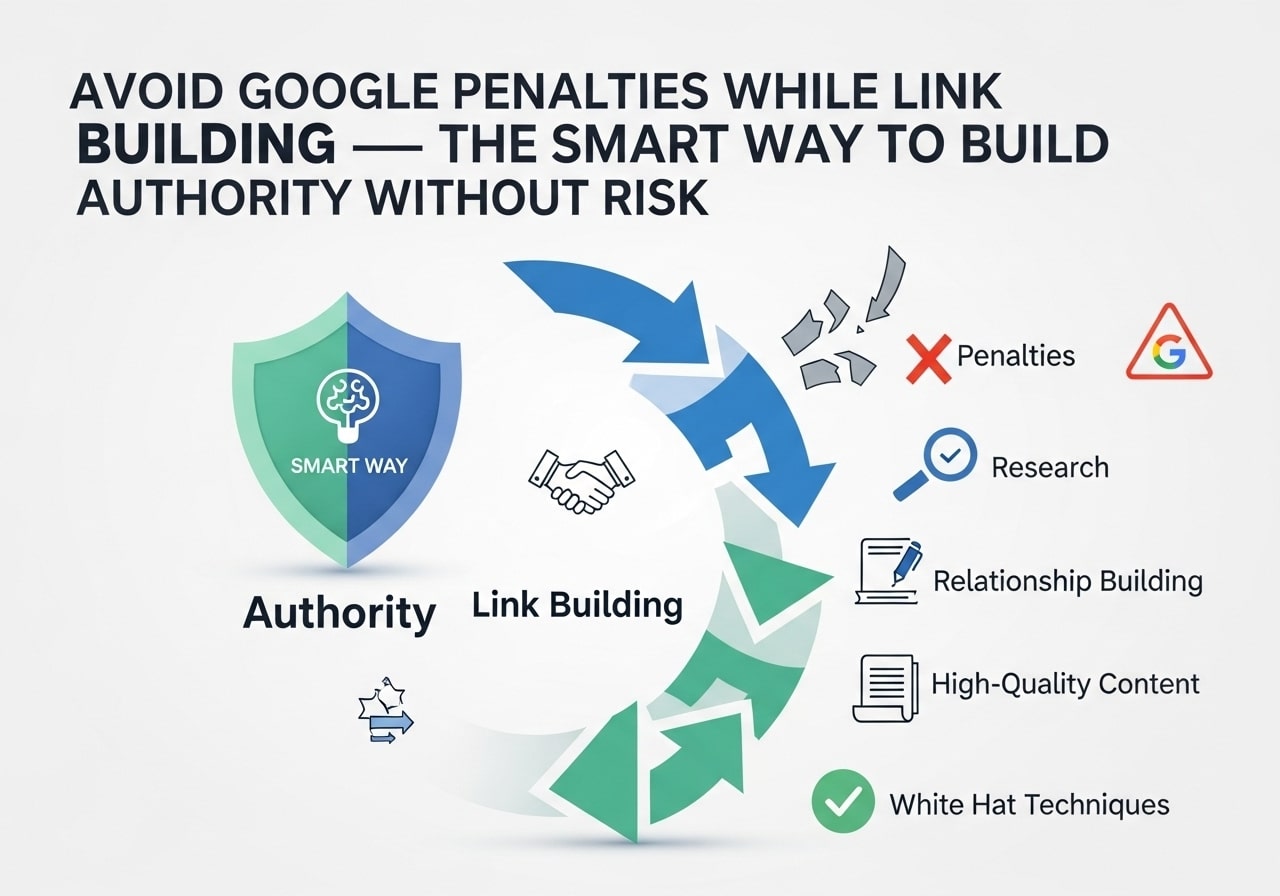
Link building remains one of the most important ranking factors in Google’s algorithm, but it’s also one of the riskiest SEO activities. If you want to avoid Google penalties while link building, you need to understand exactly what Google considers spam and how to build links the right way. Many websites have suffered severe ranking drops or complete removal from search results due to poor link building practices.
Understanding Google Penalties and Link Building
Google penalties come in two main forms: algorithmic and manual. Algorithmic penalties happen automatically when Google’s systems detect suspicious link patterns, while manual penalties are applied by human reviewers who find violations of Google’s guidelines.
How can I avoid Google penalties? The answer lies in understanding what triggers these penalties in the first place. Google’s Penguin algorithm specifically targets websites with unnatural link profiles. This includes sites that have too many low-quality links, over-optimized anchor text, or links from known spam networks.
When Google detects link spam, it can either devalue the problematic links or penalize your entire website. The severity depends on how widespread the issue is and whether Google believes it was intentional manipulation.
Types of Google Link Penalties
- Algorithmic penalties: Applied automatically by Google’s systems
- Manual penalties: Applied by human reviewers after investigation
- Partial penalties: Affect specific pages or sections of your site
- Site-wide penalties: Impact your entire domain’s rankings
Why Link Building Still Matters for SEO
Is link building still good for SEO? Absolutely. Despite the risks, quality backlinks remain one of Google’s top ranking factors. The key is focusing on natural, high-quality links rather than trying to manipulate search rankings through artificial link schemes.
Quality backlinks serve as votes of confidence from other websites. When reputable sites link to your content, it signals to Google that your content is valuable and trustworthy. However, not all links are created equal, and the quality of your backlinks matters far more than the quantity.
Modern link building requires a strategic approach that prioritizes:
- Relevance: Links from sites in your industry or niche
- Authority: Links from established, trusted websites
- Natural placement: Links that make sense within the context of the content
- Editorial value: Links that are given naturally by content creators
Common Link Building Mistakes That Trigger Penalties
Understanding what not to do is just as important as knowing the right strategies. Here are the most common link building mistakes that can trigger Google penalties:
Link Spamming and Spam Networks
Link spamming involves creating or purchasing large quantities of low-quality links. This includes participating in private blog networks (PBNs), buying links from link farms, or using automated link building tools that create thousands of spam links.
Google has become very sophisticated at identifying these artificial link patterns. What is link spam according to Google? It’s any attempt to manipulate PageRank through unnatural linking schemes.
Keyword Stuffing in Anchor Text
Anchor text overuse penalty occurs when too many of your backlinks use the same exact-match keywords. Natural link profiles have varied anchor text, including:
- Brand names
- Generic phrases like “click here” or “read more”
- Partial match keywords
- Natural variations of your target keywords
Paid Link Schemes
Risks of paid links are significant because Google explicitly prohibits buying or selling links that pass PageRank. This includes:
- Direct payment for links
- Trading links for products or services
- Sending free products in exchange for links with specific anchor text
- Article marketing with over-optimized links
Low-Quality Directory Submissions
Submitting your site to hundreds of low-quality directories was once a popular strategy, but it’s now considered spam. Focus only on legitimate, industry-specific directories that provide real value to users.
Safe Link Building Techniques to Avoid Penalties
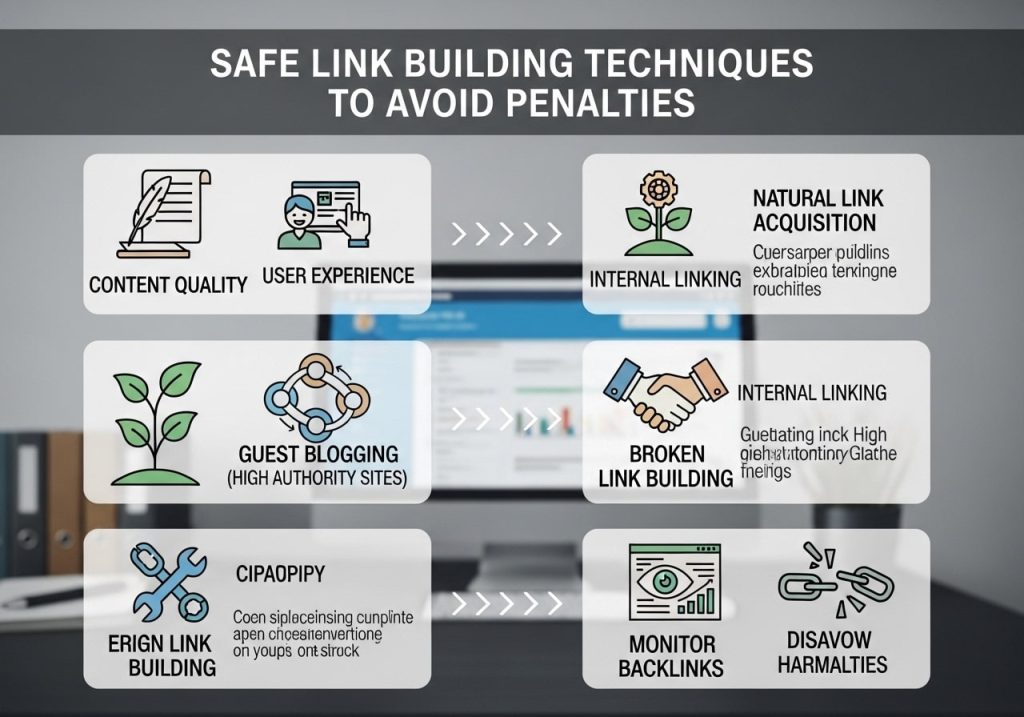
Ethical link building strategies focus on creating value and building genuine relationships. Here are proven methods that won’t put your site at risk:
Content-Driven Link Building
Create high-quality, valuable content that naturally attracts links. This includes:
- Research studies and surveys: Original data that other sites want to reference
- Comprehensive guides: In-depth resources that become go-to references in your industry
- Infographics and visual content: Easily shareable visual information
- Tools and calculators: Useful resources that provide ongoing value
Guest Posting Done Right
Guest posting can be effective when done properly:
- Target high-quality sites in your niche
- Write genuinely valuable content
- Use natural, varied anchor text
- Focus on building relationships, not just getting links
- Ensure the host site has good editorial standards
Digital PR and Outreach
Build relationships with journalists, bloggers, and influencers in your industry:
- Share newsworthy stories and insights
- Offer expert commentary on industry trends
- Participate in industry events and conferences
- Build genuine relationships before asking for anything
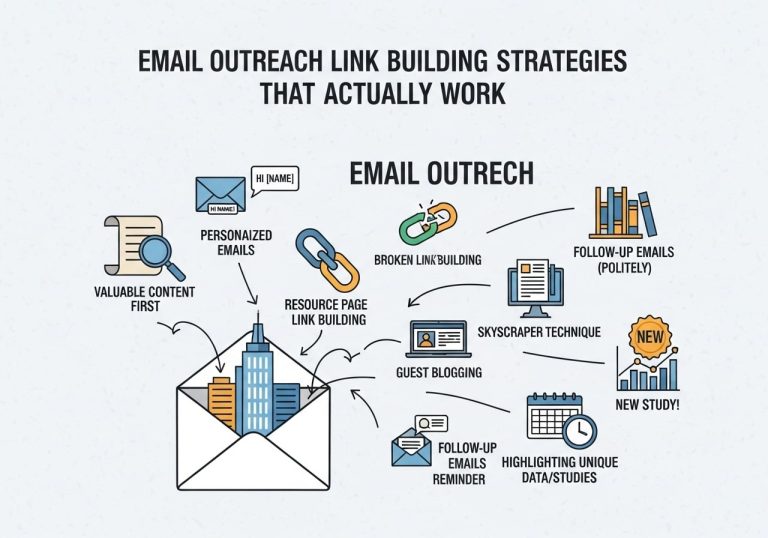
Resource Page Link Building
Find resource pages in your industry and suggest your content when it genuinely adds value:
- Search for “resources,” “useful links,” or “helpful tools” in your niche
- Ensure your content is truly relevant and valuable
- Write personalized outreach emails
- Follow up professionally but not excessively
How to Identify and Remove Bad Backlinks
How to identify bad backlinks is crucial for maintaining a healthy link profile. Regular audits help you spot problematic links before they cause issues.
Signs of Toxic Backlinks
- Links from completely unrelated websites
- Links from sites with very low domain authority
- Links from sites with poor content quality or obvious spam
- Links with over-optimized anchor text
- Links from known private blog networks
- Links from sites that have been penalized by Google
How to identify spam links involves using both tools and manual analysis:
- Use link analysis tools to get a complete picture of your backlink profile
- Review anchor text distribution to spot over-optimization
- Analyze linking domains for quality and relevance
- Check for sudden spikes in link acquisition
- Look for patterns that suggest artificial link building
The Disavow Process
When you find toxic backlinks that you can’t remove manually, use Google’s disavow tool:
- Try to remove bad links by contacting webmasters first
- Document your removal efforts
- Create a disavow file listing the toxic links
- Submit the file through Google Search Console
- Monitor your rankings and traffic after submission
Disavow toxic backlinks should be your last resort, not your first response to link problems.
Tools for Spam Link Detection
Several tools can help you identify problematic links in your backlink profile:
Free Tools
- Google Search Console: Shows links Google has discovered
- Google Analytics: Helps identify traffic drops that might indicate penalties
- Bing Webmaster Tools: Provides additional link data
Paid Tools
- Ahrefs: Comprehensive backlink analysis with spam score indicators
- SEMrush: Link audit tools with toxicity ratings
- Moz Link Explorer: Spam link analysis Moz provides spam scores for domains
- Majestic: Trust Flow and Citation Flow metrics
Google penalty checker tools can help you identify if your site has been affected:
- Monitor your search visibility trends
- Check for manual actions in Search Console
- Analyze traffic drops correlated with known algorithm updates
- Use rank tracking tools to spot sudden ranking changes
Recovering from Google Link Penalties

How do I remove the Google manual penalty? The process requires thorough cleanup and documentation:
Manual Penalty Recovery Steps
- Identify the penalty: Check Google Search Console for manual action notifications
- Audit your entire link profile: Use multiple tools to get complete coverage
- Remove or disavow bad links: Contact webmasters and use the disavow tool
- Document everything: Keep records of your cleanup efforts
- Submit a reconsideration request: Explain what you found and how you fixed it
- Be patient: Recovery can take weeks or months
Google link penalty recovery requires persistence and thorough work:
- Don’t rush the process – Google prefers comprehensive cleanup
- Be honest about what went wrong
- Show genuine understanding of their guidelines
- Implement better processes to prevent future issues
How have you dealt with link penalties? Most successful recoveries involve completely changing the approach to link building and focusing on quality over quantity.
Building a Natural Backlink Profile
A natural backlink profile has several characteristics that signal organic link growth:
Diversity in Link Sources
- Mix of different domain authorities
- Various types of websites (blogs, news sites, directories, etc.)
- Different geographic locations
- Range of page authorities on linking pages
Natural Anchor Text Distribution
- Brand name: 30-40%
- Naked URLs: 20-30%
- Generic terms: 15-25%
- Partial match: 10-15%
- Exact match: 5-10%
Link velocity guidelines suggest gradual, consistent growth rather than sudden spikes:
- Steady increase over time
- Growth that correlates with content publication
- Natural fluctuations rather than perfectly consistent numbers
- Acceleration during natural PR events or viral content
Google’s Current Link Spam Rules
Google spam rules continue to evolve, but the core principles remain consistent:
Latest Updates
Google regularly updates its spam policies and enforcement. Recent focuses include:
- AI-generated content with artificial links
- Sophisticated private blog networks
- Cross-domain redirect chains used to hide link schemes
- Guest posting networks with thin content
What Google Considers Spam
- Any attempt to manipulate PageRank
- Links that violate their quality guidelines
- Patterns that appear unnatural or manipulative
- Links from hacked or compromised websites
Best Practices for Long-term Success
How to avoid link penalties long-term requires adopting sustainable practices:
Focus on Value Creation
- Create content that naturally attracts links
- Build genuine relationships in your industry
- Participate authentically in your community
- Offer real value to your audience
Regular Monitoring and Maintenance
- Conduct monthly link audits
- Monitor your rankings and traffic
- Stay updated on Google algorithm changes
- Maintain healthy link acquisition rates
Education and Training
- Keep your team updated on best practices
- Avoid working with agencies that use risky tactics
- Understand the difference between white hat and black hat techniques
- Learn from case studies and industry examples
Quality Over Quantity
Modern SEO success comes from building fewer, higher-quality links rather than pursuing large quantities of mediocre ones. Focus on:
- Relevance: Links from sites related to your industry
- Authority: Links from established, trusted sources
- Editorial quality: Links placed naturally within valuable content
- User value: Links that genuinely help users find relevant information
The landscape of link building continues to change, but the fundamental principle remains the same: focus on providing value and building genuine relationships. When you approach link building with this mindset, you’ll naturally avoid Google penalties while link building and create sustainable, long-term SEO success.
Remember, the goal isn’t to trick Google or manipulate rankings – it’s to build authority and trust through quality content and genuine connections. This approach not only keeps you safe from penalties but also creates lasting value for your business and your audience.
What strategies have worked best for your link building efforts? Share your experiences and questions in the comments below to help others learn from your journey in building penalty-free backlink profiles.
FAQs
What exactly are Google penalties when it comes to links?
Google penalties are punishments your website gets when you break Google’s rules about link building. They can drop your site’s ranking in search results or even remove it completely. Google does this when it finds unnatural or low-quality links pointing to your site.
How can I tell if my website has been hit with a link penalty?
You’ll usually notice a sudden drop in your website traffic and search rankings. Check your Google Search Console for manual action notifications – Google will tell you directly if they’ve penalized your site. Also watch for big drops in organic traffic that happen around the same time as Google algorithm updates.
What types of links should I avoid to stay safe from penalties?
Stay away from paid links, link exchanges, links from spammy websites, and links with exact-match anchor text repeated too often. Don’t buy links from link farms or get links from completely unrelated websites. These all look unnatural to Google and can get you in trouble.
What makes a good, penalty-safe link?
Good links come from real websites in your industry or related fields. They should be placed naturally in content where they actually help readers. The linking website should have real traffic and good content, not just exist to sell links. The anchor text should vary and sound natural.
How do I build links without risking a penalty?
Focus on creating content that people actually want to link to. Reach out to real websites and bloggers in your field with genuine relationship-building emails. Guest post on quality sites, but make sure you’re providing real value, not just trying to get links. Always prioritize quality over quantity.
Is it safe to do guest posting for links?
Yes, guest posting can be safe if you do it right. Write high-quality content for reputable websites in your industry. Don’t just guest post for the link – make sure you’re providing real value to their readers. Avoid guest posting on low-quality sites that accept anyone’s content.
How many links should I build per month to stay safe?
There’s no magic number, but focus on consistency rather than speed. Building a few high-quality links each month is much safer than building dozens of mediocre ones. Your link growth should look natural and steady, not like sudden spikes that could raise red flags.
What should I do if I think I already have bad links pointing to my site?
First, identify the problematic links using tools like Google Search Console or other link analysis tools. Try to contact the website owners to remove the bad links. If that doesn’t work, use Google’s disavow tool to tell Google to ignore those links when evaluating your site.
Can I use link building services without getting penalized?
Be very careful with link building services. Many of them use tactics that can get you penalized. If you do use a service, make sure they focus on quality over quantity and use white-hat methods. Ask for examples of their work and avoid any service that promises quick results or guaranteed rankings.
How long does it take to recover from a Google link penalty?
Recovery time varies depending on how severe the penalty was and how quickly you fix the problems. Manual penalties can be lifted within a few weeks after you submit a successful reconsideration request. Algorithmic penalties might take several months to recover from, as you’ll need to wait for Google to recrawl and reevaluate your site.